Awareness of sign language rights and Deaf community needs continues to grow across Canada. International Day of Sign Languages and the International Week of Deaf People bring important visibility each September. Statements of support appear. Flags are raised. Conversations happen.
The real test comes afterward: when a citizen or client needs to communicate through ASL or LSQ in a government or Crown corporation channel — and needs it right now.
Awareness alone does not create access. Action does.
The Gap Between Awareness and Access
Many provincial, federal, municipal, and Crown organizations have made clear commitments to accessibility. Policies exist. Training occurs. Scheduled interpreting is arranged for planned meetings and events.
Yet the unplanned moment remains a frequent point of failure. A walk-in at a service counter. An urgent inquiry. An intake process that cannot wait. In these situations, the absence of an immediately available interpreter turns awareness into delay.
Clients wait. Staff improvise. Interactions are postponed or left incomplete. The gap between stated values and lived experience becomes visible.
Turning Awareness into Instant Access
On-demand video remote interpreting (VRI) closes that gap.
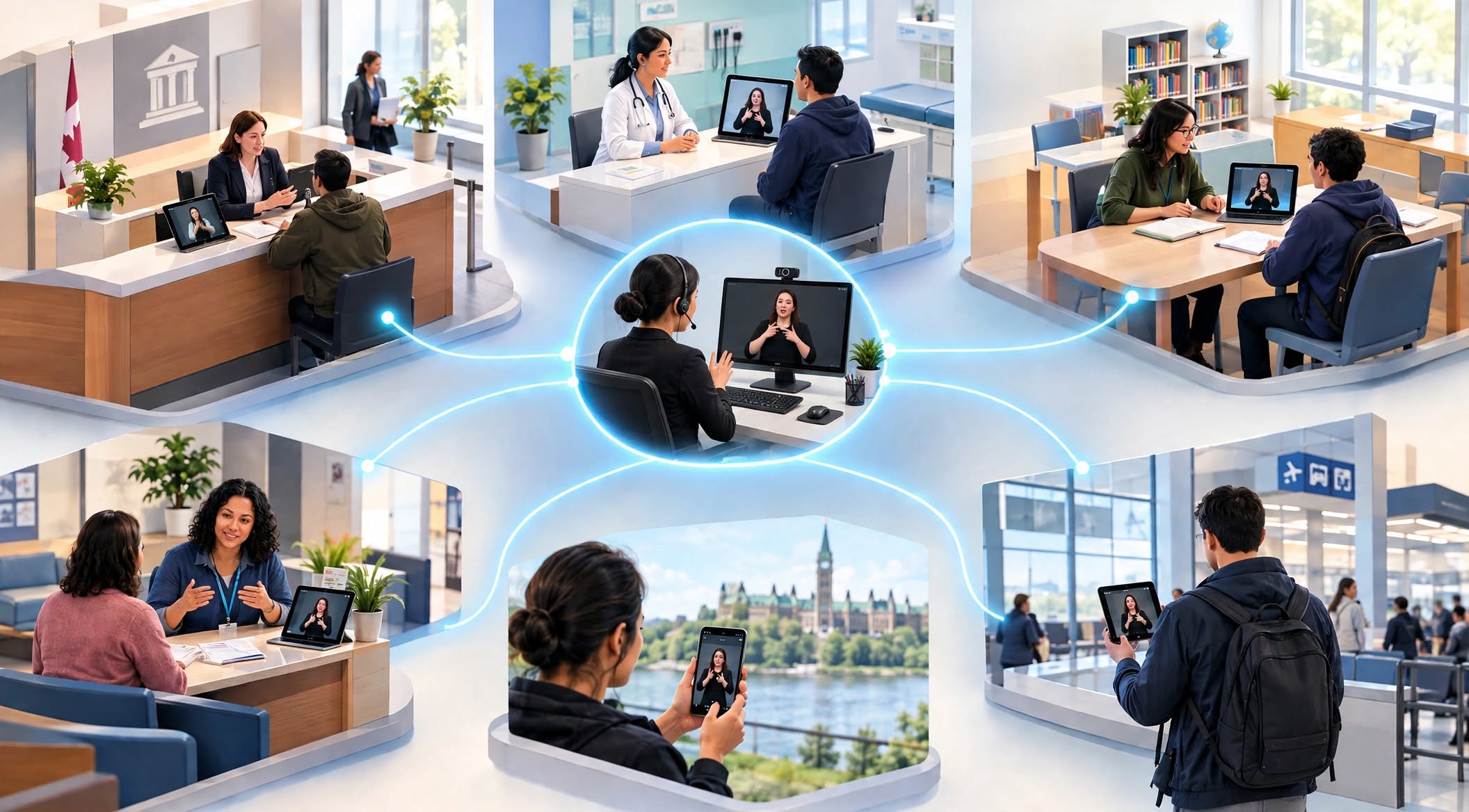
With a platform such as Asign On, staff across government and Crown channels can connect to a qualified ASL or LSQ interpreter within seconds from a laptop, tablet, or mobile device. No advance booking is required. Communication begins in real time, face to face, in the language the client uses.
This capability does not replace scheduled interpreting. It completes the picture. Planned support covers known needs. On-demand access covers the moments that cannot be anticipated — the moments that define much of day-to-day public service.
What Instant Access Looks Like in Practice
When on-demand ASL and LSQ interpreting is available across channels:
- Service counters can respond immediately instead of asking clients to return
- Intake and inquiry processes continue without interruption
- Staff across locations and shifts have a consistent, reliable option
- Accessibility commitments move from policy documents into operational reality
The result is practical inclusion. Clients experience dignity and efficiency. Organizations reduce friction, complaints, and rework. Awareness becomes measurable action.
A Clear Step for Government and Crown Teams
Awareness campaigns create important visibility. The next step is ensuring that visibility translates into capability.
One practical question helps assess readiness:
If a Deaf or hard-of-hearing client needed an ASL or LSQ interpreter right now in one of your service channels, how quickly could your team provide one?
If the answer involves waiting or workarounds, the path from awareness to action is still incomplete.
Making ASL and LSQ available instantly is no longer a future aspiration. It is an operational choice available today.
Visit asign.ca to explore how on-demand interpreting can support your government or Crown channels, or reach out to discuss a practical next step for your team.
Awareness opens the door. Instant access walks through it.