Tag: ASL interpreting

  • Building a Hybrid Interpreting Strategy for Government and Crown Services: On-Demand + Scheduled + In-Person

    Building a Hybrid Interpreting Strategy for Government and Crown Services: On-Demand + Scheduled + In-Person

    Government and Crown services interact with the public in many different ways — scheduled appointments, formal meetings, walk-in counters, urgent inquiries, and everything in between. No single interpreting method covers all of these situations effectively.

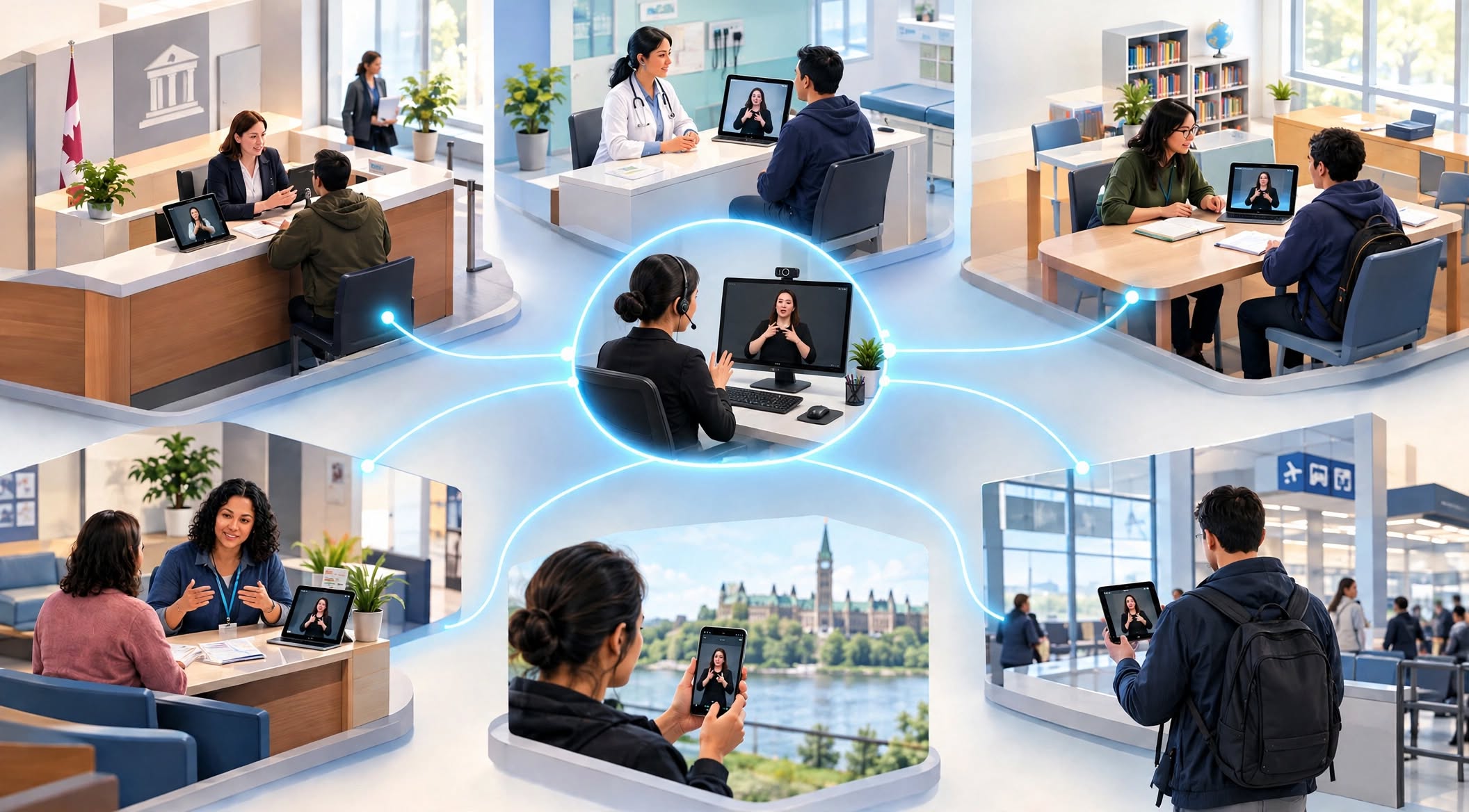
    A practical hybrid strategy combines three complementary approaches: on-demand video remote interpreting (VRI), scheduled interpreting, and in-person interpreting. Used together, they create consistent access without forcing every interaction into one model.

    The Three Components

    Scheduled interpreting is arranged in advance for known dates, times, and durations. It works well for formal meetings, hearings, training sessions, and planned appointments. Advance booking allows for preparation, subject-matter briefing, and logistical coordination.

    In-person interpreting places a qualified interpreter physically present at the location. It is often preferred for longer, complex, or high-stakes interactions, sensitive discussions, or settings where visual and environmental context matter significantly.

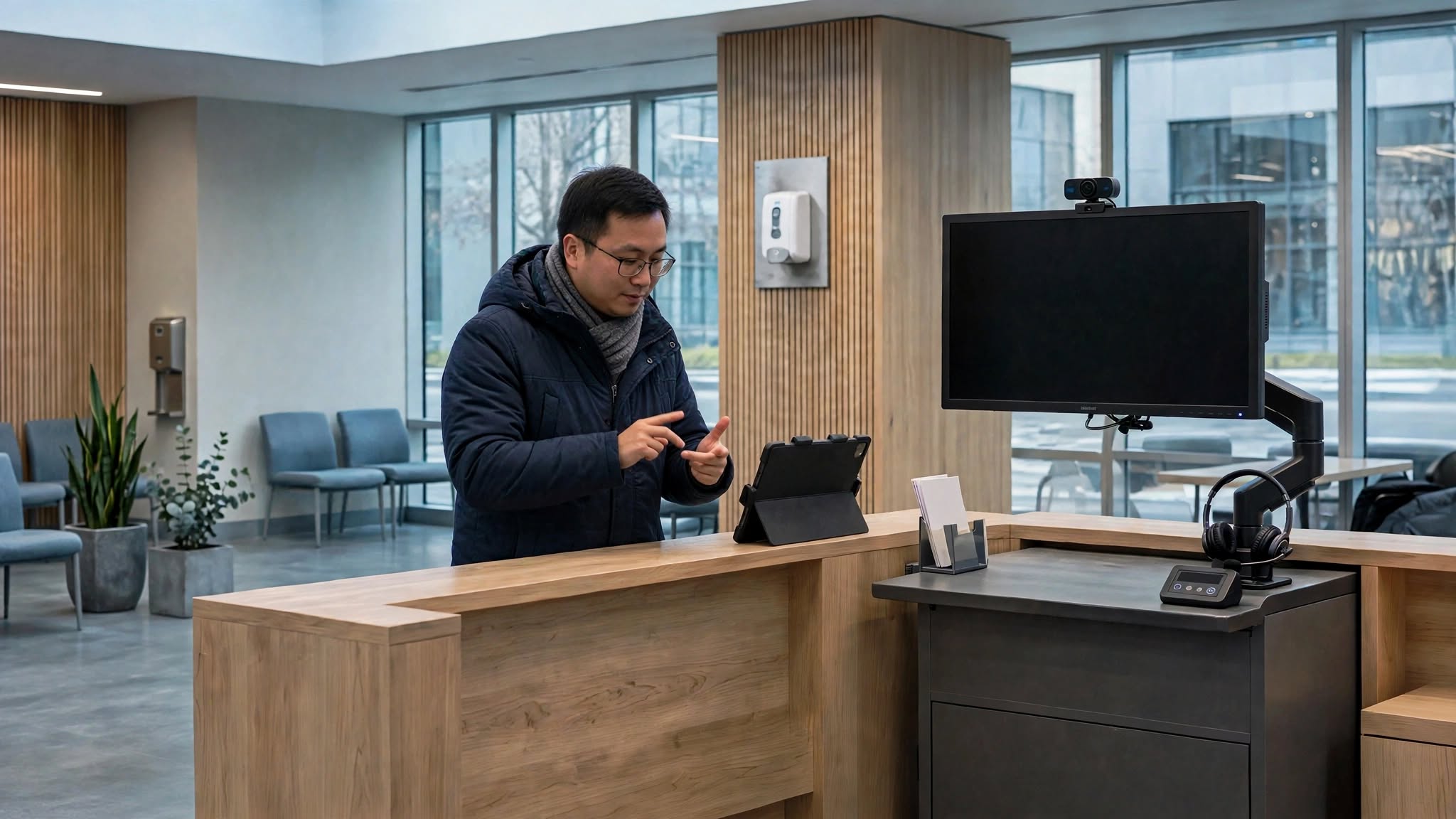
    On-demand VRI provides immediate access when no interpreter has been booked. Staff connect through a platform and are matched with a qualified ASL or LSQ interpreter within seconds from a laptop, tablet, or mobile device. It is designed for unplanned or urgent needs that cannot wait for scheduling.

    Each method solves a different operational problem. Treating them as interchangeable creates gaps. Treating them as complementary closes those gaps.

    Matching the Method to the Situation

    A clear hybrid model assigns each approach to the situations it handles best:

    • Use scheduled interpreting when the need is known in advance and preparation adds value.
    • Use in-person interpreting for complex, lengthy, or high-stakes interactions where physical presence is important.
    • Use on-demand VRI for walk-ins, urgent inquiries, last-minute needs, and any situation where waiting or rescheduling is not acceptable.

    This structure gives front-line teams clear guidance and reduces the risk of defaulting to incomplete workarounds when an unexpected need arises.

    Why a Hybrid Approach Works for Government and Crown Services

    Public-sector environments regularly produce both planned and unplanned communication needs. Relying only on scheduled or in-person interpreting leaves the “right now” moments uncovered. Relying only on on-demand VRI may miss the benefits of preparation and physical presence for more complex interactions.

    A hybrid strategy delivers:

    • Coverage for both anticipated and unexpected needs
    • Greater consistency across locations, shifts, and service channels
    • Reduced pressure on staff who previously had limited options
    • Stronger alignment between accessibility commitments and daily operations

    On-demand VRI does not replace scheduled or in-person services. It fills the critical space between them.

    Implementing the Strategy

    Successful hybrid models usually include three practical elements:

    1. Clear internal guidance so staff know which option to use and how to access it.
    2. Reliable on-demand capability that meets professional standards for ASL and LSQ interpreting.
    3. Continued investment in scheduled and in-person services for the situations that require them.

    When these pieces are in place, accessibility becomes more consistent and less dependent on whether someone remembered to book ahead.

    A Practical Next Step

    Review a recent period of service interactions and identify how often communication needs arose without advance notice. Those instances point directly to where on-demand VRI strengthens the overall model.

    A hybrid strategy is not theoretical. It is a working combination of planned support, physical presence when needed, and immediate access when timing cannot wait.

    Visit asign.ca to explore how on-demand ASL and LSQ interpreting can complement your existing scheduled and in-person services, or reach out to discuss a hybrid approach tailored to your government or Crown operations.

    Three methods. One goal: reliable access in every situation that matters.
  • How to Choose an On-Demand VRI Platform That Meets Public-Sector Requirements (Security, Quality, Speed)

    How to Choose an On-Demand VRI Platform That Meets Public-Sector Requirements (Security, Quality, Speed)

    Provincial, municipal, federal, and Crown organizations evaluating on-demand video remote interpreting (VRI) face a clear set of operational requirements. The platform must deliver professional ASL and LSQ interpreting quickly, maintain high quality, and meet the security expectations of public-sector environments.

    Choosing well means looking beyond marketing claims and focusing on three core dimensions: security, quality, and speed.

    1. Security: Protecting Sensitive Information

    Public-sector interactions frequently involve personal, financial, health, or regulated information. A suitable VRI platform should support:

    • Interpreters who can hold appropriate security clearances (Reliability through Top Secret where required)
    • Secure connection protocols and data handling practices aligned with government expectations
    • Clear policies on confidentiality and professional ethics

    Ask providers to explain how they manage security requirements and whether their interpreter pool includes individuals cleared for the levels your organization needs.

    2. Quality: Professional Standards and Language Coverage

    Speed without quality creates new risks. Quality in Canadian VRI rests on two foundations: qualified interpreters and reliable coverage of both ASL and LSQ.

    Key indicators include:

    • Interpreters who meet recognized professional standards and belong to established associations
    • CASLI (Canadian Association of Sign Language Interpreters) — the national body for ASL-English interpreters, managing the Canadian Evaluation System (CES) and Certificate of Interpretation (COI)
    • AQILS (Association québécoise des interprètes en langues des signes) — the professional association representing sign language interpreters (including LSQ and ASL) in Quebec, focused on ethics, certification standards, and professional development
    • WAVLI (Westcoast Association of Visual Language Interpreters) — the provincial association for ASL-English interpreters in British Columbia, which holds legislative title protection for Registered ASL-English Interpreter and related titles

    A strong platform draws on interpreters affiliated with these (or equivalent) bodies and provides consistent, high-quality service in both ASL and LSQ across regions.

    3. Speed: Access Measured in Seconds, Not Minutes

    The defining value of on-demand VRI is immediate availability. Evaluate:

    • Average time from request to live interpreter
    • Performance during peak periods
    • Ease of launching a session from standard devices (laptop, tablet, or mobile) with minimal training

    If staff cannot connect quickly under real service-counter or office conditions, the platform will see limited use precisely when it is needed most.

    Putting the Three Requirements Together

    A platform that excels in only one or two areas leaves gaps. Public-sector teams need all three working together:

    • Security that meets organizational and regulatory expectations
    • Quality grounded in professional standards, association affiliation, and full ASL/LSQ coverage
    • Speed that delivers an interpreter in seconds rather than creating new delays

    When these elements are present, on-demand VRI becomes a reliable complement to scheduled interpreting — closing the gap for unplanned interactions without compromising standards.

    A Practical Evaluation Approach

    Before deciding, request clear answers on connection times, interpreter qualifications and affiliations (CASLI, AQILS, WAVLI or equivalent), available security clearances, and how the platform performs in typical public-facing environments. Where possible, observe a live demonstration under conditions that resemble your actual service settings.

    The right choice supports both accessibility commitments and day-to-day operational reality.

    Visit asign.ca to explore how on-demand ASL and LSQ interpreting can meet public-sector requirements for security, quality, and speed, or reach out to discuss the criteria that matter most for your organization.

    Security. Quality. Speed. All three are non-negotiable for public-sector access that works.

  • 5 Questions Every Provincial, Municipal & Crown Accessibility Lead Should Ask Before Choosing VRI

    5 Questions Every Provincial, Municipal & Crown Accessibility Lead Should Ask Before Choosing VRI

    Choosing a video remote interpreting (VRI) solution is a practical decision with lasting operational impact. For provincial, municipal, and Crown accessibility leads, the goal is not simply to add a new tool — it is to close the gap between planned interpreting and the unplanned moments that define much of public service delivery.

    Before selecting a platform, these five questions help separate solutions that look good on paper from those that perform reliably in real public-sector environments.

    1. How quickly can staff actually connect to an interpreter?

    Speed is the core value of on-demand VRI. Ask for clear information on average connection times and what happens during peak periods. A platform that requires multiple steps, long waits, or complex logins undermines the purpose of on-demand access.

    The practical test is simple: if a Deaf client is standing at a service counter right now, how long until a qualified ASL or LSQ interpreter is available on screen?

    2. Are both ASL and LSQ supported at a professional level?

    Canada’s linguistic reality includes both American Sign Language (ASL) and Langue des signes québécoise (LSQ). A solution that treats one language as secondary creates uneven access across regions and client groups.

    Confirm that the platform provides reliable, high-quality interpreting in both ASL and LSQ, delivered by qualified professionals.

    3. What professional standards and affiliations do the interpreters meet?

    Public-sector environments often involve sensitive information, regulated processes, and security requirements. Ask about interpreter qualifications, ongoing professional development, security clearances (including Reliability through Top Secret where relevant), and professional association membership.

    In Canada, several key organizations set professional expectations:

    • CASLI (Canadian Association of Sign Language Interpreters, formerly AVLIC) is the national professional association and certifying body for ASL-English interpreters. It manages the Canadian Evaluation System (CES) and grants the Certificate of Interpretation (COI). CASLI also maintains a public Interpreter Directory of vetted professionals.
    • AQILS (Association québécoise des interprètes en langues des signes) is the professional non-profit association representing sign language interpreters (including LSQ and ASL) in Quebec. Interpreters join AQILS to adhere to professional codes of ethics, maintain certification standards, and access networking and continuous professional development. LSQ interpreters in Quebec are primarily represented and supported by AQILS.
    • WAVLI (Westcoast Association of Visual Language Interpreters) is the provincial professional association for ASL-English interpreters in British Columbia. WAVLI supports members and advances sign language interpretation standards through professional development and leadership. It holds legislative occupational title protection in B.C., meaning only members in good standing may use the restricted titles: Registered ASL-English Interpreter, Registered Sign Language Interpreter, and Registered Visual Language Interpreter.

    CASLI and AQILS maintain an organizational partnership to support consistent professional standards across the country. Asking whether interpreters are affiliated with these associations (or equivalent recognized provincial bodies such as WAVLI) helps ensure the people who appear on screen meet established ethical and professional expectations.

    4. How easily can front-line staff use the platform in real conditions?

    The best technology fails if it is difficult to access under pressure. Consider:

    • Can staff launch a session from a laptop, tablet, or mobile device with minimal training?
    • Is the process consistent across locations and shifts?
    • Does it work in typical service-counter or office environments?

    A solution that requires specialized equipment or lengthy setup will see limited adoption precisely when it is needed most.

    5. Does the provider understand Canadian public-sector realities?

    On-demand VRI for government, provincial, municipal, and Crown services is not the same as a generic consumer video tool. Look for experience with Canadian accessibility expectations, bilingual (ASL/LSQ) delivery, and the operational patterns of public-facing teams.

    A provider that understands these contexts can support both the technology and the practical rollout across your organization.

    Moving from Evaluation to Decision

    These questions help accessibility leads move beyond feature lists and focus on operational fit. The right VRI solution should make professional ASL and LSQ interpreting available within seconds, integrate smoothly into existing workflows, and complement — rather than replace — scheduled interpreting services.

    When the answers are clear and positive, on-demand access becomes a reliable part of the service model instead of another item on a future wish list.

    Visit asign.ca to explore how on-demand ASL and LSQ interpreting can support your provincial, municipal, or Crown operations, or reach out to discuss the questions that matter most for your team.

    The right questions lead to the right capability — available when it is needed.

  • Inclusive Communication Beyond the Checklist: What Real Access Looks Like for Public-Sector Organizations This September

    Inclusive Communication Beyond the Checklist: What Real Access Looks Like for Public-Sector Organizations This September

    September often brings renewed attention to accessibility. International Day of Sign Languages, the International Week of Deaf People, and National Day for Truth and Reconciliation all highlight the importance of inclusion and the removal of barriers.

    For public-sector organizations, these moments frequently prompt review of policies, training, and existing supports. Checklists are updated. Commitments are restated. Scheduled interpreting arrangements are confirmed.

    Checklists are useful. They are not the same as real access.

    What a Checklist Cannot Cover

    Many federal, provincial, municipal, and Crown organizations have solid foundations in place: accessibility policies, staff awareness, and scheduled interpreting for planned meetings and events.

    What a checklist rarely captures is the unplanned moment — the walk-in at a service counter, the urgent inquiry, the intake process that begins without notice. In these situations, the absence of an immediately available interpreter turns good intentions into delay.

    Clients wait. Staff improvise. Interactions are postponed or left incomplete. The gap between documented commitment and lived experience becomes clear.

    What Real Access Looks Like

    Real access means a Deaf or hard-of-hearing person can communicate in ASL or LSQ at the moment they need to — without waiting for an appointment, without relying on informal workarounds, and without being asked to return another day.

    On-demand video remote interpreting (VRI) makes this possible.

    With a platform such as Asign On, staff can connect to a qualified ASL or LSQ interpreter within seconds from a laptop, tablet, or mobile device. No advance booking is required. Communication begins face to face, in real time, in the language the person uses.

    This capability does not replace scheduled interpreting. It completes the picture. Planned support covers known needs. On-demand access covers the moments that cannot be anticipated — the moments that define much of day-to-day public service.

    Moving Beyond Compliance This September

    September provides a natural point for public-sector teams to assess whether their current approach delivers consistent access or only planned access.

    A practical test is straightforward:

    If a Deaf client needed an ASL or LSQ interpreter right now in one of your service channels, how quickly could your team provide one?

    If the answer involves waiting, rescheduling, or incomplete alternatives, the opportunity to strengthen access is immediate.

    Inclusive communication is not only about meeting requirements. It is about ensuring that when someone needs to communicate, the system is ready.

    A Clear Step Forward

    Policies and checklists create the framework. Operational capability delivers the result.

    Adding on-demand ASL and LSQ interpreting alongside existing scheduled services gives provincial, municipal, federal, and Crown teams a practical way to close the remaining gap. Access becomes consistent rather than conditional on whether someone remembered to book ahead.

    Visit asign.ca to explore how on-demand interpreting can support your public-sector operations, or reach out to discuss a practical next step for your team.

    Checklists document the intention. Real access is measured in the moment communication is needed.

  • Accessibility and Reconciliation: Ensuring Communication Access Across Government, Provincial, Municipal & Crown Services

    Accessibility and Reconciliation: Ensuring Communication Access Across Government, Provincial, Municipal & Crown Services

    National Day for Truth and Reconciliation invites reflection on history, responsibility, and the ongoing work of building more respectful and inclusive public institutions.

    Part of that work includes ensuring that government, provincial, municipal, and Crown services are genuinely accessible to everyone who needs them — including Deaf, hard-of-hearing, and DeafBlind people who use ASL or LSQ.

    Communication access is not separate from inclusion. It is one of the practical ways public services demonstrate respect and remove barriers.

    Access That Depends on Timing Is Incomplete

    Many public-sector organizations have made clear commitments to accessibility. Policies exist. Scheduled interpreting is arranged for planned meetings and events. Training and awareness efforts continue.

    Yet unplanned interactions remain common across service counters, intake processes, and client channels. When a Deaf or hard-of-hearing person needs to communicate and no interpreter is immediately available, access becomes conditional. Waiting, rescheduling, written notes, or informal assistance often follow.

    In those moments, the gap between commitment and delivery is visible. Equitable service requires more than good intentions — it requires the ability to respond in real time.

    Making Communication Access Immediate

    On-demand video remote interpreting (VRI) provides a practical way to close that gap.

    With a platform such as Asign On, staff across federal, provincial, municipal, and Crown channels can connect to a qualified ASL or LSQ interpreter within seconds from a laptop, tablet, or mobile device. No advance booking is required. Communication begins face to face, in the language the person uses.

    This capability does not replace scheduled interpreting. It complements it. Planned support covers known needs. On-demand access covers the moments that cannot be anticipated — the moments that define much of day-to-day public service.

    Why This Matters for Inclusive Public Services

    When ASL and LSQ interpreting is available instantly:

    • Citizens and clients can access services without unnecessary delay or workarounds
    • Front-line staff have a clear, reliable option instead of improvising
    • Service delivery remains more consistent across locations and shifts
    • Accessibility commitments move from policy into everyday operations

    Removing communication barriers is one concrete expression of respect. It supports the broader goal of public services that work equitably for the people they are meant to serve.

    A Practical Step Forward

    Reflection is important. Action makes the difference.

    One clear question helps assess current readiness:

    If a Deaf or hard-of-hearing person needed an ASL or LSQ interpreter right now in one of your service channels, how quickly could your team provide one?

    If the answer involves waiting or incomplete alternatives, the opportunity to strengthen access is immediate.

    Ensuring communication access across government, provincial, municipal, and Crown services is practical, achievable, and aligned with the ongoing work of building more inclusive institutions.

    Visit asign.ca to explore how on-demand interpreting can support your service channels, or reach out to discuss a practical next step for your team.

    Respect is shown in many ways. One of them is making sure people can communicate when they need to.

  • Sign Language Rights Are Human Rights — How Federal, Provincial & Crown Services Can Deliver Them in Seconds

    Sign Language Rights Are Human Rights — How Federal, Provincial & Crown Services Can Deliver Them in Seconds

    Sign language rights are human rights.

    This principle sits at the centre of the International Day of Sign Languages and the broader recognition of Deaf people’s right to communicate in their own languages — ASL and LSQ in the Canadian context.

    Recognition is essential. Legislation, policies, and public statements matter.

    What matters most in daily public service is whether those rights can be exercised in real time.

    Rights Without Immediate Access Remain Incomplete

    Federal, provincial, and Crown services interact with citizens and clients every day through counters, intake processes, inquiries, and support channels. Many of these interactions cannot be scheduled in advance.

    When a Deaf or hard-of-hearing person needs to communicate and no interpreter is immediately available, the right to accessible communication becomes conditional on timing. Waiting, rescheduling, written notes, or informal assistance often follow.

    In those moments, the gap between principle and practice becomes visible.

    Delivering Rights in Seconds

    On-demand video remote interpreting (VRI) turns the principle into operational reality.

    With a platform such as Asign On, staff in federal, provincial, and Crown settings can connect to a qualified ASL or LSQ interpreter within seconds from a laptop, tablet, or mobile device. No advance booking is required. Communication begins face to face, in real time, in the language the person uses.

    This capability does not replace scheduled interpreting for planned meetings and appointments. It fills the critical space between planned support and immediate need — the space where many public service interactions actually occur.

    What Changes When Access Is Instant

    When on-demand ASL and LSQ interpreting is available across service channels:

    • Citizens and clients can exercise their communication rights without delay
    • Front-line staff have a clear, reliable option instead of improvising
    • Service delivery remains consistent across locations and shifts
    • Accessibility commitments move from policy documents into everyday operations

    The result is practical respect for human rights. Access is no longer deferred. It is delivered in the moment it is required.

    A Practical Test for Public-Sector Teams

    One question helps separate recognition from delivery:

    If a Deaf person needed an ASL or LSQ interpreter right now in one of your service channels, how quickly could your team provide one?

    If the answer involves waiting or workarounds, the right exists on paper but is not yet fully available in practice.

    Sign language rights are human rights. Delivering them in seconds is how federal, provincial, and Crown services turn that statement into lived experience.

    Visit asign.ca to explore how on-demand interpreting can support your service channels, or reach out to discuss a practical next step for your team.

    Rights recognized. Access delivered — in seconds.

  • International Day of Sign Languages 2026: What Real Access Looks Like for Provincial, Municipal & Crown Organizations

    International Day of Sign Languages 2026: What Real Access Looks Like for Provincial, Municipal & Crown Organizations

    Today, September 23, marks the International Day of Sign Languages. Across Canada and around the world, organizations are recognizing the importance of sign languages, Deaf culture, and the right to accessible communication.

    Recognition matters. Statements of support matter. Raising awareness matters.

    What matters most, however, is what happens the next time a Deaf or hard-of-hearing person walks into a provincial service counter, a municipal office, or a Crown corporation channel and needs to communicate right now.

    That is where real access is measured.

    Awareness Is Not the Same as Access

    Many provincial, municipal, and Crown organizations have made meaningful commitments to accessibility. Policies exist. Training has been delivered. Scheduled interpreting is arranged for planned meetings and events.

    Yet the unplanned moment remains a frequent point of failure. A walk-in client. An urgent inquiry. An intake process that cannot be deferred. In these situations, the absence of an immediately available interpreter turns good intentions into delay.

    Clients wait. Staff improvise with notes or gestures. Interactions are postponed or left incomplete. The gap between awareness and lived experience becomes clear.

    What Real Access Looks Like

    Real access means a Deaf or hard-of-hearing person can communicate in ASL or LSQ at the moment they need to — without waiting for an appointment, without relying on informal workarounds, and without being asked to return another day.

    On-demand video remote interpreting (VRI) makes this possible.

    With a platform such as Asign On, staff can connect to a qualified ASL or LSQ interpreter within seconds from a laptop, tablet, or mobile device. No advance booking is required. Communication begins in real time, face to face, in the language the person uses.

    This capability does not replace scheduled interpreting. It completes it. Planned support covers known needs. On-demand access covers the moments that cannot be anticipated — the moments that define much of day-to-day public service.

    Practical Impact for Public-Sector Teams

    When on-demand ASL and LSQ interpreting is available across provincial, municipal, and Crown channels:

    • Service counters can respond immediately instead of creating delays
    • Intake and inquiry processes continue without interruption
    • Staff across locations and shifts have a consistent, reliable option
    • Accessibility commitments move from policy into operational reality

    The result is practical inclusion. Clients experience dignity and efficiency. Organizations reduce friction, complaints, and rework.

    A Clear Question for Today

    On this International Day of Sign Languages, one practical question helps separate awareness from action:

    If a Deaf client needed an ASL or LSQ interpreter right now in one of your service channels, how quickly could your team provide one?

    If the answer involves waiting or workarounds, the path from recognition to real access is still incomplete.

    Making sign language available instantly is no longer a future goal. It is an operational choice available today.

    Visit asign.ca to explore how on-demand interpreting can support your provincial, municipal, or Crown operations, or reach out to discuss a practical next step for your team.

    Awareness opens the conversation. Instant access completes it.

  • From Awareness to Action: Making ASL and LSQ Available Instantly Across Government and Crown Corporation Channels

    From Awareness to Action: Making ASL and LSQ Available Instantly Across Government and Crown Corporation Channels

    Awareness of sign language rights and Deaf community needs continues to grow across Canada. International Day of Sign Languages and the International Week of Deaf People bring important visibility each September. Statements of support appear. Flags are raised. Conversations happen.

    The real test comes afterward: when a citizen or client needs to communicate through ASL or LSQ in a government or Crown corporation channel — and needs it right now.

    Awareness alone does not create access. Action does.

    The Gap Between Awareness and Access

    Many provincial, federal, municipal, and Crown organizations have made clear commitments to accessibility. Policies exist. Training occurs. Scheduled interpreting is arranged for planned meetings and events.

    Yet the unplanned moment remains a frequent point of failure. A walk-in at a service counter. An urgent inquiry. An intake process that cannot wait. In these situations, the absence of an immediately available interpreter turns awareness into delay.

    Clients wait. Staff improvise. Interactions are postponed or left incomplete. The gap between stated values and lived experience becomes visible.

    Turning Awareness into Instant Access

    On-demand video remote interpreting (VRI) closes that gap.

    With a platform such as Asign On, staff across government and Crown channels can connect to a qualified ASL or LSQ interpreter within seconds from a laptop, tablet, or mobile device. No advance booking is required. Communication begins in real time, face to face, in the language the client uses.

    This capability does not replace scheduled interpreting. It completes the picture. Planned support covers known needs. On-demand access covers the moments that cannot be anticipated — the moments that define much of day-to-day public service.

    What Instant Access Looks Like in Practice

    When on-demand ASL and LSQ interpreting is available across channels:

    • Service counters can respond immediately instead of asking clients to return
    • Intake and inquiry processes continue without interruption
    • Staff across locations and shifts have a consistent, reliable option
    • Accessibility commitments move from policy documents into operational reality

    The result is practical inclusion. Clients experience dignity and efficiency. Organizations reduce friction, complaints, and rework. Awareness becomes measurable action.

    A Clear Step for Government and Crown Teams

    Awareness campaigns create important visibility. The next step is ensuring that visibility translates into capability.

    One practical question helps assess readiness:

    If a Deaf or hard-of-hearing client needed an ASL or LSQ interpreter right now in one of your service channels, how quickly could your team provide one?

    If the answer involves waiting or workarounds, the path from awareness to action is still incomplete.

    Making ASL and LSQ available instantly is no longer a future aspiration. It is an operational choice available today.

    Visit asign.ca to explore how on-demand interpreting can support your government or Crown channels, or reach out to discuss a practical next step for your team.

    Awareness opens the door. Instant access walks through it.

  • Scheduled Interpreting vs. On-Demand VRI: Building a Practical Hybrid Model for Public-Sector Teams

    Scheduled Interpreting vs. On-Demand VRI: Building a Practical Hybrid Model for Public-Sector Teams

    Public-sector teams in provincial, municipal, and Crown organizations often face a practical question: should we rely on scheduled interpreting or invest in on-demand video remote interpreting (VRI)?

    The most effective answer is rarely either/or. It is both — used intentionally as a hybrid model that matches how public services actually operate.

    Understanding the Two Approaches

    Scheduled interpreting is planned in advance. It works well when the date, time, location, and duration are known. Common uses include formal meetings, hearings, training sessions, scheduled appointments, and events where an interpreter can be booked days or weeks ahead. It allows for preparation, subject-matter briefing, and in-person or remote delivery as needed.

    On-demand VRI is built for the opposite situation: the moment when communication is needed immediately and no interpreter has been arranged. A staff member connects through a platform, is matched with a qualified ASL or LSQ interpreter within seconds, and communication begins in real time. No booking lead time is required.

    Each approach solves a different problem. Treating them as interchangeable creates gaps. Treating them as complementary closes those gaps.

    Where Scheduled Interpreting Excels

    Scheduled services remain essential for:

    • Formal or high-stakes meetings that benefit from preparation
    • Longer sessions where continuity and context matter
    • Situations requiring in-person presence
    • Events or appointments with predictable timing

    In these cases, advance booking supports quality, consistency, and logistical planning.

    Where On-Demand VRI Fills the Gap

    Public-facing environments regularly produce unplanned needs:

    • A citizen walks into a service counter with an urgent question
    • An intake process begins and a communication barrier appears
    • A last-minute discussion or drop-in request requires immediate access
    • Staff on different shifts or in different locations encounter the same barrier

    Scheduled interpreting cannot respond in these moments. On-demand VRI can. Platforms such as Asign On allow teams to connect to professional ASL or LSQ interpreters in seconds from a laptop, tablet, or mobile device — keeping the interaction moving without rescheduling or relying on incomplete workarounds.

    Building a Practical Hybrid Model

    A hybrid approach assigns each method to the situations it handles best:

    • Use scheduled interpreting for known, planned interactions
    • Use on-demand VRI for unplanned, immediate needs
    • Maintain clear internal guidance so staff know which option to use and when
    • Ensure both services meet the same professional standards (qualified interpreters, appropriate security clearances where required, and cultural competence)

    This model reduces friction for clients, lowers pressure on front-line staff, and strengthens alignment with accessibility commitments across provincial, municipal, and Crown operations.

    Why the Hybrid Model Matters

    Many public-sector teams already have strong scheduled interpreting arrangements. The remaining gap is almost always the unplanned moment — the interaction that arrives without notice. Closing that gap does not require replacing existing services. It requires adding the capability to respond in real time.

    When both scheduled and on-demand options are available and clearly understood, accessibility becomes consistent rather than conditional on whether someone remembered to book ahead.

    Next Steps for Public-Sector Teams

    Review a recent period of service interactions and identify how often communication needs arose without advance notice. Those instances point directly to where on-demand VRI can add value.

    A practical hybrid model is not theoretical. It is a working combination of planned support and immediate access that reflects the reality of public service delivery.

    Visit asign.ca to learn how on-demand ASL and LSQ interpreting can complement your existing scheduled services, or reach out to discuss a hybrid approach tailored to your team’s operations.

    Clear roles for each method. Better access in every moment that matters.

  • The Cost of Waiting: Delayed Communication in Government and Crown Corporation Services

    The Cost of Waiting: Delayed Communication in Government and Crown Corporation Services

    In government and Crown corporation services, time is rarely neutral. When a Deaf or hard-of-hearing client needs to communicate and no interpreter is immediately available, the resulting delay carries costs that extend well beyond a few extra minutes.

    What Delayed Communication Actually Costs

    For the client, waiting often means:

    • Incomplete or postponed access to benefits, information, or decisions
    • Additional travel, time, and effort to return for a rescheduled interaction
    • Reliance on written notes, gestures, or informal interpreters that reduce accuracy and privacy
    • A clear signal that their communication needs are treated as secondary

    For the organization, the costs appear in different forms:

    • Longer handling times and repeated interactions for the same issue
    • Increased pressure on front-line staff who lack a reliable way to communicate
    • Higher risk of complaints, escalations, or formal accessibility concerns
    • Inconsistent service quality across locations, shifts, and departments
    • A growing gap between stated accessibility commitments and actual delivery

    In high-volume public service environments, these costs compound quickly. Every incomplete interaction generates follow-up work. Every workaround introduces risk. Every postponed conversation erodes trust.

    Why the Wait Persists

    Most government and Crown teams already use scheduled interpreting for planned appointments and meetings. That support is necessary and valuable.

    The problem arises in the unplanned moments that define much of day-to-day service delivery: walk-ins, urgent inquiries, intake processes, and last-minute needs that cannot be booked in advance. When the only available tool requires advance scheduling, waiting becomes the default response.

    Removing the Wait

    On-demand video remote interpreting (VRI) changes the equation.

    With a platform such as Asign On, staff can connect to a qualified ASL or LSQ interpreter within seconds from a laptop, tablet, or mobile device. The conversation continues without postponement. Accuracy and privacy are maintained. The client receives the service they came for in the moment they need it.

    This capability does not replace scheduled interpreting. It completes it. Planned support covers known needs. On-demand access covers the moments that cannot be anticipated.

    A Practical Measure for Government and Crown Teams

    One clear way to assess current readiness is to ask:

    When communication is needed right now in a government or Crown service setting, how long does the client actually wait?

    If the answer regularly involves delay, rescheduling, or incomplete exchange, the cost is already being paid — by the client and by the organization.

    Reducing that cost does not require redesigning entire service models. It requires adding the ability to respond in real time.

    Visit asign.ca to explore how on-demand ASL and LSQ interpreting can eliminate unnecessary waiting in your government or Crown operations, or reach out to discuss a practical approach for your team.

    Access delayed is access diminished. Access in the moment is what changes the experience.