Author: Jordan

  • Your Accessibility Contacts Are Back — Is Your On-Demand Interpreting Ready for Provincial, Municipal & Crown Services?

    Your Accessibility Contacts Are Back — Is Your On-Demand Interpreting Ready for Provincial, Municipal & Crown Services?

    Accessibility leads and service managers across provincial, municipal, and Crown organizations are returning from vacation. Inboxes are filling, counters are reopening to regular volumes, and the first unplanned interactions of the fall are already underway.

    This is the moment when a practical question becomes urgent:

    Is your on-demand interpreting capability ready — or are you still relying only on scheduled support?

    The Return-to-Work Reality

    The first weeks back bring a predictable mix of activity:

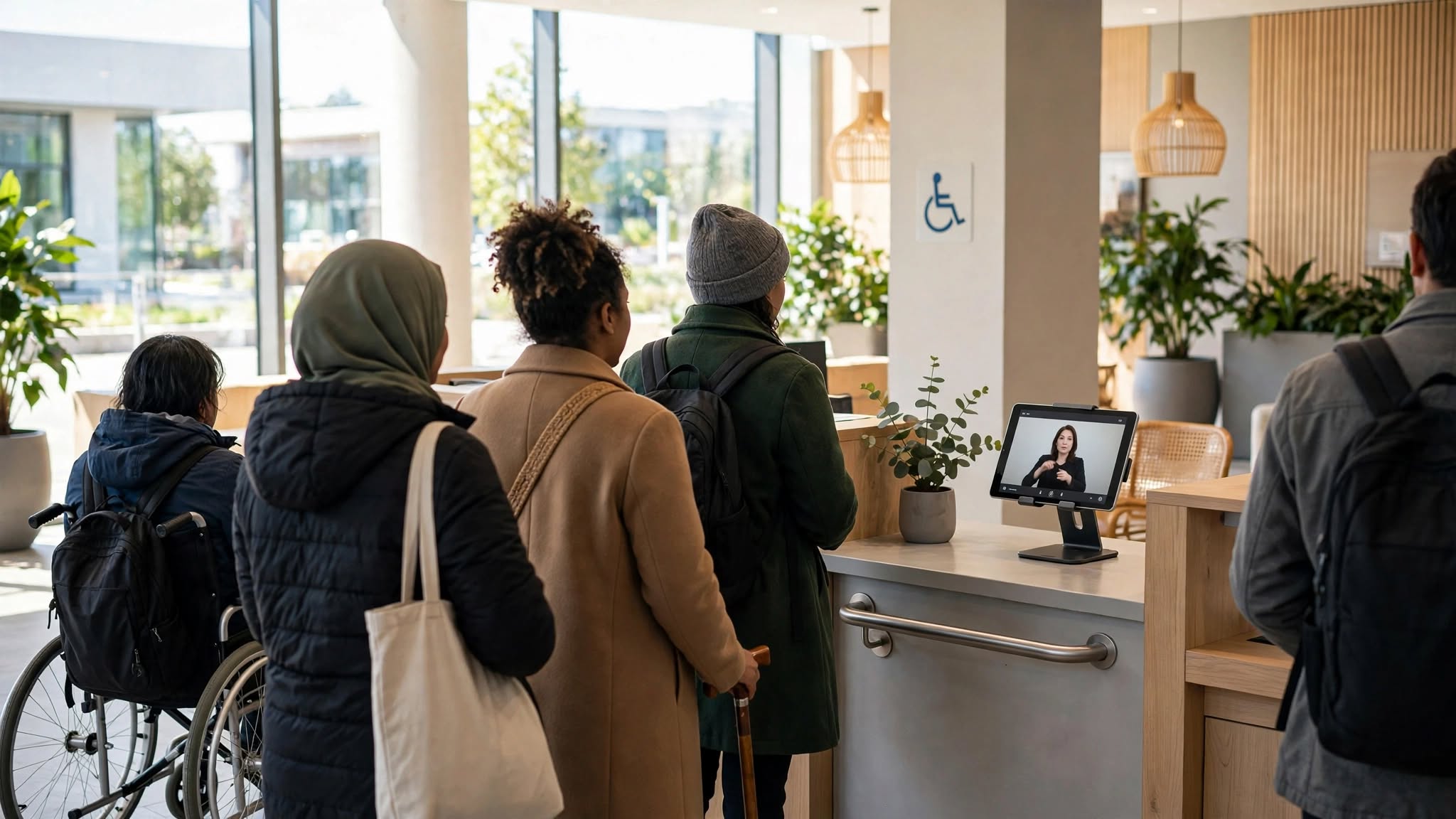
    • Higher volumes at service counters and intake points
    • Follow-ups that could not be completed before the break
    • New or returning staff settling into roles
    • Citizens and clients arriving with needs that were not booked in advance

    Scheduled interpreting continues to serve planned meetings and appointments well. It does not cover the sudden communication requirements that appear the moment operations resume at full pace. When no interpreter is immediately available, the default responses — waiting, rescheduling, written notes, or informal assistance — quickly reappear.

    Why On-Demand Readiness Matters Now

    On-demand video remote interpreting (VRI) is built for exactly these situations.

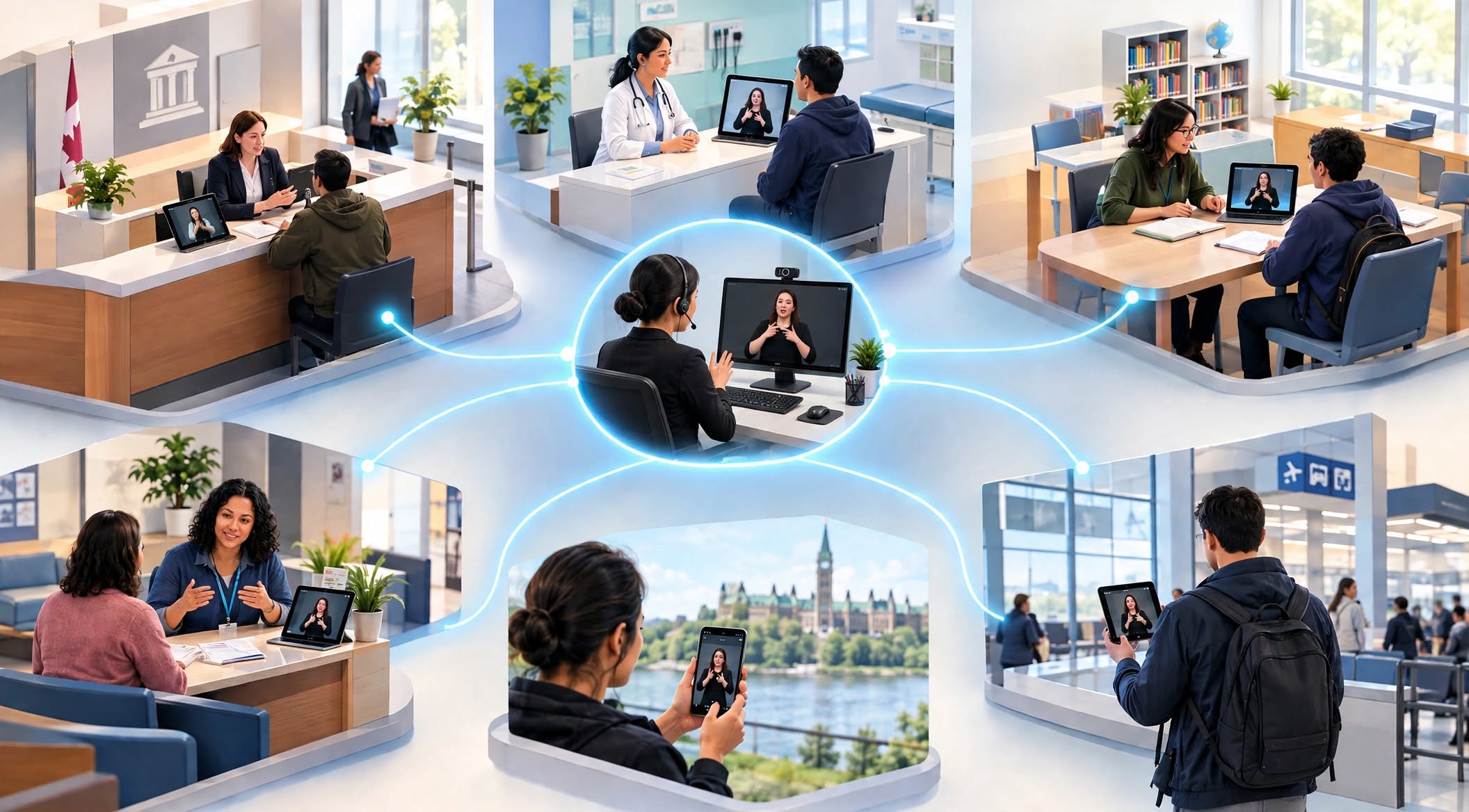
    With a platform such as Asign On, staff can connect to a qualified ASL or LSQ interpreter within seconds from a laptop, tablet, or mobile device. No advance booking is required. The interaction continues without delay, and the client receives clear, professional communication in real time.

    This capability is especially valuable in the return-to-work period because it:

    • Prevents small delays from turning into backlogs
    • Supports consistent service across locations and shifts that are still re-establishing routines
    • Reduces pressure on front-line staff who may be covering multiple responsibilities
    • Demonstrates that accessibility commitments remain operational, not seasonal

    A Simple Readiness Check

    Provincial, municipal, and Crown teams can assess their current position with a few direct questions:

    • If a Deaf client arrived at a counter today with no interpreter booked, how long would it take to provide one?
    • Do staff know exactly how to access on-demand support, or does the process still require searching and waiting?
    • Is on-demand capability available consistently across the sites and teams that need it most?

    If any of these answers involve uncertainty or delay, the gap is clear.

    Closing the Gap Before Volumes Peak

    The weeks after vacation are an ideal time to confirm that both scheduled and on-demand options are in place and understood. A hybrid approach — planned interpreting for known needs and on-demand VRI for immediate ones — gives teams the flexibility to handle whatever the fall season brings.

    Readiness is not only about having a policy. It is about having a working solution that staff can use the moment communication is required.

    Visit asign.ca to review how on-demand ASL and LSQ interpreting can support your provincial, municipal, or Crown operations, or reach out to discuss a practical next step for your team.

    Your accessibility contacts are back. Make sure the tools they need are ready too.

  • First Week Back for Government & Crown Teams: Why On-Demand VRI Matters More Than Ever

    First Week Back for Government & Crown Teams: Why On-Demand VRI Matters More Than Ever

    The first week back after summer vacation is rarely quiet for government and Crown corporation teams. Inboxes are full, service counters are busy again, and the volume of citizen and client interactions rises quickly.

    In the middle of that return-to-work rush, one recurring challenge reappears: a Deaf or hard-of-hearing person needs to communicate right now — and no interpreter has been booked.

    The Reality of the First Week Back

    Provincial, federal, municipal, and Crown teams often face a surge of unplanned or semi-planned interactions as operations resume:

    • Walk-in clients at service counters
    • Urgent intake or inquiry processes
    • Last-minute meetings or follow-ups that could not be fully arranged before the break
    • Staff covering for colleagues still transitioning back

    Scheduled interpreting remains essential for known appointments. It does not, however, cover the sudden communication needs that arise when volumes increase and calendars are still settling. When the only available option requires advance booking, waiting, rescheduling, or incomplete workarounds become the default response.

    Why On-Demand Access Becomes Critical Now

    On-demand video remote interpreting (VRI) is designed precisely for these moments.

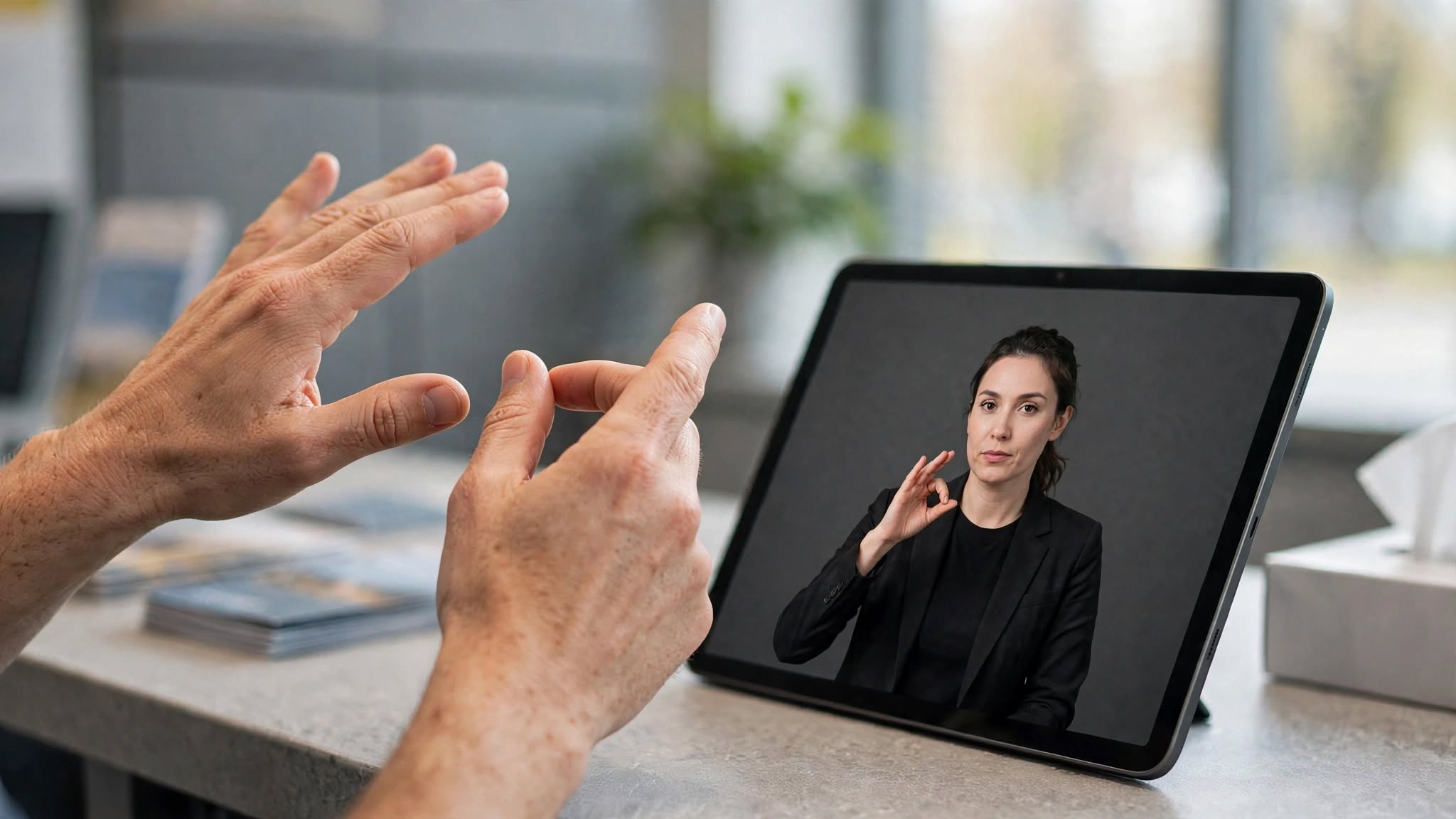
    With a platform such as Asign On, staff can connect to a qualified ASL or LSQ interpreter within seconds from a laptop, tablet, or mobile device. There is no need to wait for availability, rearrange the client’s day, or rely on written notes or informal assistance.

    The process is simple and immediate:

    1. Open the platform and request an interpreter
    2. Match with a professional ASL or LSQ interpreter
    3. Communicate in real time, face to face

    This capability keeps service moving during the high-pressure first weeks of the fall season and prevents small delays from becoming larger operational or accessibility issues.

    Practical Benefits for Government and Crown Operations

    Adding on-demand VRI alongside existing scheduled services delivers clear advantages during the return-to-work period and beyond:

    • Faster resolution at counters and service points when volumes are high
    • Reduced backlog created by postponed or incomplete interactions
    • Greater consistency across teams, locations, and shifts that are still re-establishing routines
    • Stronger alignment with accessibility commitments at a time when public expectations are also rising
    • A flexible tool that complements, rather than replaces, planned interpreting arrangements

    The result is a more resilient service model — one that can handle both the scheduled work that was planned before the break and the unplanned needs that inevitably appear once operations resume.

    A Timely Question for the First Week Back

    As teams settle into regular operations again, one practical question is worth asking:

    If a Deaf client needed an interpreter today with no advance notice, how quickly could your team provide one?

    If the current answer involves delay or workarounds, the first week back is an ideal time to close that gap.

    Real accessibility is tested most clearly when demand rises and routines are still forming. On-demand access ensures that communication does not become another item left waiting on the to-do list.

    Visit asign.ca to see how on-demand ASL and LSQ interpreting can support your government or Crown team this fall, or reach out to discuss a practical solution for your operations.

    Ready when your clients are — not only when the calendar allows.

  • GPT-6 Astra is an impressive leap—and it still leaves Deaf signers behind.

    GPT-6 Astra is an impressive leap—and it still leaves Deaf signers behind.

    OpenAI just released GPT-6 Astra, and after watching the announcement video, the jump is real. It’s being called a generational leap: stronger computer use, better multi-step professional workflows, higher accuracy with fewer tokens in many cases, and clear gains on hard benchmarks like ARC-AGI-3 and ExploitBench. The model feels more capable at sustained, end-to-end work than what came before it. That part is exciting.

    But one limitation stands out immediately. Astra remains built around spoken and written language. Input and output still center on text and speech-adjacent interfaces. For the many Deaf people who use sign languages as their primary language, that creates a real barrier. We already use AI every day for work, learning, communication, and creativity. Leaving sign language out of the core interaction model means we stay on the outside of the most advanced systems.

    The technology to close that gap already exists.

    Google recently launched SL2T (sign-language-to-text) with the Pixel 11. It translates American Sign Language into written English in real time by analyzing handshapes, facial expressions, and body movement. The feature works inside Gboard and Live Transcribe so signers can search, message, draft, or talk to Gemini without switching to typing. Training data covered more than 100,000 hours across dozens of sign languages, and the system was developed with Deaf community input. It’s not perfect and currently limited to Pixel 11 and ASL-to-English, but it proves the direction is viable.

    SignCaption.ai has been building in this space as well. It is available on iOS, Android, and the web, so it works across phones, computers, and other devices. The platform handles automatic captioning of signed video, conversion between signed and spoken content, and related accessibility tools. Because it is web-based and mobile-ready, it already reaches more people without requiring a specific new handset.

    These systems show that real-time, usable sign-language interfaces are no longer speculative. They are shipping.

    What OpenAI should do next

    GPT-6 Astra should incorporate native sign-language support. That means:

    • Accepting video or camera input of signing as a first-class modality alongside text and images.
    • Producing signed output (via avatar or video) when the user prefers it, not only text or speech.
    • Supporting major sign languages with the same seriousness given to spoken languages, starting with ASL and expanding.
    • Designing the experience so Deaf users do not have to translate themselves into the hearing world just to use the most capable model.

    Accessibility here is not a side feature or a checkbox. Sign languages are complete natural languages. Treating them as optional add-ons after the fact keeps an entire community of AI users one step behind. The people building and using these tools daily—Deaf professionals, students, creators, parents—deserve direct access, not workarounds.

    Astra is a genuine milestone in capability and alignment. Making it fully usable by signers would make it a milestone in inclusion as well. The pieces are already on the table. The only question is whether the next version of the most advanced models will finally treat signed languages as equal.

    Here’s the video for those who haven’t seen Astra in action yet.

  • September Reality Check: When a Deaf Client Walks Into a Provincial or Municipal Counter and There’s No Interpreter Booked

    September Reality Check: When a Deaf Client Walks Into a Provincial or Municipal Counter and There’s No Interpreter Booked

    It’s early September. Accessibility leads and front-line managers across provincial and municipal offices are returning from vacation. Inboxes are full, service counters are busy again, and the first unexpected situation of the fall is already walking through the door.

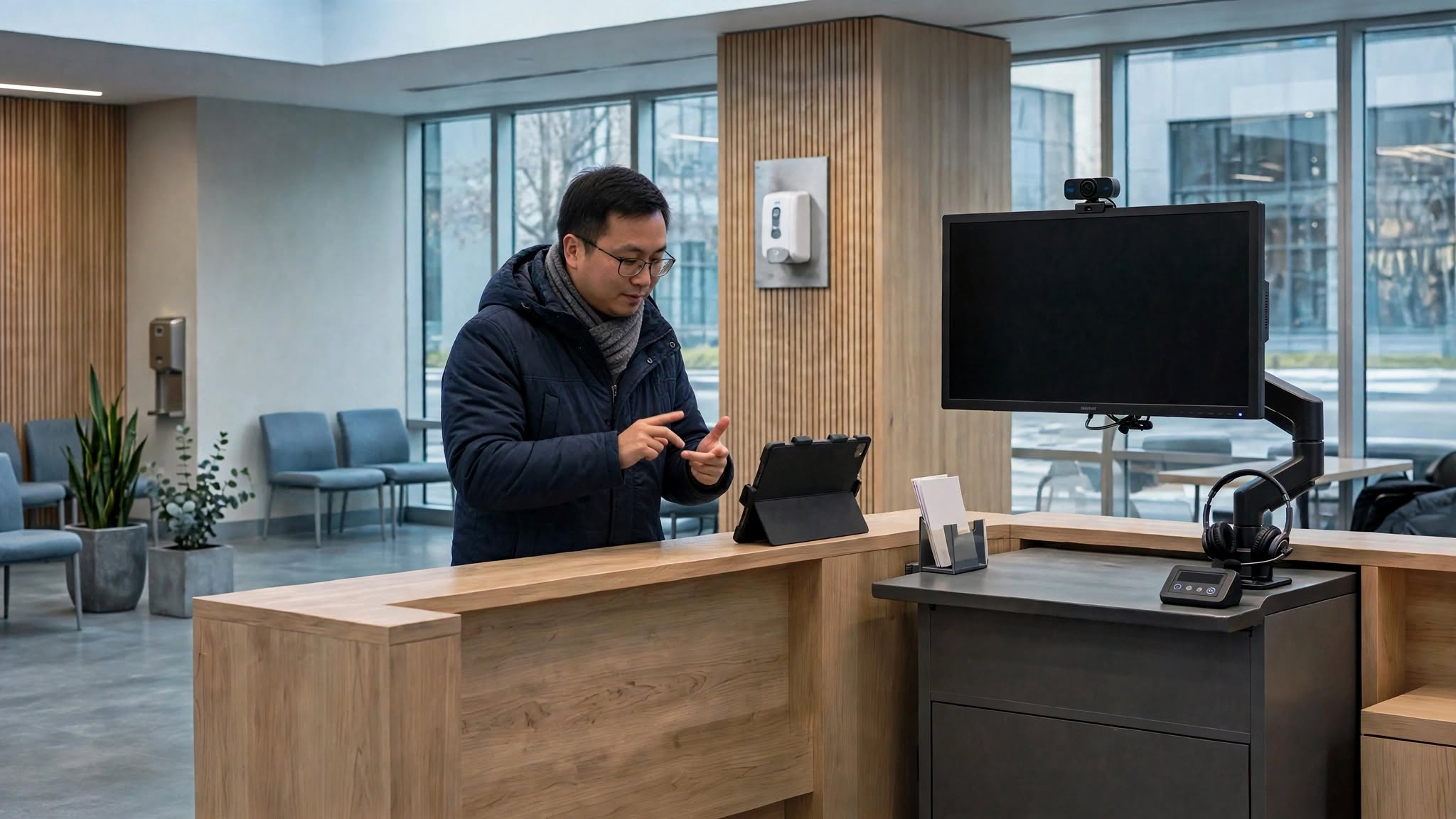
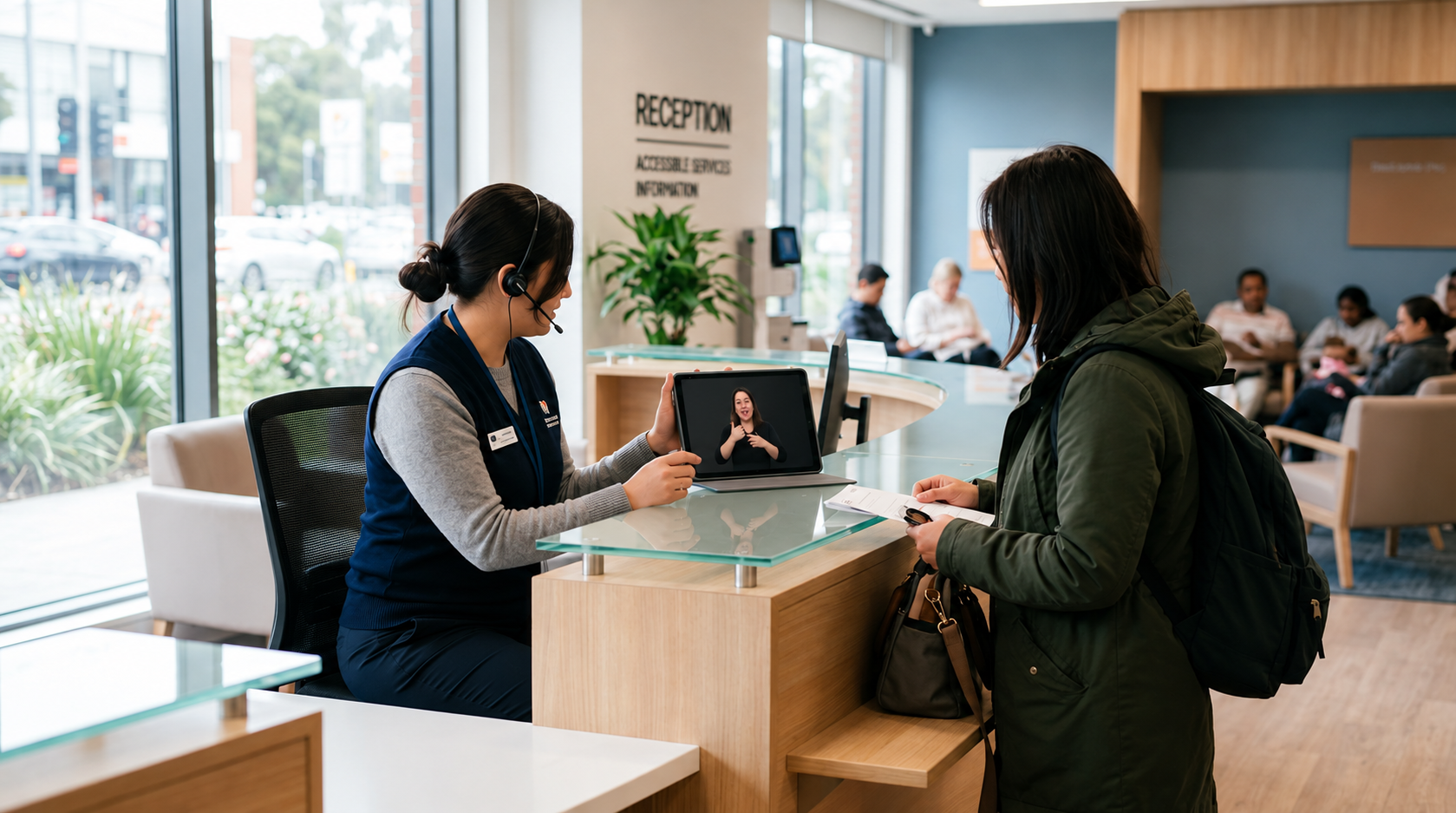
    A Deaf client arrives at a provincial service counter or municipal intake desk. They need help right now. There is no interpreter booked.

    What happens next?

    Too often, the client is asked to wait, come back another day, or try to communicate through written notes or family members. The interaction becomes delayed, incomplete, or abandoned. For the organization, it creates frustration, potential complaints, and a clear gap between accessibility commitments and real-time delivery.

    This scenario is common — and entirely preventable.

    The Reality of Unplanned Interactions

    Provincial and municipal services are full of moments that cannot be scheduled in advance:

    • A citizen drops in with an urgent question about benefits, permits, or housing
    • An intake process begins and communication barriers appear immediately
    • A last-minute appointment or counter interaction requires clear, accurate exchange

    Scheduled interpreting works well when timing is known. It does not solve the “right now” problem. When the only option is to wait for an available interpreter or reschedule, accessibility becomes conditional.

    What On-Demand Access Changes

    On-demand video remote interpreting (VRI) closes that gap.

    With a platform like Asign On, staff can connect to a qualified ASL or LSQ interpreter in seconds from a laptop, tablet, or mobile device. No advance booking. No waiting for availability. No barriers between the client and the information or service they need.

    The process is straightforward:

    1. Connect to the platform
    2. Match with a professional interpreter
    3. Communicate in real time, face to face

    The result is immediate, equitable access — exactly when it is needed.

    Why This Matters for Provincial and Municipal Teams

    Public-facing teams carry a dual responsibility: deliver services efficiently and uphold accessibility standards. When communication fails in the moment, both goals are compromised.

    On-demand VRI supports:

    • Faster resolution at service counters
    • Reduced need for clients to return or rely on informal workarounds
    • Consistent access across locations and shifts
    • Alignment with accessibility policies and human rights expectations

    It complements existing scheduled and in-person interpreting rather than replacing them. Together they form a practical hybrid approach that matches how provincial and municipal services actually operate.

    A Simple September Action

    As teams settle back into regular operations this month, it is worth asking one practical question:

    If a Deaf client walked into your counter or office today and needed an interpreter immediately, how long would it take to provide one?

    If the answer involves waiting, rescheduling, or written notes, on-demand access is the missing piece.

    Real accessibility is not only about having policies and booked appointments. It is about being ready for the moments that cannot be planned.

    Visit asign.ca to learn how on-demand ASL and LSQ interpreting can support your provincial or municipal service delivery — or reach out to discuss what a practical solution looks like for your team.

    No pressure. Just a clearer path to access that works in real time.

  • Real Accessibility Starts with the Right Communication Solutions

    Accessibility isn’t a checkbox. It’s about dignity — making sure no one gets left out because the information or conversation wasn’t available in their language.

    At Asign Inc., we help organizations across Canada communicate clearly and equitably with Deaf, hard-of-hearing, and DeafBlind communities through professional sign language interpreting and translation.

    Our Core Services

    We offer two primary services designed to fit how organizations actually work.

    Asign On is our video remote interpreting (VRI) platform built for on-demand access. When an ASL or LSQ interpreter is needed right now — not tomorrow or next week — Asign On connects you in seconds. No scheduling. No waiting. No barriers. Open the platform, connect, and start communicating. It’s the fastest way to support Deaf or hard-of-hearing customers, employees, or clients in the moment.

    We also provide scheduled interpreting, both in-person and remote, for situations where timing and location are known in advance. For written or pre-recorded content, our translation services convert English into ASL and French into LSQ with accuracy and cultural respect.

    Whether the need is immediate, planned, in-person, remote, or content-based, we design communication solutions that match real operational realities.

    Who We Work With

    Our clients span financial services, government, transportation, corporate environments, and many other sectors. Every industry has its own terminology, regulatory requirements, and communication challenges. Our interpreters develop subject-matter expertise specific to each client’s context so they arrive prepared and effective.

    If an organization needs to communicate with Deaf, hard-of-hearing, or DeafBlind Canadians, we build the solution around that specific environment.

    Who This Serves

    The work reaches Deaf, hard-of-hearing, and DeafBlind communities across Canada in both ASL and LSQ. Whether someone is accessing a service, participating in a meeting, or engaging with content, professional interpreting and translation make the experience equitable.

    Why Organizations Choose Asign Inc.

    We have provided interpreting and translation services since 1997 — nearly three decades of specialized expertise. We hold certifications with the International Organization for Standardization (ISO) and the Canadian Language Industry Association (CLIA). We are also certified as a Women’s Business Enterprise through WBE Canada and WeConnect International.

    Our interpreters operate at a high professional standard. Many hold security clearances ranging from Reliability to Top Secret and participate in ongoing professional development and mentorship.

    As a Canadian-owned and Canadian-led company, we understand the bilingual English-French landscape, provincial regulatory environments, and the practical needs of organizations operating nationwide. Beyond that, we remain deeply connected to the Deaf community — its language, culture, and diversity. That connection forms the foundation of our work.

    Trust and Fit

    When organizations invest in accessibility, they need partners who understand the stakes and deliver proven capability. Certifications, experience, and a consistent track record matter. The goal is never a generic package — it is a solution shaped around actual needs, goals, and audiences.

    Next Steps

    If your organization is exploring on-demand interpreting, scheduled support, or content translation, reach out. We can discuss your specific requirements and determine the best fit — with no pressure.

    Visit asign.ca to learn more or start the conversation.

    Accessible, on-demand sign language solutions that work in real time and respect cultural nuance are within reach.

  • Building Real Accessibility: On-Demand Interpreting, Trusted Expertise, and Solutions That Fit

    I’ve spent my career in the space where accessibility meets business. What drives me is simple: every time an organization becomes more accessible, real people get better access to healthcare, education, government services, and opportunities they didn’t have before. That’s not just a mission statement — it’s something I’ve seen happen.

    What We Do at Asign Inc.

    We provide two core services across Canada. Let me start with the one that changes how organizations think about accessibility.

    Asign On is our video remote interpreting platform. This is on-demand VRI. If a client needs an ASL or LSQ interpreter right now — not tomorrow, not next week — Asign On makes that happen in seconds. No scheduling. No waiting. No barriers. You open the platform, you connect, and you’re communicating. It’s the fastest way to connect with Deaf or hard-of-hearing customers, employees, or clients.

    We also offer scheduled interpreting — both in-person and remote — when you know exactly when and where you need support. And for organizations with written or pre-recorded content, we provide translation services from English into ASL and from French into LSQ.

    Whether it’s on-demand, scheduled, in-person, remote, or translation, we build a communication solution that fits how you actually work.

    Who We Work With

    Our clients come from across sectors — financial services, government, transportation, corporate, and beyond. If your organization needs to communicate with Deaf, hard-of-hearing, or DeafBlind Canadians, we’ll build a solution that fits your specific context.

    Every sector has its own terminology, its own regulatory environment, and its own communication challenges. Our interpreters become subject matter experts on your business — so when they show up, they already understand your world.

    Who This Reaches — and Why It Matters

    This work reaches the Deaf, hard-of-hearing, and DeafBlind communities across Canada, in both ASL and LSQ. Whether someone is accessing a service, sitting in a meeting, or watching your content, our interpreting and translation work is what makes that experience equitable.

    Accessibility isn’t a checkbox. It’s about dignity. It’s about making sure no one gets left out because the information wasn’t available in their language.

    Why Organizations Choose Asign Inc.

    We’ve been doing this since 1997 — nearly three decades of interpreting and translation expertise. We’re certified with the International Standards Organization (ISO) and the Canadian Language Industry Association (CLIA). We’re also certified as a Women’s Business Enterprise with WBE Canada and WeConnect International.

    Our interpreters are professionals at the highest level. They carry security clearances ranging from Reliability to Top Secret. They receive ongoing professional development and mentorship. When you work with us, you’re getting interpreters who are continuously learning and improving.

    We’re Canadian-owned and Canadian-led. We understand the Canadian landscape: the bilingual English-French context, the regulatory environment, and the unique needs of organizations operating across provinces. More than that — we’re community-driven. We’re deeply connected to the Deaf community. Its language. Its culture. Its diversity. That connection isn’t an afterthought — it’s the foundation of everything we do.

    Trust Matters

    When you’re hiring someone to make your organization accessible, you need to know they understand the stakes. You need the certifications, the experience, and the track record. Asign Inc. has them. The goal is always the same: the right solution for your actual needs — not a one-size-fits-all package.

    Where Do We Start?

    If you’re thinking about next steps, reach out. Let’s have a conversation about what your organization needs. No pressure. We’ll talk about your goals, your audience, and whether Asign Inc. is the right fit.

    Visit asign.ca to learn more, or get in touch directly.

    Need accessible, on-demand sign language solutions for your organization? Let’s talk.

  • Google DeepMind Launches SL2T: Sign Language AI Now on Pixel 11 Phones

    Google DeepMind Launches SL2T: Sign Language AI Now on Pixel 11 Phones

    Google DeepMind just made one of the most meaningful accessibility advances in AI this year. On August 12, 2026, the company unveiled SL2T (Sign-Language-to-Text), a breakthrough model that finally brings high-quality sign language recognition out of the research lab and onto everyday smartphones.

    Starting with the Pixel 11, SL2T powers a new “sign-to-text” feature in Gboard and Live Transcribe. For the first time, Deaf and hard-of-hearing users can sign in American Sign Language (ASL) directly to their phone camera instead of typing. The phone turns those signs into English text in real time.

    What SL2T Actually Lets You Do

    Anywhere you would normally type on your Pixel 11, you can now sign:

    • Search the web
    • Draft messages, emails, or documents
    • Ask Gemini questions or give it tasks
    • Respond in face-to-face conversations using Live Transcribe

    Early testers told Google that signing in ASL felt faster and more natural than typing English. That alone is a big deal for people who use sign language as their primary language.

    How the Technology Works

    SL2T is deliberately designed with privacy and real-world usability in mind.

    An on-device model called MediaPipe Holistic tracks roughly 130 key points on the signer’s face, hands, arms, and torso. Only those geometric coordinates are sent to the cloud for translation. The original video is discarded immediately and never leaves the device.

    Unlike earlier systems that relied on intermediate “glosses” (fixed labels for individual signs), SL2T translates the sequence of pose landmarks directly into fluent English text. This approach better captures the simultaneous hand, body, and facial movements that give sign languages their full grammatical structure.

    The model was trained on more than 100,000 hours of signing data across over 50 sign languages, with about a quarter of that data in ASL. Training across many languages helped it learn shared patterns and improved performance.

    Performance and Real-World Readiness

    On the challenging FLEURS-ASL benchmark, SL2T scored 70 BLEURT in a zero-shot setting — significantly higher than previously reported results. It also performs well on one-handed signing (important when you’re holding a phone) and reaches 64% exact-match accuracy on mobile fingerspelling data.

    Google specifically optimized for practical issues: lower latency, reduced hallucination when no one is signing, support for left-handed signers, and one-handed use.

    Built With the Deaf Community, Not Just for It

    The project began with Sam Sepah, a Deaf Googler, and Deaf perspectives shaped data collection, testing, and evaluation throughout development.

    Google also established the AI Sign Language Advisory Committee (AISLAC), which includes major organizations such as the National Association of the Deaf and the World Federation of the Deaf. Together they published a joint impact report that clearly defines what SL2T 1.0 is — and is not — intended for.

    The report positions the current version as an assistive tool for informal, low-stakes situations such as messaging, searching, note-taking, and casual conversation. It explicitly states that SL2T should not be used as a substitute for certified interpreters in medical, legal, educational, or official settings, and it does not fulfill legal requirements for reasonable accommodations.

    What’s Coming Next

    ASL-to-English on Pixel 11 is only the starting point. Google plans to expand support to additional sign languages, improve handling of non-manual markers and multi-signer scenarios, add features like punctuation and editing commands, and eventually explore sign language generation.

    The longer-term goal is full parity: making sign languages as accessible and useful across digital products as spoken and written languages already are.

    Why This Matters

    An estimated 70 million people worldwide are Deaf or hard of hearing, and there are more than 200 distinct sign languages. While speech recognition and translation have advanced rapidly, sign language AI has lagged far behind — partly because of technical complexity and partly because of longstanding misconceptions about how sign languages work.

    SL2T does not solve every challenge overnight. Accuracy still drops in poor lighting, extreme camera angles, or with rapid fingerspelling of rare words. But for the first time, a capable sign-language-to-text system is available as a free, everyday feature on a mainstream smartphone.

    That is genuine progress. And for many users, it means their primary language can finally work with the devices they already carry every day.

    SL2T is available now on Pixel 11 in Gboard and Live Transcribe, with broader device support planned. No extra cost.

  • On-Demand Sign Language Access

    How Asign On and Translation Services Remove Communication Barriers

    What happens when a Deaf customer needs help right now — and there’s no interpreter booked? Too often, they wait. They get turned away. They come back another day. That shouldn’t be the reality of accessibility in 2026.

    I’m going to show you how on-demand sign language access changes everything.

    What Is Asign On?

    Asign On is our video remote interpreting (VRI) platform. It’s built for the moments when you need an interpreter immediately.

    When a Deaf or hard-of-hearing person needs to communicate, they shouldn’t have to plan their day around it. Asign On puts an ASL or LSQ interpreter within reach — on demand. In seconds. Not tomorrow. Not next week. Right now.

    How Asign On Works

    It’s simple.

    You connect to the platform from a laptop, tablet, or mobile device. You’re matched with a qualified ASL or LSQ interpreter. And within seconds, you’re communicating — face to face, in real time, in the other person’s language.

    There’s no complex scheduling. No call center. No barriers. Just a clear connection between your organization and the Deaf, hard-of-hearing, or DeafBlind person you’re serving.

    Real Situations Where Asign On Fits

    Where does Asign On actually make a difference? Here are common examples:

    • A Deaf customer walks into your store or service counter with a question — Asign On connects you instantly.
    • A client needs to communicate with a receptionist or intake staff — Asign On is there.
    • An employee who is Deaf needs to jump on a last-minute call with their manager — Asign On bridges that gap.

    Any time someone needs to communicate and there’s no interpreter scheduled — that’s the moment Asign On is built for.

    Translation Services: Reaching People Beyond the Moment

    Asign On bridges the communication barrier in real time. But what about your content? That’s where our translation services come in.

    We translate written and pre-recorded material from English into ASL, and from French into LSQ. This includes training videos, corporate communications, government documents, scripts, and marketing content.

    The goal is simple: your message — delivered accurately and culturally, in the language your Deaf audience actually uses.

    Why Both Services Matter

    Asign On makes sure no one is ever stuck in the moment. Translation makes sure your prepared content reaches everyone, accurately and with respect for the culture and nuance of sign language.

    Together, they mean one thing: your organization can communicate with the Deaf community — whether it’s happening in the next five seconds, or in the content you release next month.

    Ready to Explore the Right Fit?

    If you’re wondering whether Asign On or our translation services fit your organization, let’s find out together.

    Reach out or visit asign.ca. We’ll talk about your needs, your audience, and the right solution — no pressure.

    Real-time access. Accurate translation. Accessibility that actually works.

    I’d love to help you get there.

  • Making Accessibility Real

    How Asign Inc. Connects Organizations with Deaf, Hard-of-Hearing, and DeafBlind Canadians

    Hi, I’m Jordan Sangalang. I’m a Business Development Specialist at Asign Inc.—a Canadian-owned, Canadian-led company that helps organizations make their services accessible through sign language. If you’re a decision-maker, an accessibility lead, or you’re just starting to explore what inclusion looks like for your organization, this is for you.

    I’m Deaf. I’m based in Winnipeg, Manitoba. And I’ve spent my career in the space where accessibility meets business. What drives me is simple: every time an organization becomes more accessible, real people get better access to healthcare, education, government services, and opportunities they didn’t have before. That’s not just a mission statement—it’s something I’ve seen happen.

    What Asign Inc. Actually Does

    So what does Asign Inc. do? We provide two core services across Canada. Let me start with the one that changes how organizations think about accessibility.

    Asign On is our video remote interpreting platform. This is on-demand VRI. If a client needs an ASL or LSQ interpreter right now—not tomorrow, not next week—Asign On makes that happen in seconds. No scheduling. No waiting. No barriers. You open the platform, you connect, and you’re communicating. It’s the fastest way to connect with Deaf or hard-of-hearing customers, employees, or clients.

    We also offer scheduled interpreting—both in-person and remote—when you know exactly when and where you need support. And for organizations with written or pre-recorded content, we provide translation services from English into ASL and from French into LSQ.

    Bottom line: whether it’s on-demand, scheduled, in-person, remote, or translation, we build a communication solution that fits how you actually work.

    Who We Work With

    Our clients come from across sectors—financial services, government, transportation, corporate, and beyond. If your organization needs to communicate with Deaf, hard-of-hearing, or DeafBlind Canadians, we’ll build a solution that fits your specific context.

    Every sector has its own terminology, its own regulatory environment, and its own communication challenges. Our interpreters become subject matter experts on your business—so when they show up, they already understand your world.

    Who This Actually Reaches

    Let’s talk about who this work reaches: the Deaf, hard-of-hearing, and DeafBlind communities across Canada, in both ASL and LSQ. Whether someone is accessing a service, sitting in a meeting, or watching your content, our interpreting and translation work is what makes that experience equitable.

    Accessibility isn’t a checkbox. It’s about dignity. It’s about making sure no one gets left out because the information wasn’t available in their language.

    Why Organizations Choose Asign Inc.

    So why do organizations choose Asign Inc.?

    First, we’ve been doing this since 1997. That’s nearly three decades of interpreting and translation expertise. We’re certified with the International Standards Organization (ISO) and the Canadian Language Industry Association (CLIA). We’re also certified as a Women’s Business Enterprise with WBE Canada and WeConnect International.

    Second, our interpreters are professionals at the highest level. They carry security clearances ranging from Reliability to Top Secret. They receive ongoing professional development and mentorship. When you work with us, you’re getting interpreters who are continuously learning and improving.

    And third, we’re Canadian-owned and Canadian-led. We understand the Canadian landscape: the bilingual English-French context, the regulatory environment, and the unique needs of organizations operating across provinces. But more than that—we’re community-driven. We’re deeply connected to the Deaf community. Its language. Its culture. Its diversity. That connection isn’t an afterthought—it’s the foundation of everything we do.

    Trust Matters

    This introduction exists so that when someone looks me up, they know exactly who they’re dealing with before they even reach out. Trust matters in this space. When you’re hiring someone to make your organization accessible, you need to know they understand the stakes.

    You need to know they have the certifications, the experience, and the track record. Asign Inc. does. And I’m here to make sure you get the right solution—not a one-size-fits-all package, but something built around your actual needs.

    Where Do We Start?

    If you’re thinking, “Okay, where do we start?”—here’s what I’d suggest: reach out. Let’s have a conversation about what your organization needs. No pressure. We’ll talk about your goals, your audience, and whether Asign Inc. is the right fit.

    You can contact me directly, or visit asign.ca to learn more.

    Need accessible, on-demand sign language solutions for your organization? Let’s talk.

    Thanks for reading. I’m Jordan Sangalang, Business Development Specialist at Asign Inc. Looking forward to connecting.

  • Day 20: Deaf Accessibility Wins – Closing Reflections

    To everyone who has been reading along this month: thank you. Your presence and engagement mean a lot.

    The milestones and wins we’ve highlighted are powerful. They strengthen Deaf accessibility and inclusion in real, tangible ways. And they remind us that progress is not a one-time achievement — it is an ongoing commitment.

    Resistance will always exist. Some will push against open captions, discourage or discriminate against ASL, withhold budgets for interpreters, or simply refuse to accommodate. These challenges are real. But so is our collective ability to meet them with creativity, persistence, and clarity of purpose.

    These wins are not just accomplishments — they are fuel. They remind us why we continue the work: to share stories, raise awareness, spark meaningful conversations, and create lasting impact.

    At its heart, this work is about finding better ways to connect. It is about staying adaptable, flexible, and open. It is about choosing to grow, to learn from mistakes, and to treat accessibility not as an obligation, but as the natural expression of respect and human dignity.

    Thank you for walking through this series with me. May these stories continue to inspire action, conversation, and progress.


    What about you? What’s one accessibility win or insight from this series that stood out to you? What will you carry forward in your own advocacy or daily life?

    Share your final thoughts in the comments — let’s keep the momentum going.

    Thank you for reading. See you in future posts!