Category: Video Remote Interpreting (VRI)

  • Accessibility and Reconciliation: Ensuring Communication Access Across Government, Provincial, Municipal & Crown Services

    Accessibility and Reconciliation: Ensuring Communication Access Across Government, Provincial, Municipal & Crown Services

    National Day for Truth and Reconciliation invites reflection on history, responsibility, and the ongoing work of building more respectful and inclusive public institutions.

    Part of that work includes ensuring that government, provincial, municipal, and Crown services are genuinely accessible to everyone who needs them — including Deaf, hard-of-hearing, and DeafBlind people who use ASL or LSQ.

    Communication access is not separate from inclusion. It is one of the practical ways public services demonstrate respect and remove barriers.

    Access That Depends on Timing Is Incomplete

    Many public-sector organizations have made clear commitments to accessibility. Policies exist. Scheduled interpreting is arranged for planned meetings and events. Training and awareness efforts continue.

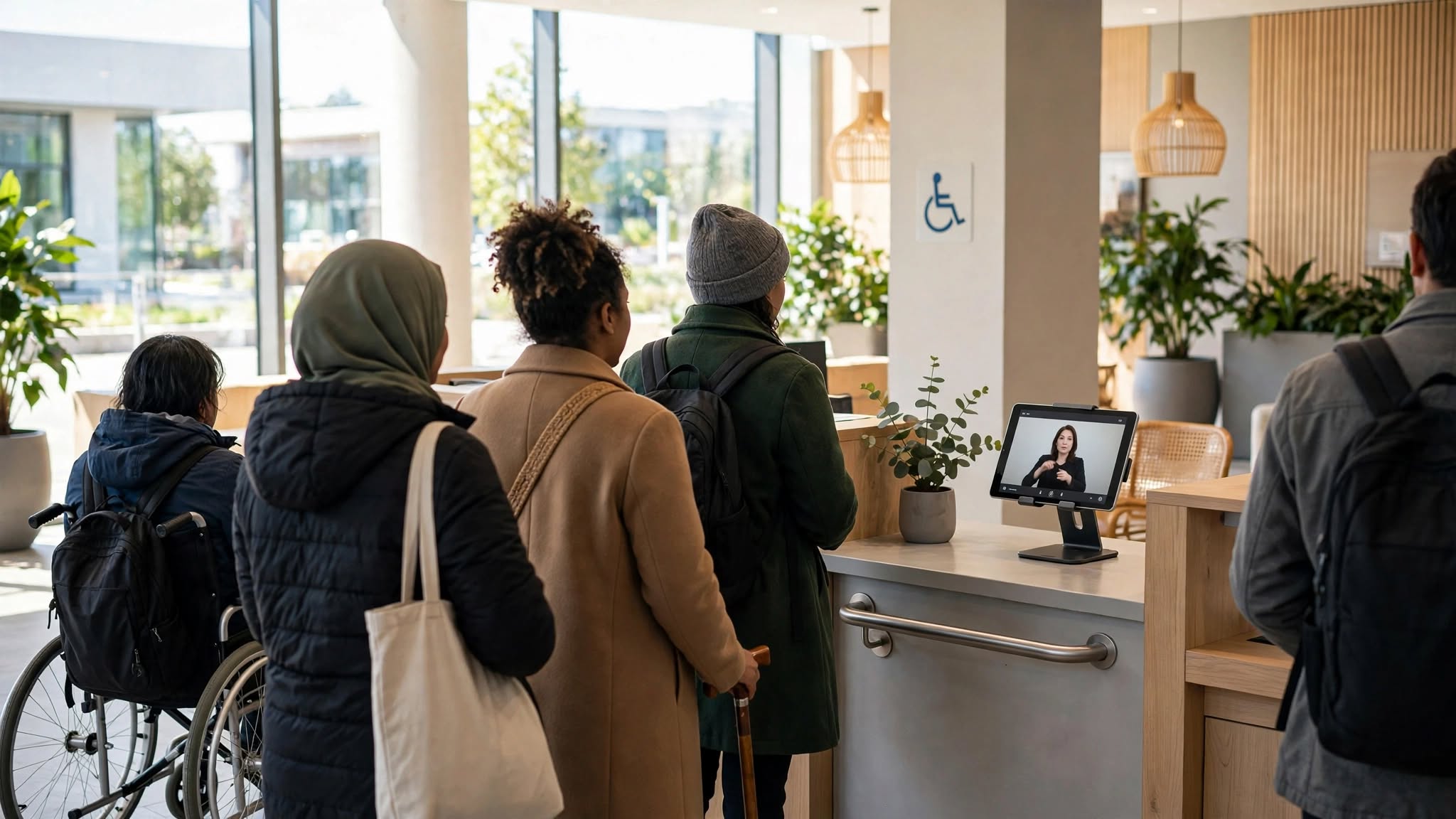
    Yet unplanned interactions remain common across service counters, intake processes, and client channels. When a Deaf or hard-of-hearing person needs to communicate and no interpreter is immediately available, access becomes conditional. Waiting, rescheduling, written notes, or informal assistance often follow.

    In those moments, the gap between commitment and delivery is visible. Equitable service requires more than good intentions — it requires the ability to respond in real time.

    Making Communication Access Immediate

    On-demand video remote interpreting (VRI) provides a practical way to close that gap.

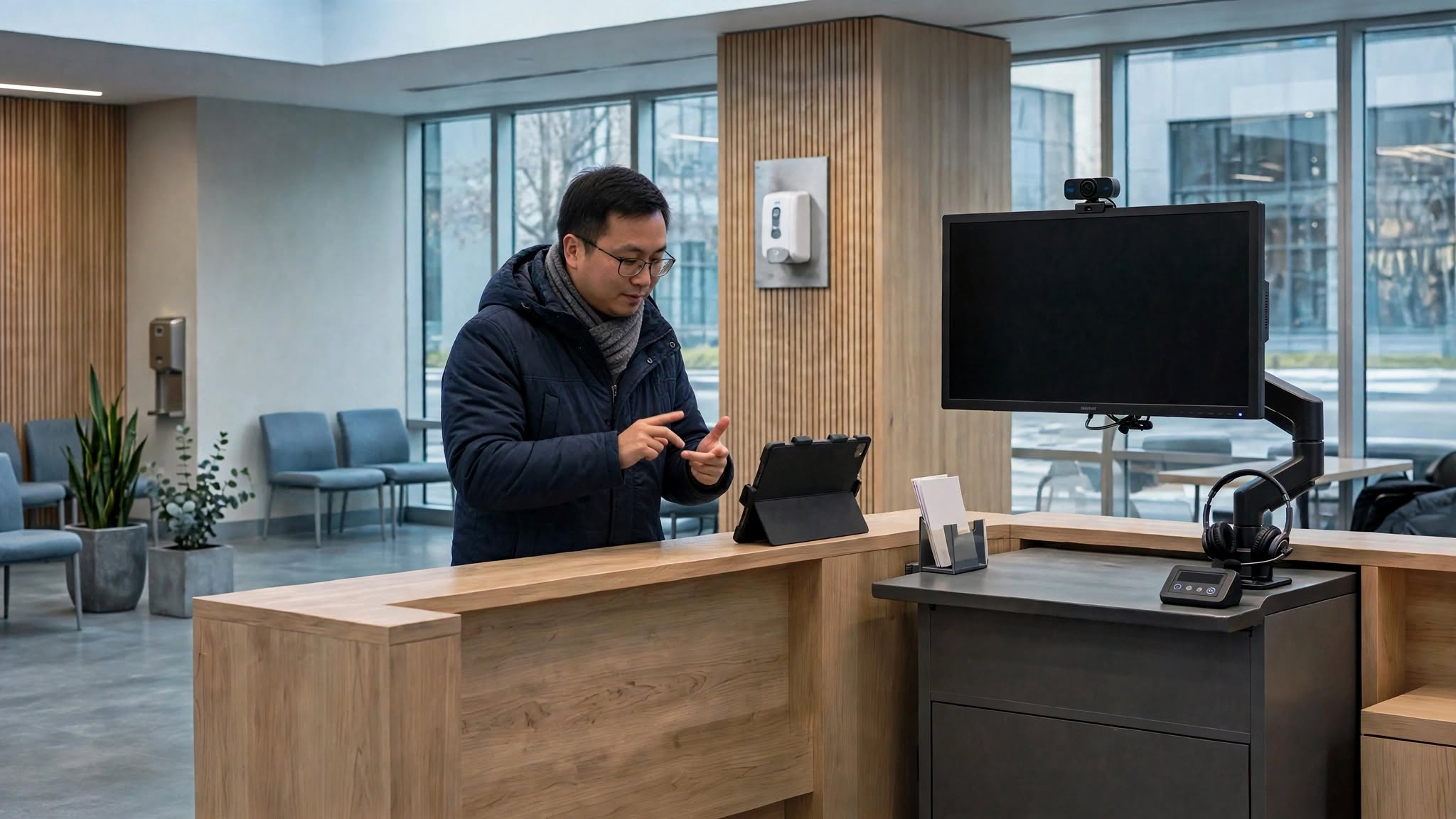
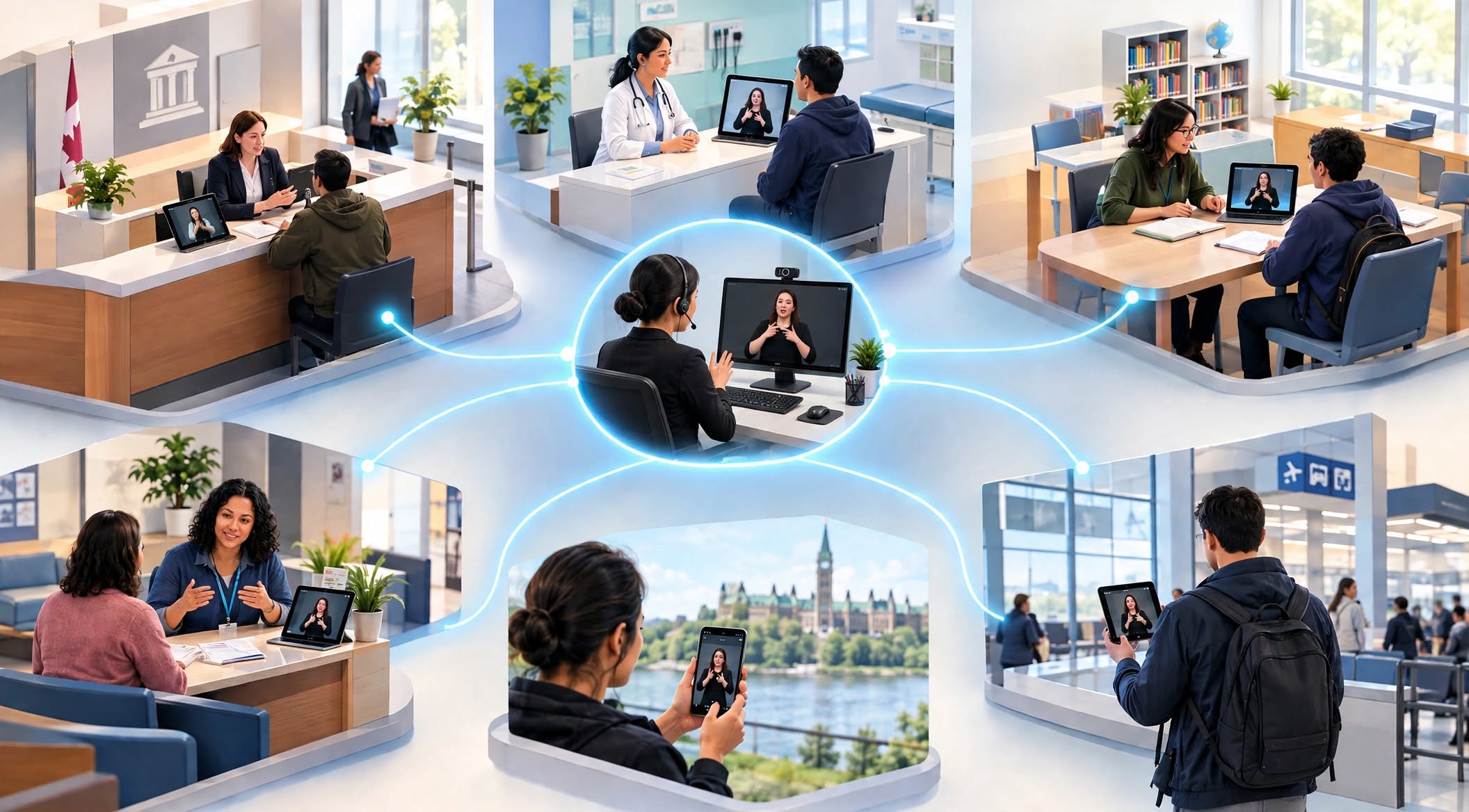
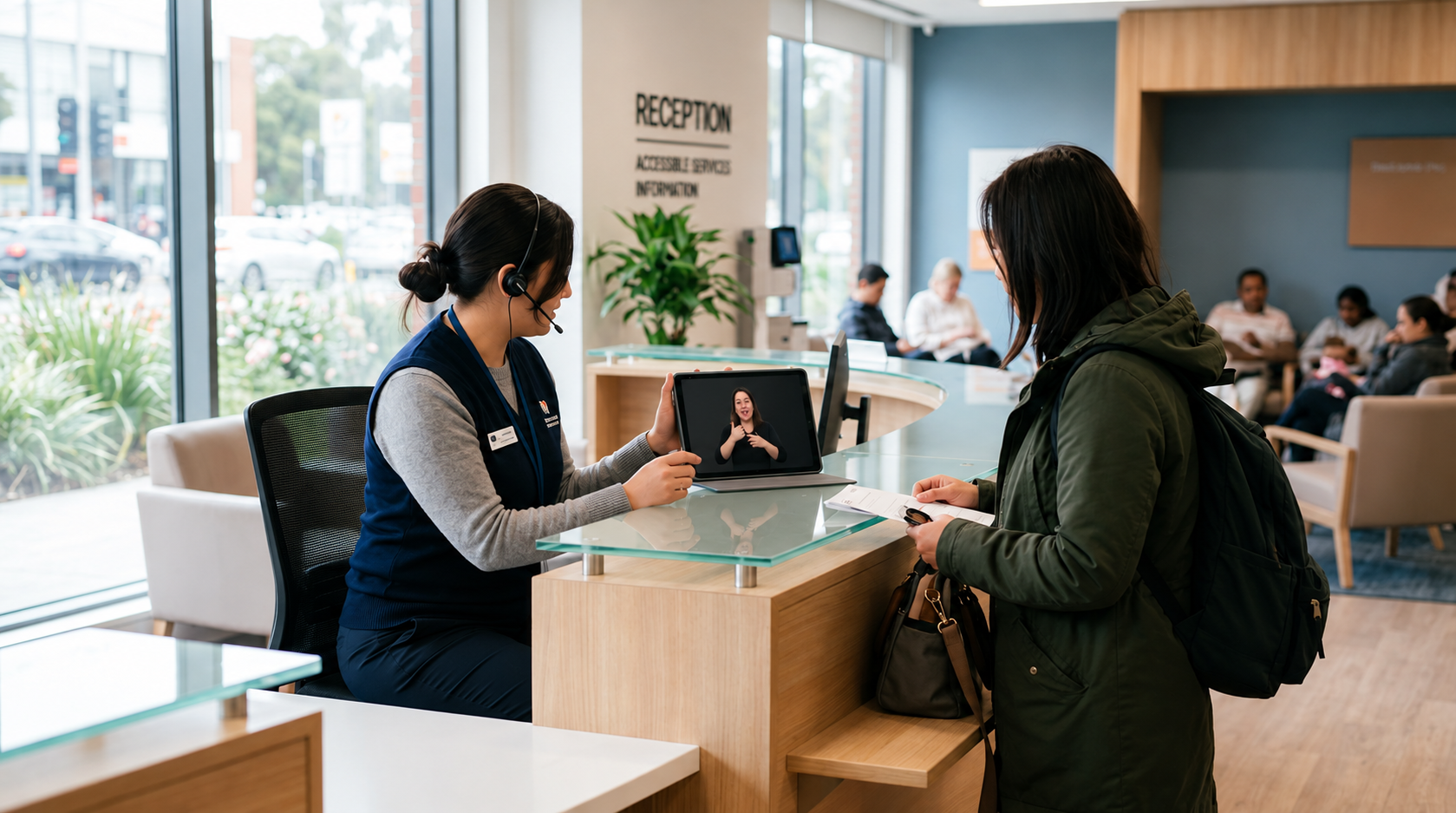
    With a platform such as Asign On, staff across federal, provincial, municipal, and Crown channels can connect to a qualified ASL or LSQ interpreter within seconds from a laptop, tablet, or mobile device. No advance booking is required. Communication begins face to face, in the language the person uses.

    This capability does not replace scheduled interpreting. It complements it. Planned support covers known needs. On-demand access covers the moments that cannot be anticipated — the moments that define much of day-to-day public service.

    Why This Matters for Inclusive Public Services

    When ASL and LSQ interpreting is available instantly:

    • Citizens and clients can access services without unnecessary delay or workarounds
    • Front-line staff have a clear, reliable option instead of improvising
    • Service delivery remains more consistent across locations and shifts
    • Accessibility commitments move from policy into everyday operations

    Removing communication barriers is one concrete expression of respect. It supports the broader goal of public services that work equitably for the people they are meant to serve.

    A Practical Step Forward

    Reflection is important. Action makes the difference.

    One clear question helps assess current readiness:

    If a Deaf or hard-of-hearing person needed an ASL or LSQ interpreter right now in one of your service channels, how quickly could your team provide one?

    If the answer involves waiting or incomplete alternatives, the opportunity to strengthen access is immediate.

    Ensuring communication access across government, provincial, municipal, and Crown services is practical, achievable, and aligned with the ongoing work of building more inclusive institutions.

    Visit asign.ca to explore how on-demand interpreting can support your service channels, or reach out to discuss a practical next step for your team.

    Respect is shown in many ways. One of them is making sure people can communicate when they need to.

  • Sign Language Rights Are Human Rights — How Federal, Provincial & Crown Services Can Deliver Them in Seconds

    Sign Language Rights Are Human Rights — How Federal, Provincial & Crown Services Can Deliver Them in Seconds

    Sign language rights are human rights.

    This principle sits at the centre of the International Day of Sign Languages and the broader recognition of Deaf people’s right to communicate in their own languages — ASL and LSQ in the Canadian context.

    Recognition is essential. Legislation, policies, and public statements matter.

    What matters most in daily public service is whether those rights can be exercised in real time.

    Rights Without Immediate Access Remain Incomplete

    Federal, provincial, and Crown services interact with citizens and clients every day through counters, intake processes, inquiries, and support channels. Many of these interactions cannot be scheduled in advance.

    When a Deaf or hard-of-hearing person needs to communicate and no interpreter is immediately available, the right to accessible communication becomes conditional on timing. Waiting, rescheduling, written notes, or informal assistance often follow.

    In those moments, the gap between principle and practice becomes visible.

    Delivering Rights in Seconds

    On-demand video remote interpreting (VRI) turns the principle into operational reality.

    With a platform such as Asign On, staff in federal, provincial, and Crown settings can connect to a qualified ASL or LSQ interpreter within seconds from a laptop, tablet, or mobile device. No advance booking is required. Communication begins face to face, in real time, in the language the person uses.

    This capability does not replace scheduled interpreting for planned meetings and appointments. It fills the critical space between planned support and immediate need — the space where many public service interactions actually occur.

    What Changes When Access Is Instant

    When on-demand ASL and LSQ interpreting is available across service channels:

    • Citizens and clients can exercise their communication rights without delay
    • Front-line staff have a clear, reliable option instead of improvising
    • Service delivery remains consistent across locations and shifts
    • Accessibility commitments move from policy documents into everyday operations

    The result is practical respect for human rights. Access is no longer deferred. It is delivered in the moment it is required.

    A Practical Test for Public-Sector Teams

    One question helps separate recognition from delivery:

    If a Deaf person needed an ASL or LSQ interpreter right now in one of your service channels, how quickly could your team provide one?

    If the answer involves waiting or workarounds, the right exists on paper but is not yet fully available in practice.

    Sign language rights are human rights. Delivering them in seconds is how federal, provincial, and Crown services turn that statement into lived experience.

    Visit asign.ca to explore how on-demand interpreting can support your service channels, or reach out to discuss a practical next step for your team.

    Rights recognized. Access delivered — in seconds.

  • International Day of Sign Languages 2026: What Real Access Looks Like for Provincial, Municipal & Crown Organizations

    International Day of Sign Languages 2026: What Real Access Looks Like for Provincial, Municipal & Crown Organizations

    Today, September 23, marks the International Day of Sign Languages. Across Canada and around the world, organizations are recognizing the importance of sign languages, Deaf culture, and the right to accessible communication.

    Recognition matters. Statements of support matter. Raising awareness matters.

    What matters most, however, is what happens the next time a Deaf or hard-of-hearing person walks into a provincial service counter, a municipal office, or a Crown corporation channel and needs to communicate right now.

    That is where real access is measured.

    Awareness Is Not the Same as Access

    Many provincial, municipal, and Crown organizations have made meaningful commitments to accessibility. Policies exist. Training has been delivered. Scheduled interpreting is arranged for planned meetings and events.

    Yet the unplanned moment remains a frequent point of failure. A walk-in client. An urgent inquiry. An intake process that cannot be deferred. In these situations, the absence of an immediately available interpreter turns good intentions into delay.

    Clients wait. Staff improvise with notes or gestures. Interactions are postponed or left incomplete. The gap between awareness and lived experience becomes clear.

    What Real Access Looks Like

    Real access means a Deaf or hard-of-hearing person can communicate in ASL or LSQ at the moment they need to — without waiting for an appointment, without relying on informal workarounds, and without being asked to return another day.

    On-demand video remote interpreting (VRI) makes this possible.

    With a platform such as Asign On, staff can connect to a qualified ASL or LSQ interpreter within seconds from a laptop, tablet, or mobile device. No advance booking is required. Communication begins in real time, face to face, in the language the person uses.

    This capability does not replace scheduled interpreting. It completes it. Planned support covers known needs. On-demand access covers the moments that cannot be anticipated — the moments that define much of day-to-day public service.

    Practical Impact for Public-Sector Teams

    When on-demand ASL and LSQ interpreting is available across provincial, municipal, and Crown channels:

    • Service counters can respond immediately instead of creating delays
    • Intake and inquiry processes continue without interruption
    • Staff across locations and shifts have a consistent, reliable option
    • Accessibility commitments move from policy into operational reality

    The result is practical inclusion. Clients experience dignity and efficiency. Organizations reduce friction, complaints, and rework.

    A Clear Question for Today

    On this International Day of Sign Languages, one practical question helps separate awareness from action:

    If a Deaf client needed an ASL or LSQ interpreter right now in one of your service channels, how quickly could your team provide one?

    If the answer involves waiting or workarounds, the path from recognition to real access is still incomplete.

    Making sign language available instantly is no longer a future goal. It is an operational choice available today.

    Visit asign.ca to explore how on-demand interpreting can support your provincial, municipal, or Crown operations, or reach out to discuss a practical next step for your team.

    Awareness opens the conversation. Instant access completes it.

  • From Awareness to Action: Making ASL and LSQ Available Instantly Across Government and Crown Corporation Channels

    From Awareness to Action: Making ASL and LSQ Available Instantly Across Government and Crown Corporation Channels

    Awareness of sign language rights and Deaf community needs continues to grow across Canada. International Day of Sign Languages and the International Week of Deaf People bring important visibility each September. Statements of support appear. Flags are raised. Conversations happen.

    The real test comes afterward: when a citizen or client needs to communicate through ASL or LSQ in a government or Crown corporation channel — and needs it right now.

    Awareness alone does not create access. Action does.

    The Gap Between Awareness and Access

    Many provincial, federal, municipal, and Crown organizations have made clear commitments to accessibility. Policies exist. Training occurs. Scheduled interpreting is arranged for planned meetings and events.

    Yet the unplanned moment remains a frequent point of failure. A walk-in at a service counter. An urgent inquiry. An intake process that cannot wait. In these situations, the absence of an immediately available interpreter turns awareness into delay.

    Clients wait. Staff improvise. Interactions are postponed or left incomplete. The gap between stated values and lived experience becomes visible.

    Turning Awareness into Instant Access

    On-demand video remote interpreting (VRI) closes that gap.

    With a platform such as Asign On, staff across government and Crown channels can connect to a qualified ASL or LSQ interpreter within seconds from a laptop, tablet, or mobile device. No advance booking is required. Communication begins in real time, face to face, in the language the client uses.

    This capability does not replace scheduled interpreting. It completes the picture. Planned support covers known needs. On-demand access covers the moments that cannot be anticipated — the moments that define much of day-to-day public service.

    What Instant Access Looks Like in Practice

    When on-demand ASL and LSQ interpreting is available across channels:

    • Service counters can respond immediately instead of asking clients to return
    • Intake and inquiry processes continue without interruption
    • Staff across locations and shifts have a consistent, reliable option
    • Accessibility commitments move from policy documents into operational reality

    The result is practical inclusion. Clients experience dignity and efficiency. Organizations reduce friction, complaints, and rework. Awareness becomes measurable action.

    A Clear Step for Government and Crown Teams

    Awareness campaigns create important visibility. The next step is ensuring that visibility translates into capability.

    One practical question helps assess readiness:

    If a Deaf or hard-of-hearing client needed an ASL or LSQ interpreter right now in one of your service channels, how quickly could your team provide one?

    If the answer involves waiting or workarounds, the path from awareness to action is still incomplete.

    Making ASL and LSQ available instantly is no longer a future aspiration. It is an operational choice available today.

    Visit asign.ca to explore how on-demand interpreting can support your government or Crown channels, or reach out to discuss a practical next step for your team.

    Awareness opens the door. Instant access walks through it.

  • Scheduled Interpreting vs. On-Demand VRI: Building a Practical Hybrid Model for Public-Sector Teams

    Scheduled Interpreting vs. On-Demand VRI: Building a Practical Hybrid Model for Public-Sector Teams

    Public-sector teams in provincial, municipal, and Crown organizations often face a practical question: should we rely on scheduled interpreting or invest in on-demand video remote interpreting (VRI)?

    The most effective answer is rarely either/or. It is both — used intentionally as a hybrid model that matches how public services actually operate.

    Understanding the Two Approaches

    Scheduled interpreting is planned in advance. It works well when the date, time, location, and duration are known. Common uses include formal meetings, hearings, training sessions, scheduled appointments, and events where an interpreter can be booked days or weeks ahead. It allows for preparation, subject-matter briefing, and in-person or remote delivery as needed.

    On-demand VRI is built for the opposite situation: the moment when communication is needed immediately and no interpreter has been arranged. A staff member connects through a platform, is matched with a qualified ASL or LSQ interpreter within seconds, and communication begins in real time. No booking lead time is required.

    Each approach solves a different problem. Treating them as interchangeable creates gaps. Treating them as complementary closes those gaps.

    Where Scheduled Interpreting Excels

    Scheduled services remain essential for:

    • Formal or high-stakes meetings that benefit from preparation
    • Longer sessions where continuity and context matter
    • Situations requiring in-person presence
    • Events or appointments with predictable timing

    In these cases, advance booking supports quality, consistency, and logistical planning.

    Where On-Demand VRI Fills the Gap

    Public-facing environments regularly produce unplanned needs:

    • A citizen walks into a service counter with an urgent question
    • An intake process begins and a communication barrier appears
    • A last-minute discussion or drop-in request requires immediate access
    • Staff on different shifts or in different locations encounter the same barrier

    Scheduled interpreting cannot respond in these moments. On-demand VRI can. Platforms such as Asign On allow teams to connect to professional ASL or LSQ interpreters in seconds from a laptop, tablet, or mobile device — keeping the interaction moving without rescheduling or relying on incomplete workarounds.

    Building a Practical Hybrid Model

    A hybrid approach assigns each method to the situations it handles best:

    • Use scheduled interpreting for known, planned interactions
    • Use on-demand VRI for unplanned, immediate needs
    • Maintain clear internal guidance so staff know which option to use and when
    • Ensure both services meet the same professional standards (qualified interpreters, appropriate security clearances where required, and cultural competence)

    This model reduces friction for clients, lowers pressure on front-line staff, and strengthens alignment with accessibility commitments across provincial, municipal, and Crown operations.

    Why the Hybrid Model Matters

    Many public-sector teams already have strong scheduled interpreting arrangements. The remaining gap is almost always the unplanned moment — the interaction that arrives without notice. Closing that gap does not require replacing existing services. It requires adding the capability to respond in real time.

    When both scheduled and on-demand options are available and clearly understood, accessibility becomes consistent rather than conditional on whether someone remembered to book ahead.

    Next Steps for Public-Sector Teams

    Review a recent period of service interactions and identify how often communication needs arose without advance notice. Those instances point directly to where on-demand VRI can add value.

    A practical hybrid model is not theoretical. It is a working combination of planned support and immediate access that reflects the reality of public service delivery.

    Visit asign.ca to learn how on-demand ASL and LSQ interpreting can complement your existing scheduled services, or reach out to discuss a hybrid approach tailored to your team’s operations.

    Clear roles for each method. Better access in every moment that matters.

  • The Cost of Waiting: Delayed Communication in Government and Crown Corporation Services

    The Cost of Waiting: Delayed Communication in Government and Crown Corporation Services

    In government and Crown corporation services, time is rarely neutral. When a Deaf or hard-of-hearing client needs to communicate and no interpreter is immediately available, the resulting delay carries costs that extend well beyond a few extra minutes.

    What Delayed Communication Actually Costs

    For the client, waiting often means:

    • Incomplete or postponed access to benefits, information, or decisions
    • Additional travel, time, and effort to return for a rescheduled interaction
    • Reliance on written notes, gestures, or informal interpreters that reduce accuracy and privacy
    • A clear signal that their communication needs are treated as secondary

    For the organization, the costs appear in different forms:

    • Longer handling times and repeated interactions for the same issue
    • Increased pressure on front-line staff who lack a reliable way to communicate
    • Higher risk of complaints, escalations, or formal accessibility concerns
    • Inconsistent service quality across locations, shifts, and departments
    • A growing gap between stated accessibility commitments and actual delivery

    In high-volume public service environments, these costs compound quickly. Every incomplete interaction generates follow-up work. Every workaround introduces risk. Every postponed conversation erodes trust.

    Why the Wait Persists

    Most government and Crown teams already use scheduled interpreting for planned appointments and meetings. That support is necessary and valuable.

    The problem arises in the unplanned moments that define much of day-to-day service delivery: walk-ins, urgent inquiries, intake processes, and last-minute needs that cannot be booked in advance. When the only available tool requires advance scheduling, waiting becomes the default response.

    Removing the Wait

    On-demand video remote interpreting (VRI) changes the equation.

    With a platform such as Asign On, staff can connect to a qualified ASL or LSQ interpreter within seconds from a laptop, tablet, or mobile device. The conversation continues without postponement. Accuracy and privacy are maintained. The client receives the service they came for in the moment they need it.

    This capability does not replace scheduled interpreting. It completes it. Planned support covers known needs. On-demand access covers the moments that cannot be anticipated.

    A Practical Measure for Government and Crown Teams

    One clear way to assess current readiness is to ask:

    When communication is needed right now in a government or Crown service setting, how long does the client actually wait?

    If the answer regularly involves delay, rescheduling, or incomplete exchange, the cost is already being paid — by the client and by the organization.

    Reducing that cost does not require redesigning entire service models. It requires adding the ability to respond in real time.

    Visit asign.ca to explore how on-demand ASL and LSQ interpreting can eliminate unnecessary waiting in your government or Crown operations, or reach out to discuss a practical approach for your team.

    Access delayed is access diminished. Access in the moment is what changes the experience.

  • No Interpreter Available Right Now? Here’s What Actually Happens — and How to Fix It

    No Interpreter Available Right Now? Here’s What Actually Happens — and How to Fix It

    A Deaf or hard-of-hearing person needs to communicate immediately. No interpreter has been booked.

    What happens next is rarely ideal — and it is more common than many organizations admit.

    What Actually Happens

    When no interpreter is available in the moment, the interaction typically follows one of these paths:

    • Staff attempt to communicate through written notes, gestures, or lip-reading
    • The person is asked to wait while someone tries to locate an interpreter
    • The conversation or appointment is postponed to another day
    • A family member or companion is asked to interpret informally
    • The interaction ends incompletely or is abandoned

    Each of these responses creates real consequences. The individual experiences delayed or reduced access to information and services. Staff face added pressure and uncertainty. The organization risks complaints, repeated work, and a visible gap between its accessibility commitments and day-to-day delivery.

    These situations arise regularly in service counters, intake processes, workplaces, and any environment where communication needs cannot always be predicted in advance — including provincial, municipal, and Crown settings.

    Why Scheduled Interpreting Alone Leaves a Gap

    Scheduled interpreting is valuable and necessary for planned meetings, appointments, and events. It allows time for preparation and ensures professional support when timing is known.

    It does not solve the unplanned moment. When the only option requires advance booking, accessibility becomes dependent on whether someone anticipated the need. In fast-moving or walk-in environments, that dependency regularly fails.

    The result is a structural shortfall: communication access exists on paper, yet barriers appear the instant an unexpected need arises.

    The Direct Fix: On-Demand Access

    On-demand video remote interpreting (VRI) closes this gap.

    With a platform such as Asign On, a staff member can connect to a qualified ASL or LSQ interpreter within seconds using a laptop, tablet, or mobile device. There is no scheduling delay and no requirement to reschedule the person in front of them.

    The steps are straightforward:

    1. Open the platform and request an interpreter
    2. Match with a professional ASL or LSQ interpreter
    3. Communicate in real time, face to face

    The conversation continues without interruption, accuracy is maintained, and the person’s right to accessible communication is respected in the moment it is needed.

    What Changes When On-Demand Is Available

    Organizations that add on-demand capability typically see:

    • Faster resolution of interactions that would otherwise stall
    • Reduced reliance on incomplete or informal communication methods
    • Greater consistency across locations, shifts, and teams
    • Stronger alignment with accessibility expectations and human rights standards
    • A practical complement to existing scheduled and in-person interpreting services

    On-demand VRI does not replace planned interpreting. It fills the critical space between planned support and real-time need.

    A Clear Question to Ask

    Every organization can test its current readiness with one practical question:

    If a Deaf person needed an interpreter right now, how long would it take to provide one?

    If the honest answer involves waiting, rescheduling, or workarounds, the gap is clear — and solvable.

    Real accessibility is measured in the moments that cannot be planned. Closing the “no interpreter available right now” gap is one of the most immediate and effective steps an organization can take.

    Visit asign.ca to see how on-demand ASL and LSQ interpreting works, or reach out to discuss a solution that fits your operational reality.

    Access when it is needed — not only when it was scheduled.

  • No Interpreter Available Right Now? What Happens in Provincial, Municipal & Crown Settings — and How to Fix It

    No Interpreter Available Right Now? What Happens in Provincial, Municipal & Crown Settings — and How to Fix It

    A Deaf or hard-of-hearing client arrives at a provincial service counter, a municipal intake desk, or a Crown corporation customer service point. They need clear communication immediately. No interpreter has been booked.

    What happens next is often predictable — and avoidable.

    What Typically Happens

    In many provincial, municipal, and Crown settings, the response follows a familiar pattern:

    • Staff attempt to communicate through written notes or gestures
    • The client is asked to wait while someone tries to locate an interpreter
    • An appointment is rescheduled for another day
    • A family member or companion is asked to interpret informally
    • The interaction is cut short or left incomplete

    Each of these workarounds creates friction. The client experiences delayed or incomplete access to services. Staff face added pressure and uncertainty. The organization risks complaints, rework, and a gap between its accessibility commitments and actual delivery.

    These situations are not rare. Public-facing roles in government and Crown corporations regularly involve unplanned interactions — drop-ins, urgent inquiries, intake processes, and last-minute needs that cannot be scheduled in advance.

    Why Scheduled Interpreting Alone Is Not Enough

    Scheduled interpreting remains essential for planned meetings, hearings, and appointments. It does not, however, solve the “right now” problem.

    When the only available option requires advance booking, accessibility becomes conditional on timing. In high-volume or walk-in environments, that condition is frequently unmet. The result is a structural gap: services are designed to be accessible in theory, yet communication barriers appear the moment an unexpected need arises.

    The Practical Fix: On-Demand Access

    On-demand video remote interpreting (VRI) directly addresses this gap.

    With a platform such as Asign On, staff can connect to a qualified ASL or LSQ interpreter within seconds using a laptop, tablet, or mobile device. There is no scheduling delay, no call centre queue, and no requirement to reschedule the client.

    The process is simple:

    1. Open the platform and request an interpreter
    2. Match with a professional ASL or LSQ interpreter
    3. Communicate in real time, face to face

    This approach keeps the interaction moving, preserves accuracy, and respects the client’s right to accessible communication in the moment it is needed.

    Benefits for Provincial, Municipal & Crown Teams

    On-demand VRI supports public-sector realities in several practical ways:

    • Faster resolution at counters and service points
    • Reduced reliance on informal or incomplete communication methods
    • Greater consistency across locations, shifts, and departments
    • Better alignment with accessibility standards and human rights expectations
    • A flexible complement to existing scheduled and in-person interpreting arrangements

    It does not replace planned interpreting services. It fills the critical space between them — the unplanned moments that define much of day-to-day public service delivery.

    Moving from Gap to Solution

    The question for any provincial, municipal, or Crown organization is straightforward:

    When a Deaf client needs an interpreter right now, how quickly can your team provide one?

    If the current answer involves waiting, rescheduling, or workarounds, on-demand access offers a clear and immediate improvement.

    Real accessibility is measured in the moments that cannot be planned. Closing the “no interpreter available right now” gap is one of the most practical steps public-sector teams can take.

    Visit asign.ca to explore how on-demand ASL and LSQ interpreting can support your service delivery, or reach out to discuss a solution tailored to your operational needs.

    No pressure — just a practical way to make access available when it matters most.

  • Your Accessibility Contacts Are Back — Is Your On-Demand Interpreting Ready for Provincial, Municipal & Crown Services?

    Your Accessibility Contacts Are Back — Is Your On-Demand Interpreting Ready for Provincial, Municipal & Crown Services?

    Accessibility leads and service managers across provincial, municipal, and Crown organizations are returning from vacation. Inboxes are filling, counters are reopening to regular volumes, and the first unplanned interactions of the fall are already underway.

    This is the moment when a practical question becomes urgent:

    Is your on-demand interpreting capability ready — or are you still relying only on scheduled support?

    The Return-to-Work Reality

    The first weeks back bring a predictable mix of activity:

    • Higher volumes at service counters and intake points
    • Follow-ups that could not be completed before the break
    • New or returning staff settling into roles
    • Citizens and clients arriving with needs that were not booked in advance

    Scheduled interpreting continues to serve planned meetings and appointments well. It does not cover the sudden communication requirements that appear the moment operations resume at full pace. When no interpreter is immediately available, the default responses — waiting, rescheduling, written notes, or informal assistance — quickly reappear.

    Why On-Demand Readiness Matters Now

    On-demand video remote interpreting (VRI) is built for exactly these situations.

    With a platform such as Asign On, staff can connect to a qualified ASL or LSQ interpreter within seconds from a laptop, tablet, or mobile device. No advance booking is required. The interaction continues without delay, and the client receives clear, professional communication in real time.

    This capability is especially valuable in the return-to-work period because it:

    • Prevents small delays from turning into backlogs
    • Supports consistent service across locations and shifts that are still re-establishing routines
    • Reduces pressure on front-line staff who may be covering multiple responsibilities
    • Demonstrates that accessibility commitments remain operational, not seasonal

    A Simple Readiness Check

    Provincial, municipal, and Crown teams can assess their current position with a few direct questions:

    • If a Deaf client arrived at a counter today with no interpreter booked, how long would it take to provide one?
    • Do staff know exactly how to access on-demand support, or does the process still require searching and waiting?
    • Is on-demand capability available consistently across the sites and teams that need it most?

    If any of these answers involve uncertainty or delay, the gap is clear.

    Closing the Gap Before Volumes Peak

    The weeks after vacation are an ideal time to confirm that both scheduled and on-demand options are in place and understood. A hybrid approach — planned interpreting for known needs and on-demand VRI for immediate ones — gives teams the flexibility to handle whatever the fall season brings.

    Readiness is not only about having a policy. It is about having a working solution that staff can use the moment communication is required.

    Visit asign.ca to review how on-demand ASL and LSQ interpreting can support your provincial, municipal, or Crown operations, or reach out to discuss a practical next step for your team.

    Your accessibility contacts are back. Make sure the tools they need are ready too.

  • First Week Back for Government & Crown Teams: Why On-Demand VRI Matters More Than Ever

    First Week Back for Government & Crown Teams: Why On-Demand VRI Matters More Than Ever

    The first week back after summer vacation is rarely quiet for government and Crown corporation teams. Inboxes are full, service counters are busy again, and the volume of citizen and client interactions rises quickly.

    In the middle of that return-to-work rush, one recurring challenge reappears: a Deaf or hard-of-hearing person needs to communicate right now — and no interpreter has been booked.

    The Reality of the First Week Back

    Provincial, federal, municipal, and Crown teams often face a surge of unplanned or semi-planned interactions as operations resume:

    • Walk-in clients at service counters
    • Urgent intake or inquiry processes
    • Last-minute meetings or follow-ups that could not be fully arranged before the break
    • Staff covering for colleagues still transitioning back

    Scheduled interpreting remains essential for known appointments. It does not, however, cover the sudden communication needs that arise when volumes increase and calendars are still settling. When the only available option requires advance booking, waiting, rescheduling, or incomplete workarounds become the default response.

    Why On-Demand Access Becomes Critical Now

    On-demand video remote interpreting (VRI) is designed precisely for these moments.

    With a platform such as Asign On, staff can connect to a qualified ASL or LSQ interpreter within seconds from a laptop, tablet, or mobile device. There is no need to wait for availability, rearrange the client’s day, or rely on written notes or informal assistance.

    The process is simple and immediate:

    1. Open the platform and request an interpreter
    2. Match with a professional ASL or LSQ interpreter
    3. Communicate in real time, face to face

    This capability keeps service moving during the high-pressure first weeks of the fall season and prevents small delays from becoming larger operational or accessibility issues.

    Practical Benefits for Government and Crown Operations

    Adding on-demand VRI alongside existing scheduled services delivers clear advantages during the return-to-work period and beyond:

    • Faster resolution at counters and service points when volumes are high
    • Reduced backlog created by postponed or incomplete interactions
    • Greater consistency across teams, locations, and shifts that are still re-establishing routines
    • Stronger alignment with accessibility commitments at a time when public expectations are also rising
    • A flexible tool that complements, rather than replaces, planned interpreting arrangements

    The result is a more resilient service model — one that can handle both the scheduled work that was planned before the break and the unplanned needs that inevitably appear once operations resume.

    A Timely Question for the First Week Back

    As teams settle into regular operations again, one practical question is worth asking:

    If a Deaf client needed an interpreter today with no advance notice, how quickly could your team provide one?

    If the current answer involves delay or workarounds, the first week back is an ideal time to close that gap.

    Real accessibility is tested most clearly when demand rises and routines are still forming. On-demand access ensures that communication does not become another item left waiting on the to-do list.

    Visit asign.ca to see how on-demand ASL and LSQ interpreting can support your government or Crown team this fall, or reach out to discuss a practical solution for your operations.

    Ready when your clients are — not only when the calendar allows.