Posts

  • Day 19: Deaf Accessibility Wins – The Power of Behind-the-Scenes Conversations

    The captions, sign language, and accessible services we see publicly are often the result of work that happens out of sight. These wins usually start with meaningful conversations with the right people — not social media influencers, but decision-makers, policymakers, business leaders, and those in public service.

    When people don’t know what they don’t know, we take matters into our own hands (pun intended). We advocate and educate them about Deaf access — captions, sign language interpretation, and more. Being assertive is key.

    You don’t have to change the entire world. Impactful conversations with one person at a time can lead to hiring, partnerships, policy shifts, or business pivots. Real change happens when we connect with accessibility champions and nurture those relationships.

    In my experience, the conversations themselves can feel easy. Taking action takes time because decision-making is influenced by both internal motivation and external pressures. Still, the strongest results come when access and inclusion are pursued not just as obligations, but because they are the humane and right thing to do.

    Investing in relationships raises the value of accessibility. When we inspire rather than only demand, we build lasting progress.


    What about you? Have you ever had a conversation with a decision-maker that led to better access? Or what’s one relationship that helped create positive change in your community?

    Share your experiences in the comments — these stories matter!

    See you tomorrow for Day 20!

  • Day 18: Deaf Accessibility Wins – ASL Avatars & AI Translation Tools on the Web

    In the last post, I talked about the rise of ASL in performance, storytelling, and mainstream media. Now let’s shift to the accessibility lens — how ASL is appearing on websites and digital platforms.

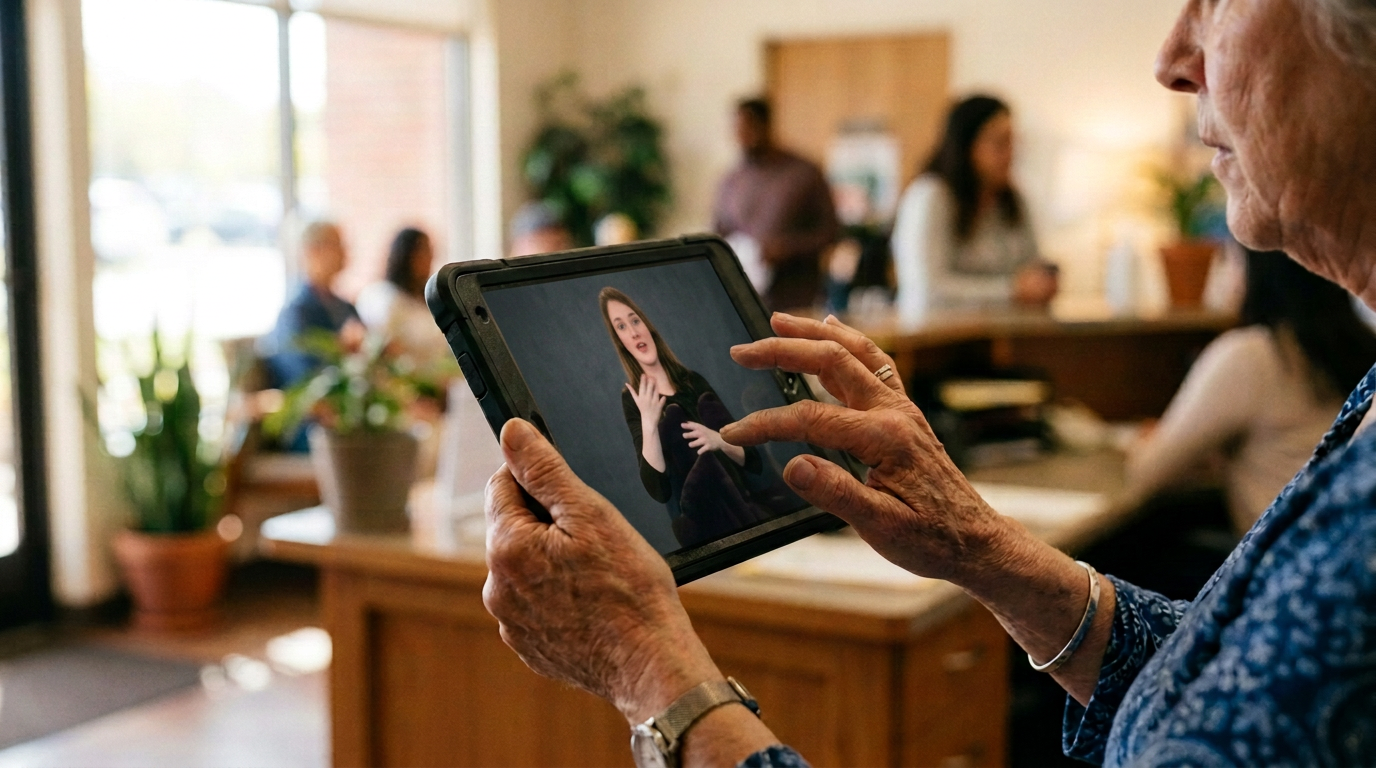
    There are growing AI tools that translate text into ASL using avatars or real human interpreters. A few notable ones include:

    • Signapse.ai
    • Signly.co
    • GoPivot.me

    As far as I know, these are not Canadian-based or Canadian-led, and they don’t always use Canadian interpreters. However, they show what’s possible and could be adapted or built upon to enhance access here in Canada without reinventing the wheel.

    Ideally, we’d see ASL/LSQ translations become the standard on websites — seamlessly integrated so users don’t have to click away to a separate page or switch back and forth. Right now, this is still not widespread or the norm.

    With AI tools and technology readily available, making this the standard would be a significant accessibility win for Deaf Canadians.

    Where would you like to see ASL/LSQ translations implemented? Whether it’s government websites, e-commerce, banking, healthcare portals, education platforms, or something else — I’d love to hear your ideas. These conversations can lead to real partnerships and collaborations to push for better web access together.


    What about you? Have you come across websites or apps that do a great job integrating ASL or sign language translation? Or what would seamless web accessibility look like for you?

    Share your examples, ideas, or wishes in the comments!

    See you tomorrow for Day 19!

  • Day 17: Deaf Accessibility Wins – The Rise of ASL on Screen

    For the longest time, seeing ASL on screens was rare. Early exposure often came from educational videos and teaching materials featuring legends like Ben Bahan, Peter Cook, Manny Hernandez, Bonnie Kraft, Sam Supalla, and many others (feel free to add your favourites in the comments!).

    Then came ASL music interpreters in churches and on YouTube. Deaf performers started signing their own songs — Rosa Lee Timm, Russell Harvard, and others. Organizations like DPAN (Deaf Performing Arts Network) also played a big role.

    Mainstream breakthroughs followed: Children of a Lesser God, Deaf actors appearing in sitcoms, and full-length movies in ASL from ASL Films.

    Today, social media has exploded with ASL content, making it more visible than ever.

    This increased exposure is a major win. When more people see ASL on screens — in theatres, TV, and online — it raises awareness and changes how they think about, approach, and interact with Deaf people. Attitudes shift toward openness and understanding.

    Sign language has existed for centuries and has faced suppression, but as George Veditz famously said, “As long as we have Deaf people, there will always be signs.”

    The growing visibility of ASL is proof of that resilience — and a powerful accessibility win for the community.


    What about you? What’s one movie, show, video, or performance that featured ASL and left an impact on you? Or how has seeing more ASL in media changed your perspective?

    Share your favourites or thoughts in the comments!

    See you tomorrow for Day 18!

  • Day 16: Deaf Accessibility Wins – Advocating for Seamless Remote Interpreting

    I’ve been having important conversations with people advocating at the policymaking level. These discussions often happen behind the scenes, but they shape the standards of accessibility across provinces, territories, and the country.

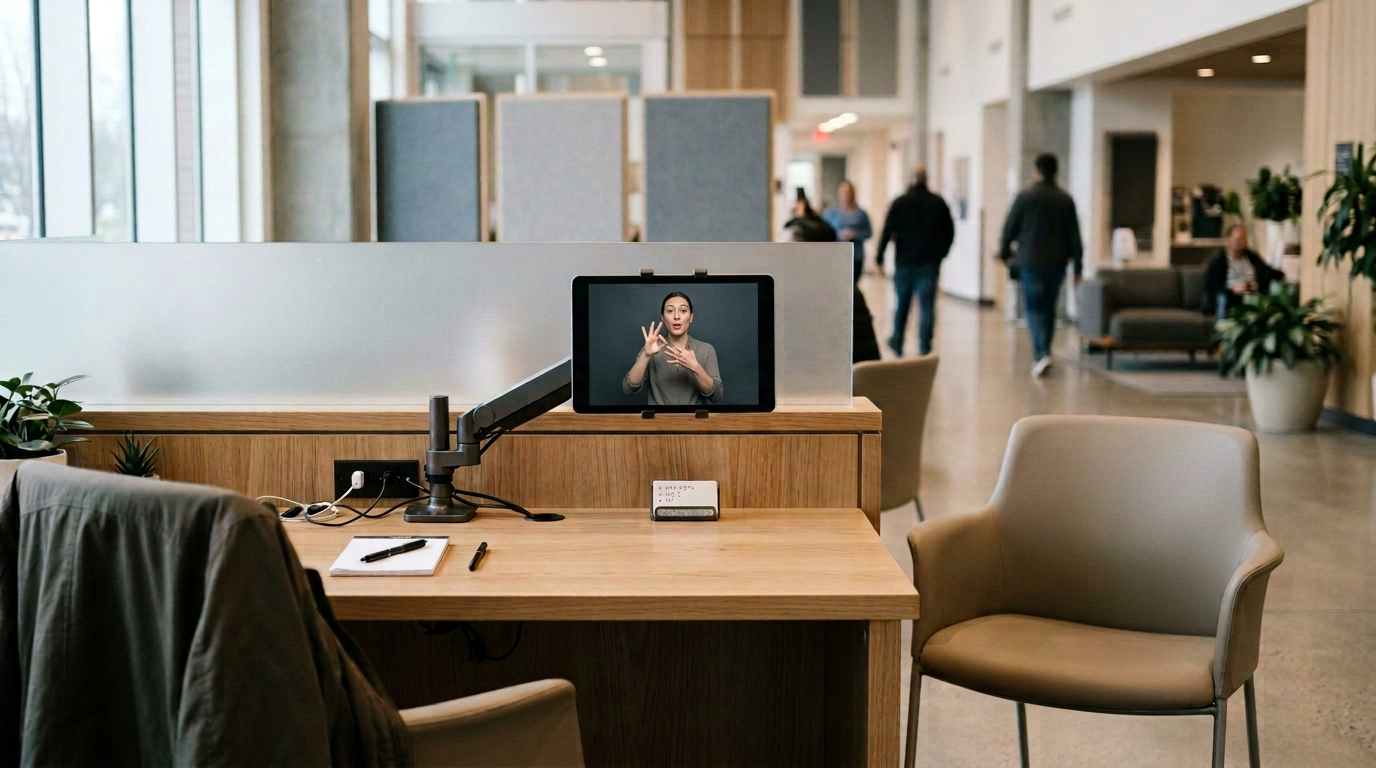
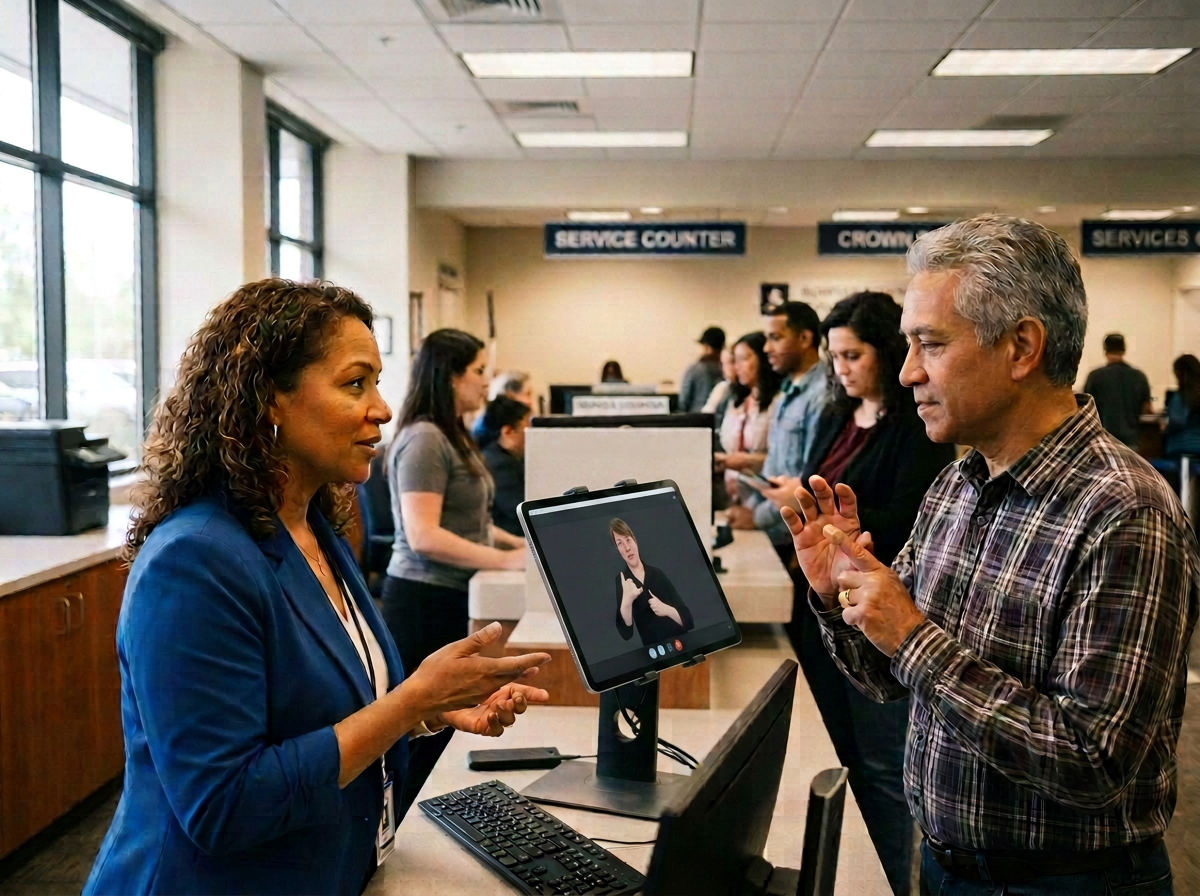
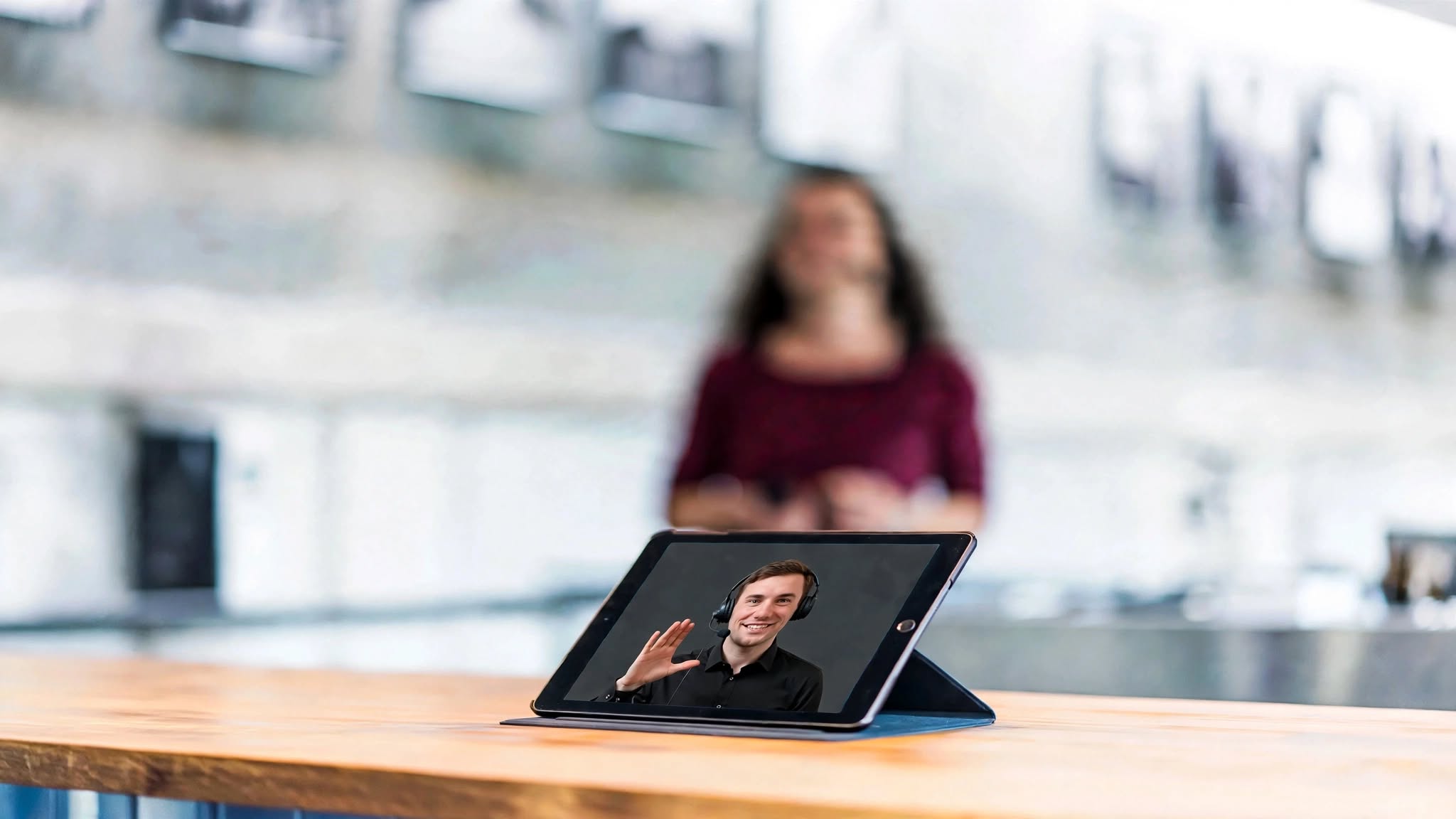
    One key area is interpreting services — whether in-person, VRS (Video Relay Service over the phone), or VRI (Video Remote Interpreting). For remote services especially, we need policies that ensure two-way seamless communication.

    Imagine a hearing person on a phone call dealing with high latency, lag, and choppy audio. It would be frustrating for everyone. The same applies to video calls for Deaf people connecting through interpreters. We need clear, low-latency, high-quality video so both the Deaf caller and the interpreter can communicate effectively without frustration.

    This kind of advocacy happens because we connect with the right people — those who have technical knowledge and lived Deaf experience. By bringing these issues to decision-makers, we can push for better policies and technology in Canada, catching up to (or surpassing) what’s already working well in other countries.

    These behind-the-scenes efforts are real accessibility wins that improve daily life for many.


    What about you? Have you experienced lag or poor quality in video calls or interpreting services? What would “seamless” communication look like for you?

    Share your thoughts in the comments!

    See you tomorrow for Day 17!

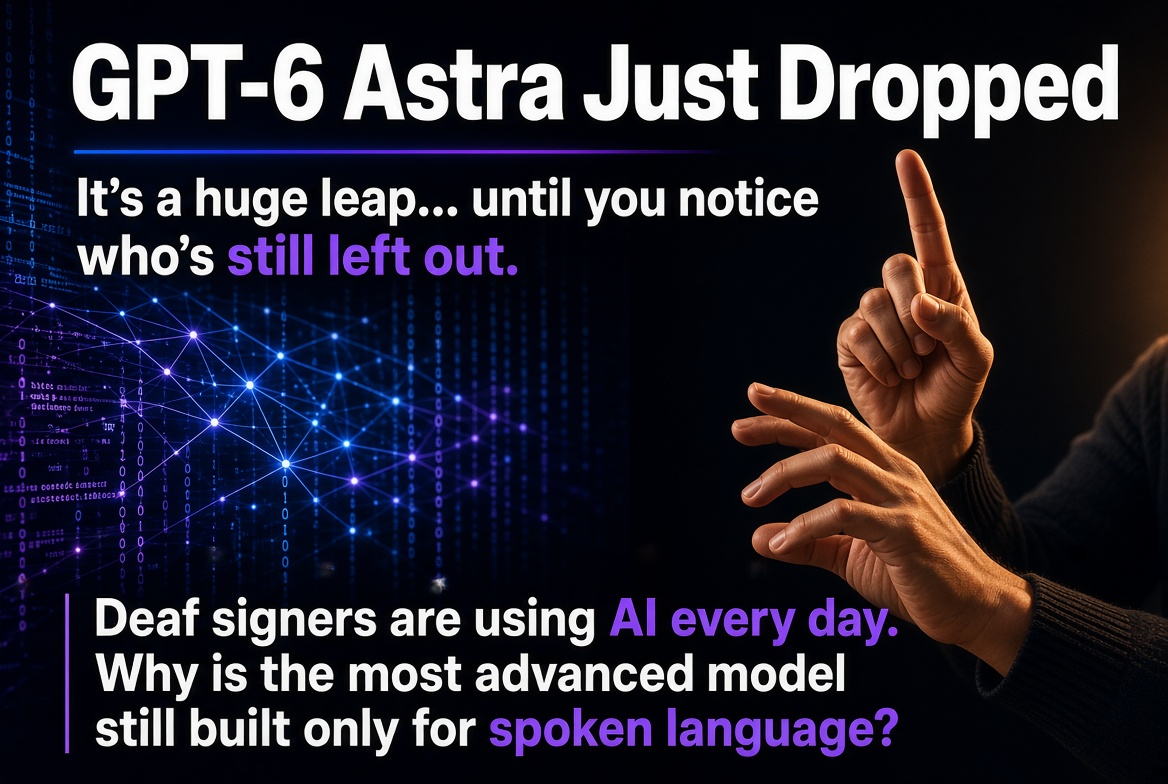
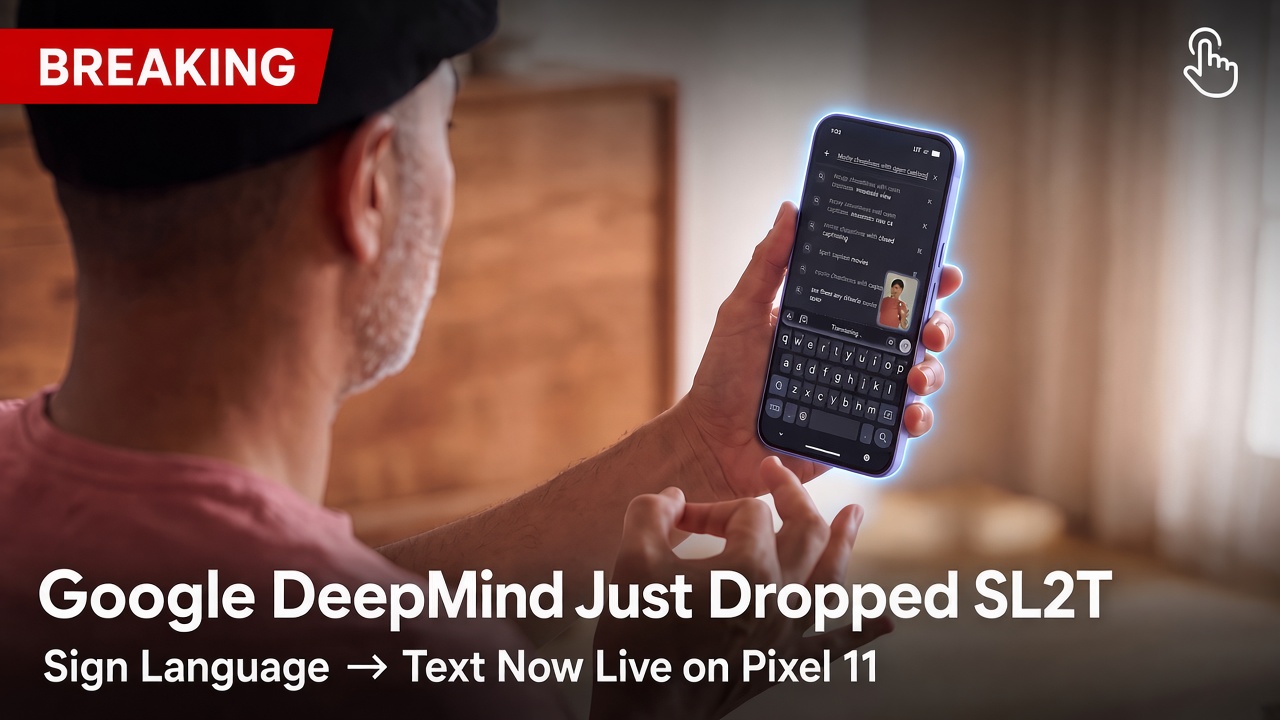
  • Day 15: Deaf Accessibility Wins – Deaf-Led AI for Sign Language Recognition

    In yesterday’s post I talked about voice-to-text tools. Today, let’s look at the other side — sign language recognition technology.

    There are already ASL and BSL recognition tools on the market, but two standout Deaf-led projects are particularly exciting:

    • GoSign.ai — They’ve developed fun learning apps, including matching games where users pair ASL signs with images, plus other interactive games to practice sign language.
    • SignCaption.ai — They recently launched a Transcription Mode that significantly improves AI accuracy when translating ASL to English. Without accurate transcription, AI struggles. This feature speeds up the process and reduces errors.

    What makes these tools special is that they are Deaf-led. Having Deaf people involved from the beginning ensures the technology is built with real lived experience, cultural understanding, and practical needs in mind.

    By embracing AI responsibly, we can shape it ethically and make sure the Deaf community is not left behind — but actively leading the way.

    These projects represent exciting accessibility wins in the intersection of technology and Deaf innovation.


    What about you? Have you tried any sign language recognition apps or AI tools? What features would you love to see in future Deaf-led AI technology?

    Share your thoughts and ideas in the comments!

    See you on Monday for Day 16!

  • Day 14: Deaf Accessibility Wins – My Go-To Voice-to-Text Apps

    In yesterday’s post I mentioned that AI will open more doors ahead — especially when accessibility is planned from the start and Deaf people with lived experience are involved in the development process.

    One practical tool I use almost daily on my phone is voice-to-text (and text-to-voice). The app I’ve been using most frequently is Flip-Talk, developed by a Deaf developer. I also used Cardzilla (another Deaf-developed app) for a long time.

    Both are excellent depending on the situation:

    • Cardzilla has larger text sizes.
    • Flip-Talk is clear and easy to read for most people. It has a simple “Start speaking…” prompt that makes it very intuitive for hearing people.

    These apps are fantastic for quick questions, ordering food, brief conversations, and everyday interactions. They’re convenient and effective when you need them.

    There are many other apps out there, but these two have worked best for me. I’ve been relying on Flip-Talk more often lately.

    Of course, the current limitation is that they don’t yet include full ASL or LSQ capabilities. That’s where Deaf-led AI development becomes so important — and I’ll share more about that in tomorrow’s post.

    Tools like these are real accessibility wins that make daily life smoother.


    What about you? What voice-to-text, captioning, or communication app has made the biggest difference for you? Or what’s one tech tool you wish existed for better accessibility?

    Share your recommendations or ideas in the comments!

    See you tomorrow for Day 15!

  • Day 13: Deaf Accessibility Wins – Celebrating 10 Years of Canada VRS

    This year marks 10 years since Canada VRS officially launched on September 28, 2016. While there were earlier discussions, trials, and CRTC decisions leading up to it, the public rollout was a major milestone.

    In the U.S., VRS had already been available since the early 2000s, with commercial rollout in 2003. Companies like Sorenson Media (with dedicated videophones like the VP-100) and better high-speed internet made it practical and popular for Deaf and hard-of-hearing users communicating in ASL through video interpreters.

    I remember making calls from Canada using U.S. VRS services through phone companies like AT&T. It was all done online with a computer, internet connection, and bulky webcams. Not long after, Viable introduced the V-Pad for Deaf Canadians — free to use. There were also early point-to-point video calling options using IP.

    This was a massive shift from the old TTY era. Video Relay Service finally allowed Deaf people to communicate using their primary language — ASL — efficiently and naturally.

    Since then, internet speeds, data, and video quality have improved dramatically. Today we have seamless options like MS Teams, Zoom, FaceTime, and Google Meet. It’s incredible to see how far technology has come in such a short time.

    I believe AI will open even more possibilities in the years ahead.

    Canada VRS has been a significant accessibility win — and it’s worth celebrating its 10-year milestone.


    What about you? How has Video Relay Service (or similar video technology) changed communication in your life? Or what’s one tech advancement that made a big difference for you?

    Share your experiences in the comments!

    See you tomorrow for Day 14!

  • Day 12: Deaf Accessibility Wins – My George Veditz Award & Applying “Privacy in Deaf Space”

    For those who don’t know, when I completed and successfully defended my M.A. in Deaf Studies at Gallaudet University, I was awarded the George Veditz Deaf Studies Award. The award recognizes graduate students who have made — and will continue to make — an impact on the lives of Deaf people and the field of Deaf Studies through outstanding scholarship and activism.

    I remember receiving it at graduation with my last name misspelled. I pointed it out, they said they’d correct it and mail it. To this day, I still haven’t received the corrected version. I just chuckled — I’m not mad. The real value was in the work itself.

    My thesis was titled What is Privacy in Deaf Space? (link available if you’d like to read it). There are opportunities to refine and improve it, but I’m sharing it as it was when I submitted and received the award.

    At the time, some classmates and colleagues questioned what this thesis would lead to career-wise — often without including me in the conversation. Was I offended? Not really. I was focused on finishing my degree and managing six-figure student loans.

    Fast forward — I’ve applied the concepts in real ways. One tangible example happened when I was a manager at a previous job. Our program was relocating to a new building with open cubicles designed for hearing people (quiet spoken conversations). For Deaf staff using ASL, privacy was a major issue.

    They initially suggested opaque sliding doors (which would block visual access) or transparent ones (which would eliminate privacy). I proposed translucent/frosted panels instead — allowing visual awareness of whether someone was inside or waiting outside, while maintaining confidential conversations. It was a practical Deaf Space solution that worked well.

    These are the kinds of wins that make the research meaningful.


    What about you? Have you seen research, a thesis, or an idea applied in real life to create better accessibility? Or what’s one change in your environment that made a big difference?

    Share your examples in the comments!

    See you tomorrow for Day 13!

  • Day 11: Deaf Accessibility Wins – Embracing Advocacy as a Deaf Dad

    Advocacy is something I proudly carry with me every day. It is my purpose and my calling. What started as a choice has become a powerful commitment — especially now as a Deaf dad raising Deaf daughters, while balancing my job and freelance work.

    Maturing has meant fully embracing this role with strength and clarity.

    I’ve learned there are many ways to advocate. One of the most empowering is through ongoing education and awareness — every single day, in every interaction.

    The goal is to shine a light on how policies and society were designed without Deaf people in mind. This creates unnecessary communication barriers, audist attitudes, medical pushes to “cure” deafness, discouragement of sign language (linguicism), and more. These challenges exist daily, often invisible to those not directly affected.

    While I can’t change the entire world overnight, I am committed to making a meaningful impact within my own community — one conversation at a time. Every genuine dialogue plants seeds of understanding and opens doors to real progress.

    This is how we build a stronger, more inclusive future — together.


    What about you? How do you channel your voice into advocacy — whether for yourself, your family, or your community? What’s one way you’ve seen small, consistent efforts create empowering change?

    Share your powerful stories in the comments — let’s inspire each other!

    See you tomorrow for Day 12!

  • Day 10: Deaf Accessibility Wins – From Sporadic Gigs to Global Freelance Success

    In the early stages of my Deaf Interpreting and translation freelance career, work was slow and sporadic. Gigs were few and far between. I attended workshops and trainings for upkeep and took on occasional internal assignments as an employee, but nothing consistent enough to call “side income.”

    That changed when I discovered Fiverr. At first, it didn’t even occur to me that I could use the platform. Then I came across freelance writer Alex Fasulo’s success stories and joined a private group where freelancers shared tips on gigs, ranking, pricing, marketing, delivery, and more.

    Gigs started rolling in. I ranked up, became a Top Rated seller, and was even listed as “Fiverr’s Top Recommended” in my category. I later expanded to Upwork (a very different platform) and tried Contra (with less success). Eventually, I moved repeat clients off the platforms and now work with them directly.

    My clients have come from all over the world — Australia, Asia, Europe, South America, Africa, and the U.S. It was a hands-on learning experience far beyond books or research.

    These opportunities helped me develop not just translation and video editing skills, but also business knowledge in service delivery, admin, finance, sales, and marketing. This foundation allowed me to expand into coaching a group of Deaf people who wanted to learn sales and marketing — all in ASL. It felt great to give back to the Deaf community with practical, accessible skills they couldn’t easily find elsewhere.


    What about you? Have you used freelance platforms like Fiverr or Upwork? Or what’s one unexpected opportunity that opened doors in your career?

    Share your experiences in the comments!

    See you on Monday for Day 11!