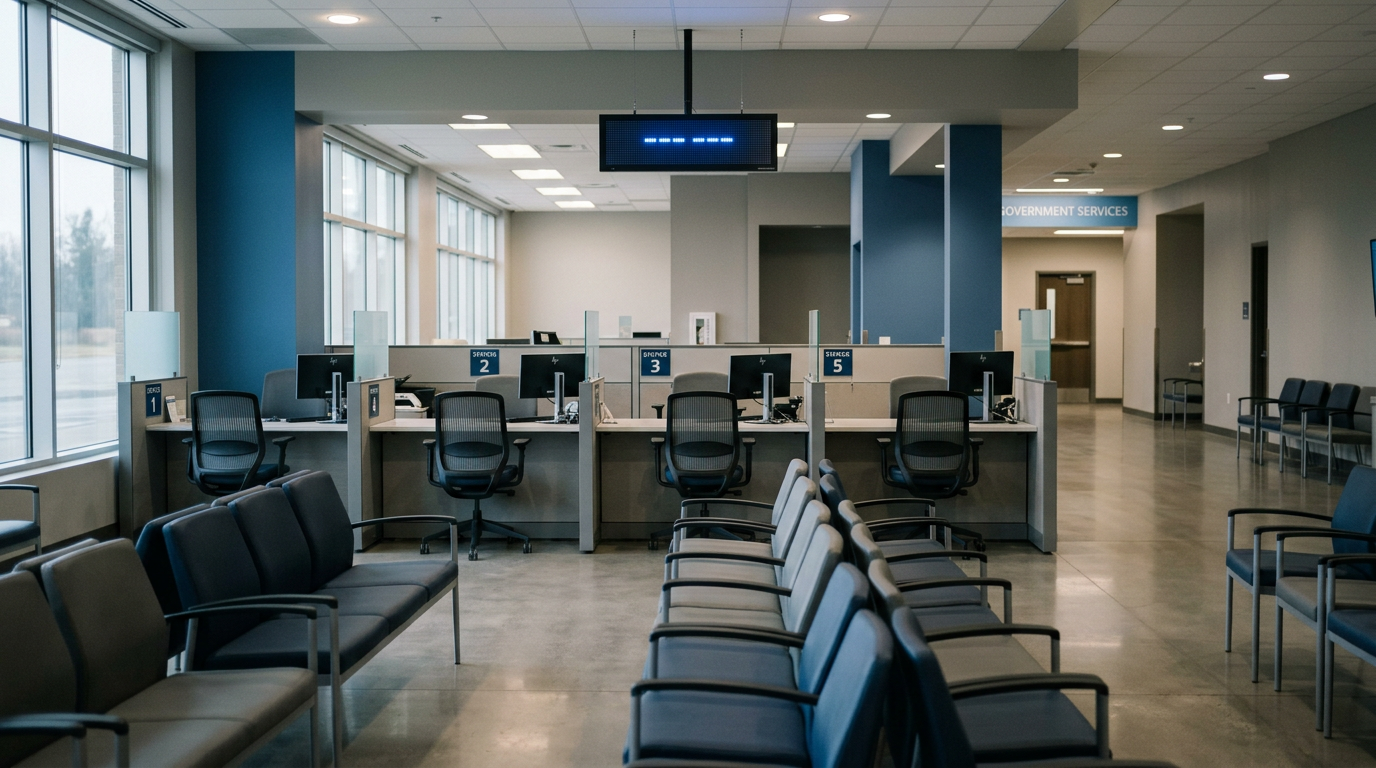
In government and Crown corporation services, time is rarely neutral. When a Deaf or hard-of-hearing client needs to communicate and no interpreter is immediately available, the resulting delay carries costs that extend well beyond a few extra minutes.
What Delayed Communication Actually Costs
For the client, waiting often means:
- Incomplete or postponed access to benefits, information, or decisions
- Additional travel, time, and effort to return for a rescheduled interaction
- Reliance on written notes, gestures, or informal interpreters that reduce accuracy and privacy
- A clear signal that their communication needs are treated as secondary
For the organization, the costs appear in different forms:
- Longer handling times and repeated interactions for the same issue
- Increased pressure on front-line staff who lack a reliable way to communicate
- Higher risk of complaints, escalations, or formal accessibility concerns
- Inconsistent service quality across locations, shifts, and departments
- A growing gap between stated accessibility commitments and actual delivery
In high-volume public service environments, these costs compound quickly. Every incomplete interaction generates follow-up work. Every workaround introduces risk. Every postponed conversation erodes trust.
Why the Wait Persists
Most government and Crown teams already use scheduled interpreting for planned appointments and meetings. That support is necessary and valuable.
The problem arises in the unplanned moments that define much of day-to-day service delivery: walk-ins, urgent inquiries, intake processes, and last-minute needs that cannot be booked in advance. When the only available tool requires advance scheduling, waiting becomes the default response.
Removing the Wait
On-demand video remote interpreting (VRI) changes the equation.
With a platform such as Asign On, staff can connect to a qualified ASL or LSQ interpreter within seconds from a laptop, tablet, or mobile device. The conversation continues without postponement. Accuracy and privacy are maintained. The client receives the service they came for in the moment they need it.
This capability does not replace scheduled interpreting. It completes it. Planned support covers known needs. On-demand access covers the moments that cannot be anticipated.
A Practical Measure for Government and Crown Teams
One clear way to assess current readiness is to ask:
When communication is needed right now in a government or Crown service setting, how long does the client actually wait?
If the answer regularly involves delay, rescheduling, or incomplete exchange, the cost is already being paid — by the client and by the organization.
Reducing that cost does not require redesigning entire service models. It requires adding the ability to respond in real time.
Visit asign.ca to explore how on-demand ASL and LSQ interpreting can eliminate unnecessary waiting in your government or Crown operations, or reach out to discuss a practical approach for your team.
Access delayed is access diminished. Access in the moment is what changes the experience.
Leave a Reply