Tag: service counters

  • First Week Back for Government & Crown Teams: Why On-Demand VRI Matters More Than Ever

    First Week Back for Government & Crown Teams: Why On-Demand VRI Matters More Than Ever

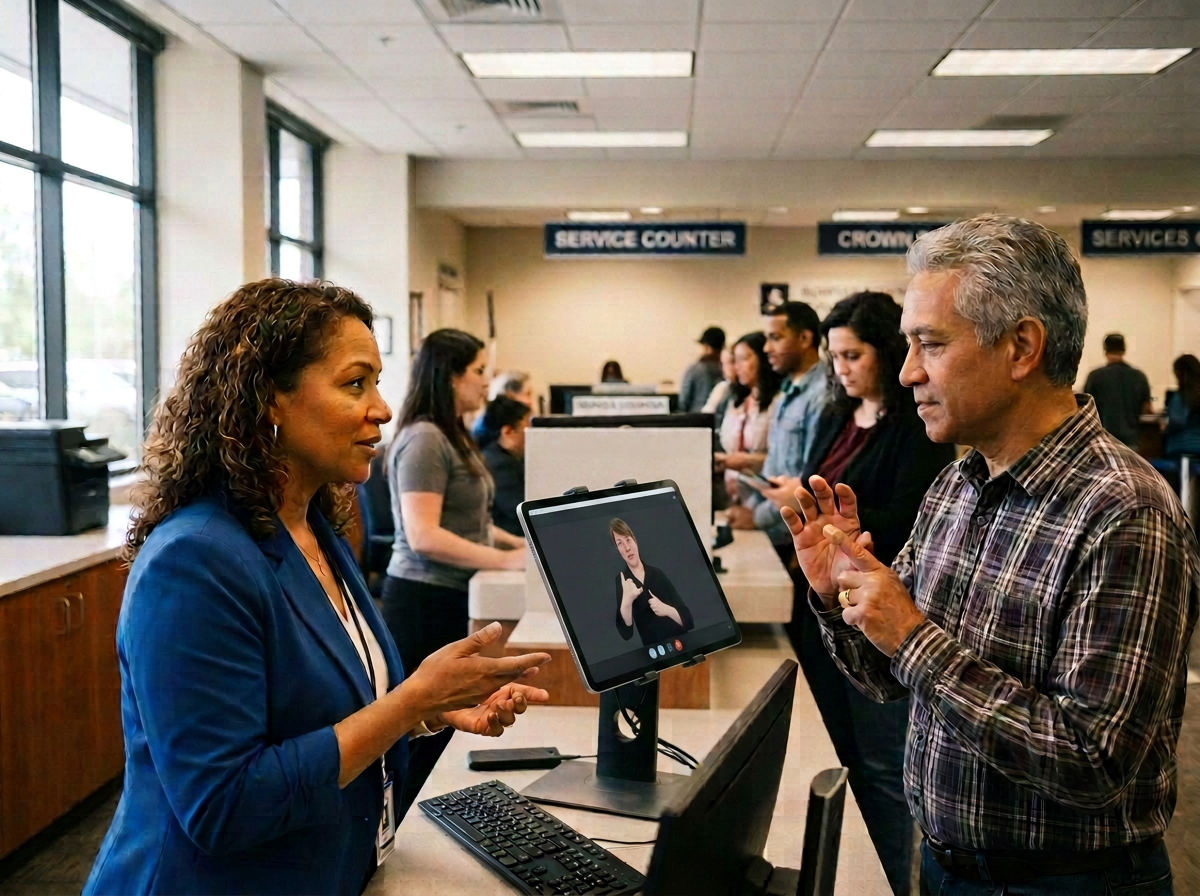
    The first week back after summer vacation is rarely quiet for government and Crown corporation teams. Inboxes are full, service counters are busy again, and the volume of citizen and client interactions rises quickly.

    In the middle of that return-to-work rush, one recurring challenge reappears: a Deaf or hard-of-hearing person needs to communicate right now — and no interpreter has been booked.

    The Reality of the First Week Back

    Provincial, federal, municipal, and Crown teams often face a surge of unplanned or semi-planned interactions as operations resume:

    • Walk-in clients at service counters
    • Urgent intake or inquiry processes
    • Last-minute meetings or follow-ups that could not be fully arranged before the break
    • Staff covering for colleagues still transitioning back

    Scheduled interpreting remains essential for known appointments. It does not, however, cover the sudden communication needs that arise when volumes increase and calendars are still settling. When the only available option requires advance booking, waiting, rescheduling, or incomplete workarounds become the default response.

    Why On-Demand Access Becomes Critical Now

    On-demand video remote interpreting (VRI) is designed precisely for these moments.

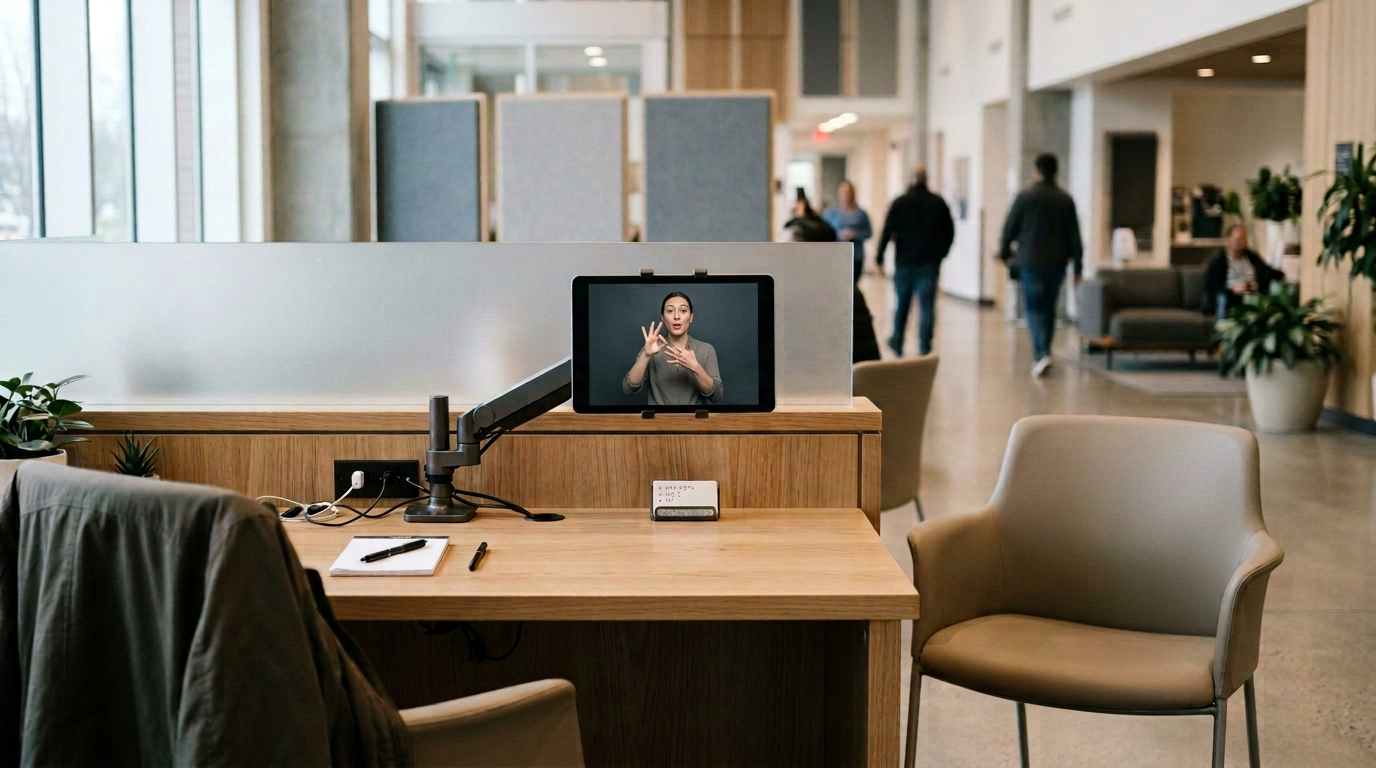
    With a platform such as Asign On, staff can connect to a qualified ASL or LSQ interpreter within seconds from a laptop, tablet, or mobile device. There is no need to wait for availability, rearrange the client’s day, or rely on written notes or informal assistance.

    The process is simple and immediate:

    1. Open the platform and request an interpreter
    2. Match with a professional ASL or LSQ interpreter
    3. Communicate in real time, face to face

    This capability keeps service moving during the high-pressure first weeks of the fall season and prevents small delays from becoming larger operational or accessibility issues.

    Practical Benefits for Government and Crown Operations

    Adding on-demand VRI alongside existing scheduled services delivers clear advantages during the return-to-work period and beyond:

    • Faster resolution at counters and service points when volumes are high
    • Reduced backlog created by postponed or incomplete interactions
    • Greater consistency across teams, locations, and shifts that are still re-establishing routines
    • Stronger alignment with accessibility commitments at a time when public expectations are also rising
    • A flexible tool that complements, rather than replaces, planned interpreting arrangements

    The result is a more resilient service model — one that can handle both the scheduled work that was planned before the break and the unplanned needs that inevitably appear once operations resume.

    A Timely Question for the First Week Back

    As teams settle into regular operations again, one practical question is worth asking:

    If a Deaf client needed an interpreter today with no advance notice, how quickly could your team provide one?

    If the current answer involves delay or workarounds, the first week back is an ideal time to close that gap.

    Real accessibility is tested most clearly when demand rises and routines are still forming. On-demand access ensures that communication does not become another item left waiting on the to-do list.

    Visit asign.ca to see how on-demand ASL and LSQ interpreting can support your government or Crown team this fall, or reach out to discuss a practical solution for your operations.

    Ready when your clients are — not only when the calendar allows.

  • September Reality Check: When a Deaf Client Walks Into a Provincial or Municipal Counter and There’s No Interpreter Booked

    September Reality Check: When a Deaf Client Walks Into a Provincial or Municipal Counter and There’s No Interpreter Booked

    It’s early September. Accessibility leads and front-line managers across provincial and municipal offices are returning from vacation. Inboxes are full, service counters are busy again, and the first unexpected situation of the fall is already walking through the door.

    A Deaf client arrives at a provincial service counter or municipal intake desk. They need help right now. There is no interpreter booked.

    What happens next?

    Too often, the client is asked to wait, come back another day, or try to communicate through written notes or family members. The interaction becomes delayed, incomplete, or abandoned. For the organization, it creates frustration, potential complaints, and a clear gap between accessibility commitments and real-time delivery.

    This scenario is common — and entirely preventable.

    The Reality of Unplanned Interactions

    Provincial and municipal services are full of moments that cannot be scheduled in advance:

    • A citizen drops in with an urgent question about benefits, permits, or housing
    • An intake process begins and communication barriers appear immediately
    • A last-minute appointment or counter interaction requires clear, accurate exchange

    Scheduled interpreting works well when timing is known. It does not solve the “right now” problem. When the only option is to wait for an available interpreter or reschedule, accessibility becomes conditional.

    What On-Demand Access Changes

    On-demand video remote interpreting (VRI) closes that gap.

    With a platform like Asign On, staff can connect to a qualified ASL or LSQ interpreter in seconds from a laptop, tablet, or mobile device. No advance booking. No waiting for availability. No barriers between the client and the information or service they need.

    The process is straightforward:

    1. Connect to the platform
    2. Match with a professional interpreter
    3. Communicate in real time, face to face

    The result is immediate, equitable access — exactly when it is needed.

    Why This Matters for Provincial and Municipal Teams

    Public-facing teams carry a dual responsibility: deliver services efficiently and uphold accessibility standards. When communication fails in the moment, both goals are compromised.

    On-demand VRI supports:

    • Faster resolution at service counters
    • Reduced need for clients to return or rely on informal workarounds
    • Consistent access across locations and shifts
    • Alignment with accessibility policies and human rights expectations

    It complements existing scheduled and in-person interpreting rather than replacing them. Together they form a practical hybrid approach that matches how provincial and municipal services actually operate.

    A Simple September Action

    As teams settle back into regular operations this month, it is worth asking one practical question:

    If a Deaf client walked into your counter or office today and needed an interpreter immediately, how long would it take to provide one?

    If the answer involves waiting, rescheduling, or written notes, on-demand access is the missing piece.

    Real accessibility is not only about having policies and booked appointments. It is about being ready for the moments that cannot be planned.

    Visit asign.ca to learn how on-demand ASL and LSQ interpreting can support your provincial or municipal service delivery — or reach out to discuss what a practical solution looks like for your team.

    No pressure. Just a clearer path to access that works in real time.