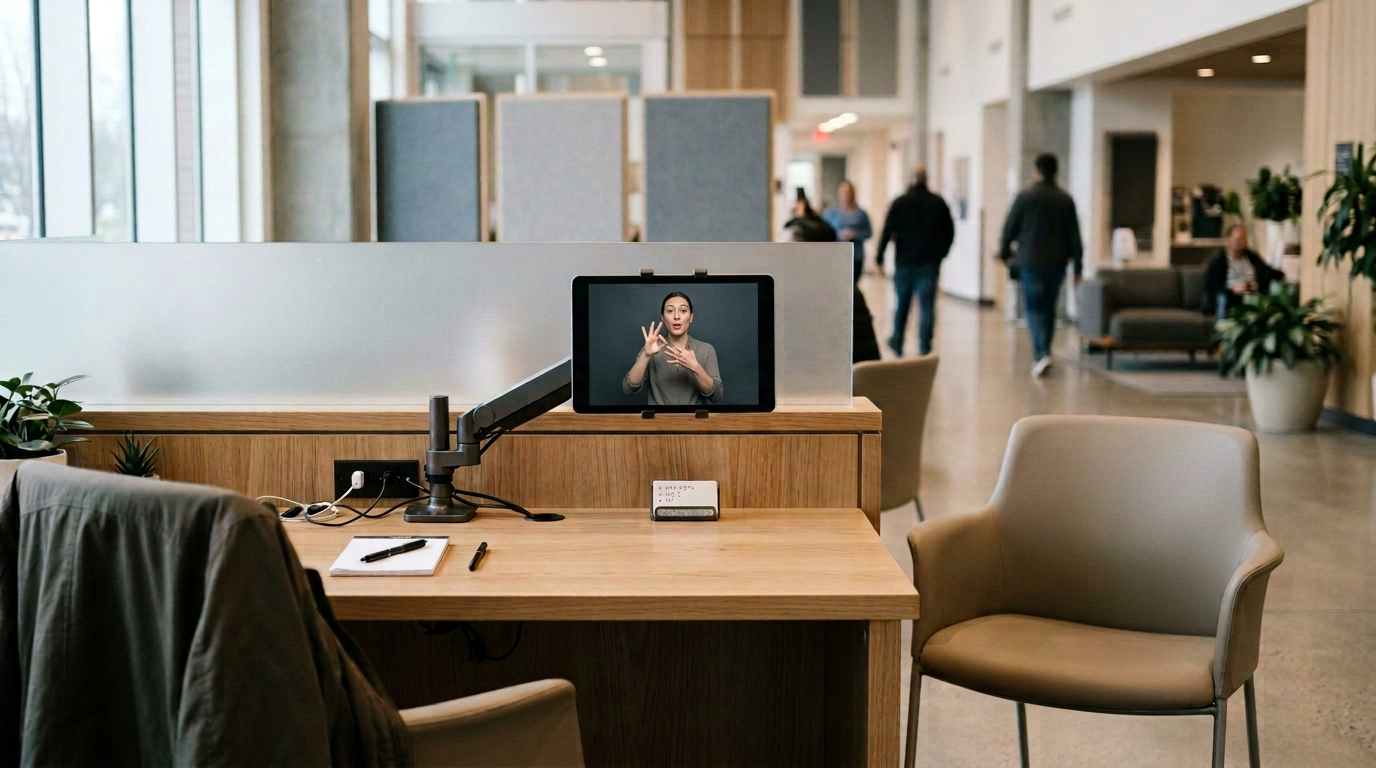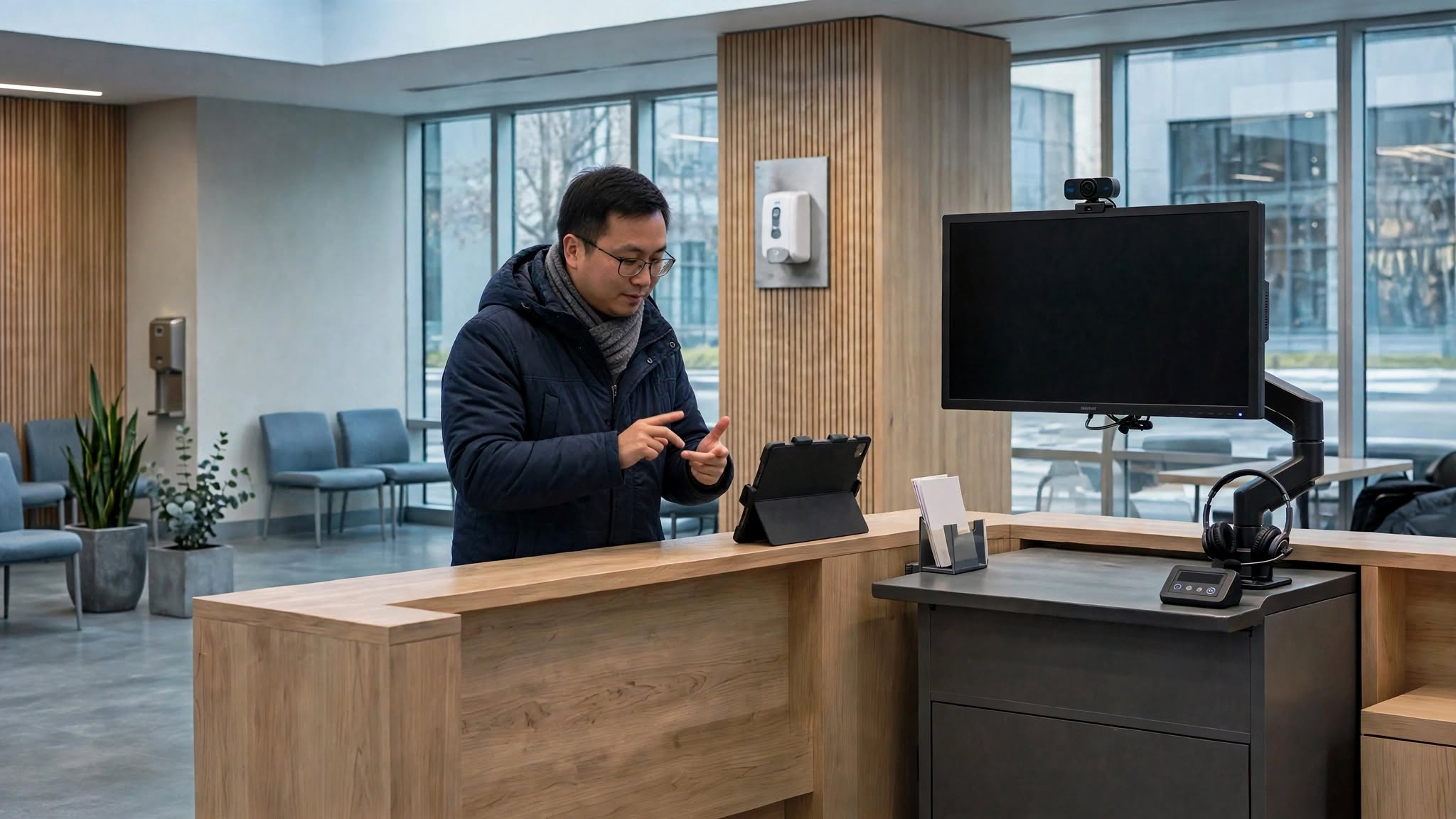
Provincial, municipal, federal, and Crown organizations evaluating on-demand video remote interpreting (VRI) face a clear set of operational requirements. The platform must deliver professional ASL and LSQ interpreting quickly, maintain high quality, and meet the security expectations of public-sector environments.
Choosing well means looking beyond marketing claims and focusing on three core dimensions: security, quality, and speed.
1. Security: Protecting Sensitive Information
Public-sector interactions frequently involve personal, financial, health, or regulated information. A suitable VRI platform should support:
- Interpreters who can hold appropriate security clearances (Reliability through Top Secret where required)
- Secure connection protocols and data handling practices aligned with government expectations
- Clear policies on confidentiality and professional ethics
Ask providers to explain how they manage security requirements and whether their interpreter pool includes individuals cleared for the levels your organization needs.
2. Quality: Professional Standards and Language Coverage
Speed without quality creates new risks. Quality in Canadian VRI rests on two foundations: qualified interpreters and reliable coverage of both ASL and LSQ.
Key indicators include:
- Interpreters who meet recognized professional standards and belong to established associations
- CASLI (Canadian Association of Sign Language Interpreters) — the national body for ASL-English interpreters, managing the Canadian Evaluation System (CES) and Certificate of Interpretation (COI)
- AQILS (Association québécoise des interprètes en langues des signes) — the professional association representing sign language interpreters (including LSQ and ASL) in Quebec, focused on ethics, certification standards, and professional development
- WAVLI (Westcoast Association of Visual Language Interpreters) — the provincial association for ASL-English interpreters in British Columbia, which holds legislative title protection for Registered ASL-English Interpreter and related titles
A strong platform draws on interpreters affiliated with these (or equivalent) bodies and provides consistent, high-quality service in both ASL and LSQ across regions.
3. Speed: Access Measured in Seconds, Not Minutes
The defining value of on-demand VRI is immediate availability. Evaluate:
- Average time from request to live interpreter
- Performance during peak periods
- Ease of launching a session from standard devices (laptop, tablet, or mobile) with minimal training
If staff cannot connect quickly under real service-counter or office conditions, the platform will see limited use precisely when it is needed most.
Putting the Three Requirements Together
A platform that excels in only one or two areas leaves gaps. Public-sector teams need all three working together:
- Security that meets organizational and regulatory expectations
- Quality grounded in professional standards, association affiliation, and full ASL/LSQ coverage
- Speed that delivers an interpreter in seconds rather than creating new delays
When these elements are present, on-demand VRI becomes a reliable complement to scheduled interpreting — closing the gap for unplanned interactions without compromising standards.
A Practical Evaluation Approach
Before deciding, request clear answers on connection times, interpreter qualifications and affiliations (CASLI, AQILS, WAVLI or equivalent), available security clearances, and how the platform performs in typical public-facing environments. Where possible, observe a live demonstration under conditions that resemble your actual service settings.
The right choice supports both accessibility commitments and day-to-day operational reality.
Visit asign.ca to explore how on-demand ASL and LSQ interpreting can meet public-sector requirements for security, quality, and speed, or reach out to discuss the criteria that matter most for your organization.
Security. Quality. Speed. All three are non-negotiable for public-sector access that works.