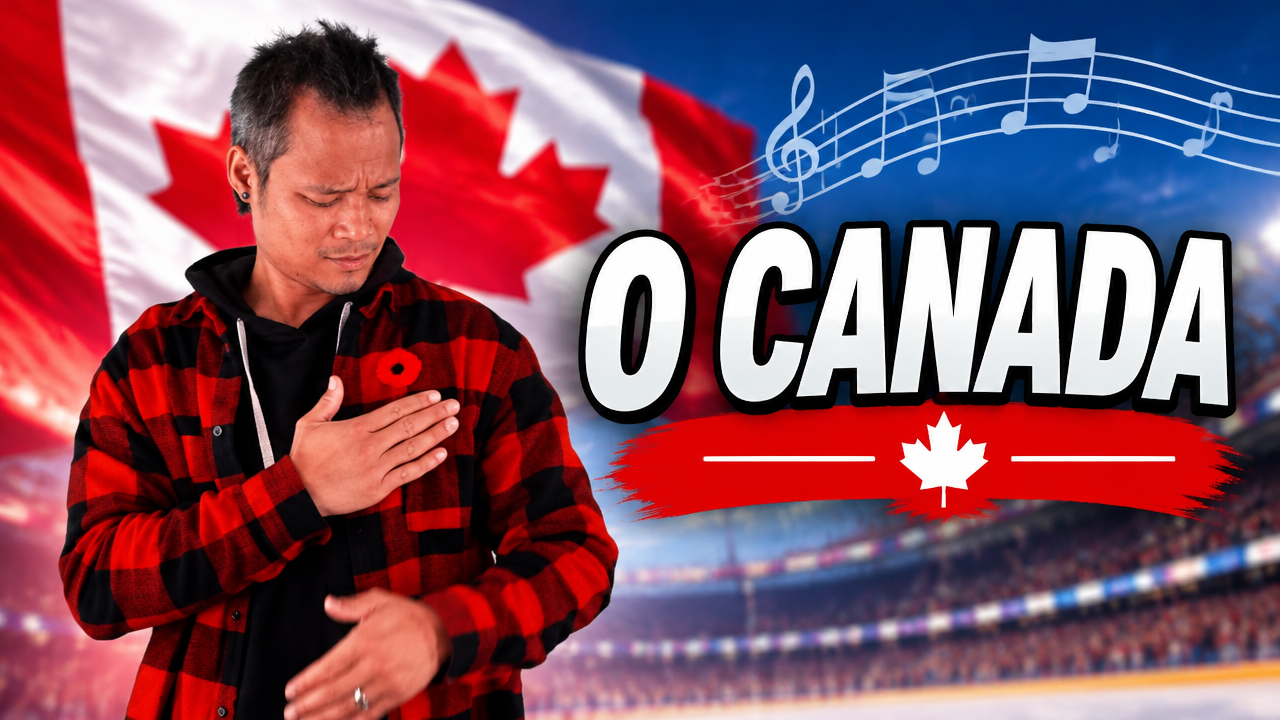
Since the Heritage Classic, there’s been quite a bit of activity and conversation within the Deaf community surrounding my performance of O Canada in American Sign Language (ASL) and Langue des signes québécoise (LSQ).
The video has garnered at least 30,000 views since I shared it, along with comments, shares and messages from people across the Deaf community.
But there’s something many people may not know: the video I shared wasn’t actually the live broadcast of the performance. It was a recreation.
During the Heritage Classic, I was introduced on the stadium screen at the beginning of the anthem. However, once the performance started, the camera shifted away from me and focused on SoulBear, the fans and the hockey players. As a result, the signing wasn’t visible for the majority of the performance.
I subsequently received messages from Deaf Canadians expressing their disappointment that they couldn’t see the national anthem being performed in ASL and LSQ. For many, this was another reminder that accessibility isn’t just about having someone present. It’s also about making sure Deaf people can actually see and experience the performance.
That’s why I decided to recreate the performance and share it publicly. I wanted the Deaf community to have the opportunity to experience what they had missed.
There’s another aspect of this performance that makes it particularly meaningful. To my knowledge, this was the first documented performance of Canada’s national anthem bringing together all four languages: English, French, ASL and LSQ.
Getting the representation right
When I was initially informed that the national anthem would be performed in English and French, I was advised to translate the French lyrics into English first, then interpret the English version into ASL.
However, I felt that approach would miss something important.
Canada has two official spoken languages, English and French, but we also have distinct sign languages. ASL and LSQ are recognized under the Accessible Canada Act as primary languages for communication by Deaf people in Canada.
In many contexts, ASL is associated with English-speaking Deaf communities, while LSQ is associated with French-speaking Deaf communities. They are distinct languages, each with its own linguistic and cultural identity.
I wanted the performance to reflect that reality.
The Heritage Classic featured the Winnipeg Jets and the Montreal Canadiens. It was a distinctly Canadian event, bringing together two teams and communities with their own linguistic and cultural connections. It would have felt incomplete to represent the anthem in English, French and ASL without also considering LSQ.
I explained why having both sign languages was important. This meant going beyond simply translating words from one language into another. It was about recognizing Deaf Canadians and ensuring that both linguistic communities were represented.
Learning, reaching out and taking on a challenge
This is where the preparation became more involved.
I started researching and reaching out to trusted members of the LSQ community, particularly professionals who were bilingual in ASL and LSQ. Ideally, I would have preferred to have someone who was genuinely fluent in both languages take on the performance alongside me.
Unfortunately, there wasn’t anyone locally available at the time, and bringing someone in from outside the city wasn’t feasible.
I decided to take on the responsibility myself.
That meant receiving one-on-one LSQ coaching, practising the French portions of the anthem and making sure I was representing the language as accurately and respectfully as possible. I didn’t want to simply memorize signs and hope for the best. I wanted to understand what I was signing and ensure the LSQ portions were presented appropriately.
It was a learning experience that required time, preparation and humility. I recognized that knowing ASL didn’t automatically mean I knew LSQ. They are different languages, and I needed guidance from people with the appropriate linguistic knowledge and experience.
I’m grateful to those within the LSQ community who shared their expertise and helped me prepare.
Catching the LSQ bug
I’ve always been interested in learning LSQ, but I never really had a strong reason to use it regularly. Living in Winnipeg, my everyday interactions are primarily in ASL, and opportunities to use LSQ are relatively limited.
This experience changed something for me.
Through the preparation, coaching and exposure to LSQ, I developed an even greater appreciation for the language and its community. I found myself wanting to continue learning beyond what was needed for the performance.
With English and French being Canada’s official languages, I also felt that developing a better understanding of LSQ was a meaningful way to deepen my connection to Canada’s linguistic landscape and Deaf communities.
I may have started learning LSQ because of the Heritage Classic, but I don’t want it to end there. I’ve caught the LSQ bug, and I’m looking forward to continuing that learning journey.
More than 30,000 views, but what matters most
Since sharing the recreated performance, the video has continued to reach people well beyond my immediate network. The views, comments, shares and saves have been encouraging.
I’ll admit, it feels good to know that something I worked so hard to prepare is making an impact, especially within the Deaf community across Canada.
But the numbers aren’t really what make this meaningful.
It’s the messages from Deaf Canadians who were excited to finally see the performance. It’s the appreciation for including LSQ alongside ASL. It’s the conversations about representation, accessibility and what it means to see our languages represented on a national stage.
This experience reminded me that visibility matters. But visibility alone isn’t enough. Representation needs to be intentional, meaningful and grounded in the communities and languages being represented.
I’m proud to have been part of this moment alongside SoulBear, who brought the anthem to life through English and French, while we worked together to bring ASL and LSQ into the performance.
And perhaps one of the biggest takeaways for me is that this experience has opened another door. What started as an opportunity to perform Canada’s national anthem became an opportunity to learn, collaborate and develop a deeper appreciation for another sign language community in Canada.
Four languages. One national anthem. And a reminder that Deaf Canadians belong in the moments where our country comes together.
That’s something worth continuing to build on.