National Day for Truth and Reconciliation invites reflection on history, responsibility, and the ongoing work of building more respectful and inclusive public institutions.
Part of that work includes ensuring that government, provincial, municipal, and Crown services are genuinely accessible to everyone who needs them — including Deaf, hard-of-hearing, and DeafBlind people who use ASL or LSQ.
Communication access is not separate from inclusion. It is one of the practical ways public services demonstrate respect and remove barriers.
Access That Depends on Timing Is Incomplete
Many public-sector organizations have made clear commitments to accessibility. Policies exist. Scheduled interpreting is arranged for planned meetings and events. Training and awareness efforts continue.
Yet unplanned interactions remain common across service counters, intake processes, and client channels. When a Deaf or hard-of-hearing person needs to communicate and no interpreter is immediately available, access becomes conditional. Waiting, rescheduling, written notes, or informal assistance often follow.
In those moments, the gap between commitment and delivery is visible. Equitable service requires more than good intentions — it requires the ability to respond in real time.
Making Communication Access Immediate
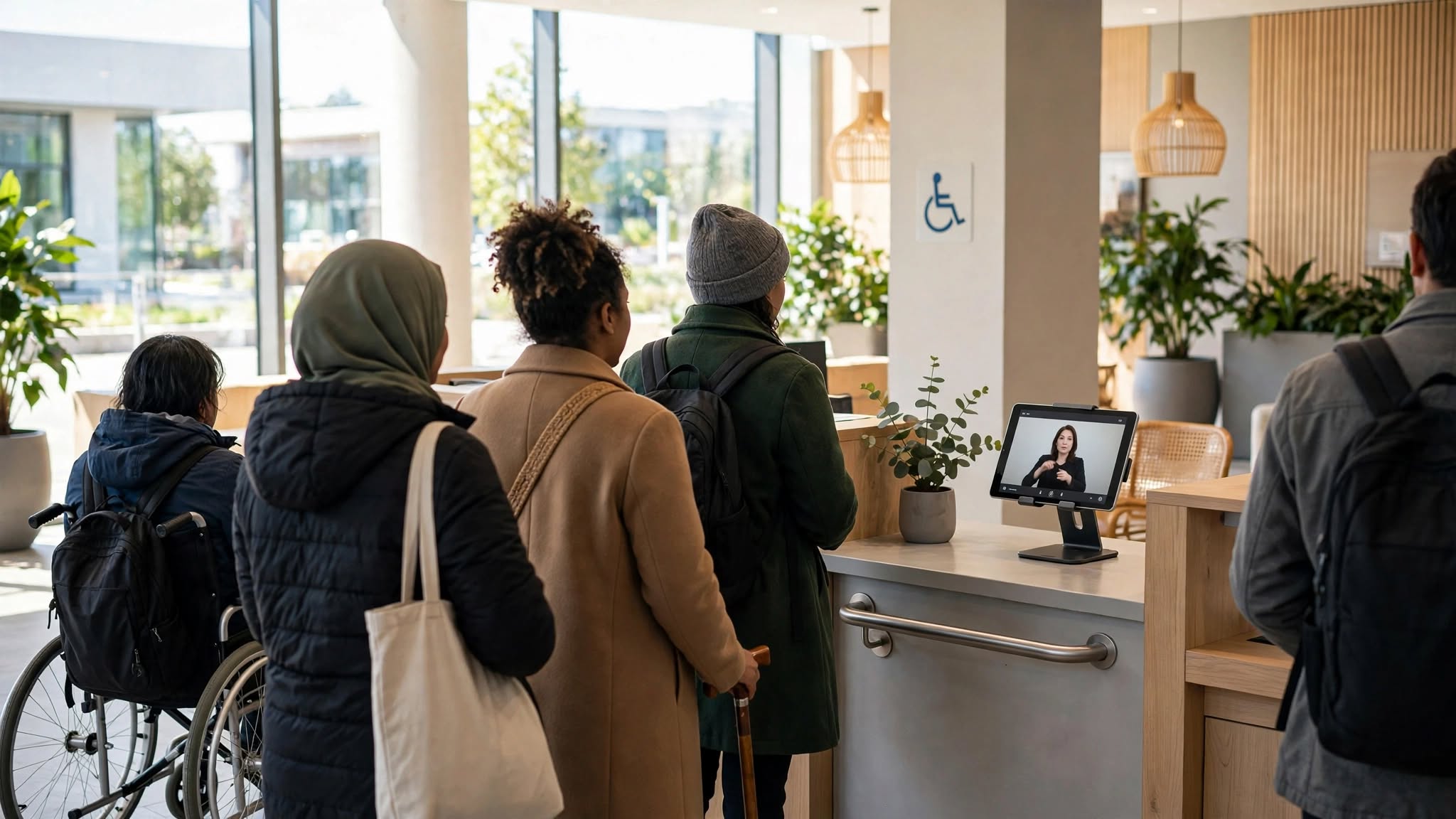
On-demand video remote interpreting (VRI) provides a practical way to close that gap.
With a platform such as Asign On, staff across federal, provincial, municipal, and Crown channels can connect to a qualified ASL or LSQ interpreter within seconds from a laptop, tablet, or mobile device. No advance booking is required. Communication begins face to face, in the language the person uses.
This capability does not replace scheduled interpreting. It complements it. Planned support covers known needs. On-demand access covers the moments that cannot be anticipated — the moments that define much of day-to-day public service.
Why This Matters for Inclusive Public Services
When ASL and LSQ interpreting is available instantly:
- Citizens and clients can access services without unnecessary delay or workarounds
- Front-line staff have a clear, reliable option instead of improvising
- Service delivery remains more consistent across locations and shifts
- Accessibility commitments move from policy into everyday operations
Removing communication barriers is one concrete expression of respect. It supports the broader goal of public services that work equitably for the people they are meant to serve.
A Practical Step Forward
Reflection is important. Action makes the difference.
One clear question helps assess current readiness:
If a Deaf or hard-of-hearing person needed an ASL or LSQ interpreter right now in one of your service channels, how quickly could your team provide one?
If the answer involves waiting or incomplete alternatives, the opportunity to strengthen access is immediate.
Ensuring communication access across government, provincial, municipal, and Crown services is practical, achievable, and aligned with the ongoing work of building more inclusive institutions.
Visit asign.ca to explore how on-demand interpreting can support your service channels, or reach out to discuss a practical next step for your team.
Respect is shown in many ways. One of them is making sure people can communicate when they need to.