Here’s an ASL adaptation of In Flanders Fields by Lieutenant-Colonel John McCrae for Remembrance Day.
May we remember those who served and sacrificed.
Lest we forget. 🌺
Here’s an ASL adaptation of In Flanders Fields by Lieutenant-Colonel John McCrae for Remembrance Day.
May we remember those who served and sacrificed.
Lest we forget. 🌺
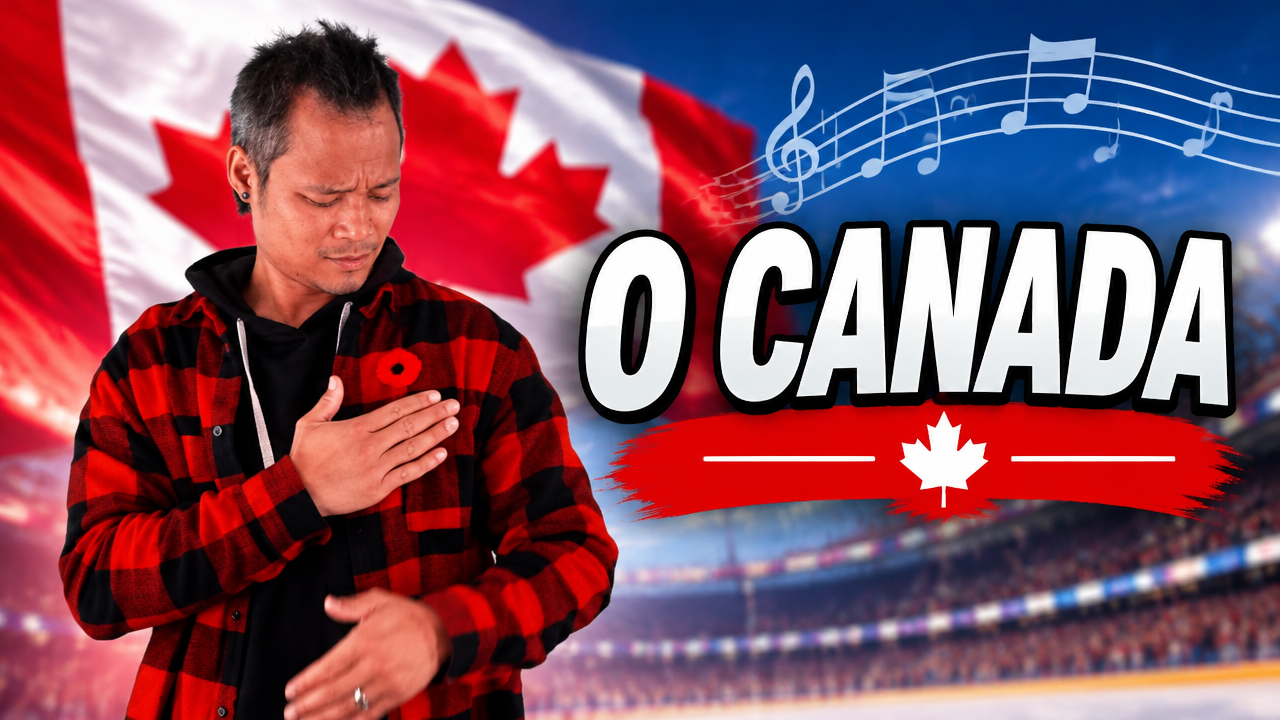
Since the Heritage Classic, there’s been quite a bit of activity and conversation within the Deaf community surrounding my performance of O Canada in American Sign Language (ASL) and Langue des signes québécoise (LSQ).
The video has garnered at least 30,000 views since I shared it, along with comments, shares and messages from people across the Deaf community.
But there’s something many people may not know: the video I shared wasn’t actually the live broadcast of the performance. It was a recreation.
During the Heritage Classic, I was introduced on the stadium screen at the beginning of the anthem. However, once the performance started, the camera shifted away from me and focused on SoulBear, the fans and the hockey players. As a result, the signing wasn’t visible for the majority of the performance.
I subsequently received messages from Deaf Canadians expressing their disappointment that they couldn’t see the national anthem being performed in ASL and LSQ. For many, this was another reminder that accessibility isn’t just about having someone present. It’s also about making sure Deaf people can actually see and experience the performance.
That’s why I decided to recreate the performance and share it publicly. I wanted the Deaf community to have the opportunity to experience what they had missed.
There’s another aspect of this performance that makes it particularly meaningful. To my knowledge, this was the first documented performance of Canada’s national anthem bringing together all four languages: English, French, ASL and LSQ.
When I was initially informed that the national anthem would be performed in English and French, I was advised to translate the French lyrics into English first, then interpret the English version into ASL.
However, I felt that approach would miss something important.
Canada has two official spoken languages, English and French, but we also have distinct sign languages. ASL and LSQ are recognized under the Accessible Canada Act as primary languages for communication by Deaf people in Canada.
In many contexts, ASL is associated with English-speaking Deaf communities, while LSQ is associated with French-speaking Deaf communities. They are distinct languages, each with its own linguistic and cultural identity.
I wanted the performance to reflect that reality.
The Heritage Classic featured the Winnipeg Jets and the Montreal Canadiens. It was a distinctly Canadian event, bringing together two teams and communities with their own linguistic and cultural connections. It would have felt incomplete to represent the anthem in English, French and ASL without also considering LSQ.
I explained why having both sign languages was important. This meant going beyond simply translating words from one language into another. It was about recognizing Deaf Canadians and ensuring that both linguistic communities were represented.
This is where the preparation became more involved.
I started researching and reaching out to trusted members of the LSQ community, particularly professionals who were bilingual in ASL and LSQ. Ideally, I would have preferred to have someone who was genuinely fluent in both languages take on the performance alongside me.
Unfortunately, there wasn’t anyone locally available at the time, and bringing someone in from outside the city wasn’t feasible.
I decided to take on the responsibility myself.
That meant receiving one-on-one LSQ coaching, practising the French portions of the anthem and making sure I was representing the language as accurately and respectfully as possible. I didn’t want to simply memorize signs and hope for the best. I wanted to understand what I was signing and ensure the LSQ portions were presented appropriately.
It was a learning experience that required time, preparation and humility. I recognized that knowing ASL didn’t automatically mean I knew LSQ. They are different languages, and I needed guidance from people with the appropriate linguistic knowledge and experience.
I’m grateful to those within the LSQ community who shared their expertise and helped me prepare.
I’ve always been interested in learning LSQ, but I never really had a strong reason to use it regularly. Living in Winnipeg, my everyday interactions are primarily in ASL, and opportunities to use LSQ are relatively limited.
This experience changed something for me.
Through the preparation, coaching and exposure to LSQ, I developed an even greater appreciation for the language and its community. I found myself wanting to continue learning beyond what was needed for the performance.
With English and French being Canada’s official languages, I also felt that developing a better understanding of LSQ was a meaningful way to deepen my connection to Canada’s linguistic landscape and Deaf communities.
I may have started learning LSQ because of the Heritage Classic, but I don’t want it to end there. I’ve caught the LSQ bug, and I’m looking forward to continuing that learning journey.
Since sharing the recreated performance, the video has continued to reach people well beyond my immediate network. The views, comments, shares and saves have been encouraging.
I’ll admit, it feels good to know that something I worked so hard to prepare is making an impact, especially within the Deaf community across Canada.
But the numbers aren’t really what make this meaningful.
It’s the messages from Deaf Canadians who were excited to finally see the performance. It’s the appreciation for including LSQ alongside ASL. It’s the conversations about representation, accessibility and what it means to see our languages represented on a national stage.
This experience reminded me that visibility matters. But visibility alone isn’t enough. Representation needs to be intentional, meaningful and grounded in the communities and languages being represented.
I’m proud to have been part of this moment alongside SoulBear, who brought the anthem to life through English and French, while we worked together to bring ASL and LSQ into the performance.
And perhaps one of the biggest takeaways for me is that this experience has opened another door. What started as an opportunity to perform Canada’s national anthem became an opportunity to learn, collaborate and develop a deeper appreciation for another sign language community in Canada.
Four languages. One national anthem. And a reminder that Deaf Canadians belong in the moments where our country comes together.
That’s something worth continuing to build on.
Hi, I’m Jordan Sangalang. I’m a Business Development Specialist at Asign Inc.—a Canadian-owned, Canadian-led company that helps organizations make their services accessible through sign language. If you’re a decision-maker, an accessibility lead, or you’re just starting to explore what inclusion looks like for your organization, this is for you.
I’m Deaf. I’m based in Winnipeg, Manitoba. And I’ve spent my career in the space where accessibility meets business. What drives me is simple: every time an organization becomes more accessible, real people get better access to healthcare, education, government services, and opportunities they didn’t have before. That’s not just a mission statement—it’s something I’ve seen happen.
So what does Asign Inc. do? We provide two core services across Canada. Let me start with the one that changes how organizations think about accessibility.
Asign On is our video remote interpreting platform. This is on-demand VRI. If a client needs an ASL or LSQ interpreter right now—not tomorrow, not next week—Asign On makes that happen in seconds. No scheduling. No waiting. No barriers. You open the platform, you connect, and you’re communicating. It’s the fastest way to connect with Deaf or hard-of-hearing customers, employees, or clients.
We also offer scheduled interpreting—both in-person and remote—when you know exactly when and where you need support. And for organizations with written or pre-recorded content, we provide translation services from English into ASL and from French into LSQ.
Bottom line: whether it’s on-demand, scheduled, in-person, remote, or translation, we build a communication solution that fits how you actually work.
Our clients come from across sectors—financial services, government, transportation, corporate, and beyond. If your organization needs to communicate with Deaf, hard-of-hearing, or DeafBlind Canadians, we’ll build a solution that fits your specific context.
Every sector has its own terminology, its own regulatory environment, and its own communication challenges. Our interpreters become subject matter experts on your business—so when they show up, they already understand your world.
Let’s talk about who this work reaches: the Deaf, hard-of-hearing, and DeafBlind communities across Canada, in both ASL and LSQ. Whether someone is accessing a service, sitting in a meeting, or watching your content, our interpreting and translation work is what makes that experience equitable.
Accessibility isn’t a checkbox. It’s about dignity. It’s about making sure no one gets left out because the information wasn’t available in their language.
So why do organizations choose Asign Inc.?
First, we’ve been doing this since 1997. That’s nearly three decades of interpreting and translation expertise. We’re certified with the International Standards Organization (ISO) and the Canadian Language Industry Association (CLIA). We’re also certified as a Women’s Business Enterprise with WBE Canada and WeConnect International.
Second, our interpreters are professionals at the highest level. They carry security clearances ranging from Reliability to Top Secret. They receive ongoing professional development and mentorship. When you work with us, you’re getting interpreters who are continuously learning and improving.
And third, we’re Canadian-owned and Canadian-led. We understand the Canadian landscape: the bilingual English-French context, the regulatory environment, and the unique needs of organizations operating across provinces. But more than that—we’re community-driven. We’re deeply connected to the Deaf community. Its language. Its culture. Its diversity. That connection isn’t an afterthought—it’s the foundation of everything we do.
This introduction exists so that when someone looks me up, they know exactly who they’re dealing with before they even reach out. Trust matters in this space. When you’re hiring someone to make your organization accessible, you need to know they understand the stakes.
You need to know they have the certifications, the experience, and the track record. Asign Inc. does. And I’m here to make sure you get the right solution—not a one-size-fits-all package, but something built around your actual needs.
If you’re thinking, “Okay, where do we start?”—here’s what I’d suggest: reach out. Let’s have a conversation about what your organization needs. No pressure. We’ll talk about your goals, your audience, and whether Asign Inc. is the right fit.
You can contact me directly, or visit asign.ca to learn more.
Need accessible, on-demand sign language solutions for your organization? Let’s talk.
Thanks for reading. I’m Jordan Sangalang, Business Development Specialist at Asign Inc. Looking forward to connecting.
A few weeks ago, we had severe weather — hail, pouring rain, and even a tornado warning. Many homes in the area had flooded basements because their sump pumps stopped working when the power went out. That got me thinking about home systems and accessibility.
It reminded me of when we needed to replace our old gas-powered boiler. It wasn’t up to code, had asbestos, and the emissions made the basement unsafe for my family. We reached out to a couple of HVAC companies for quotes. When their reps came to our house, it was the first time I tried VRI On-Demand services.
At the time, it was still a pilot project using U.S.-based interpreters. It was incredibly convenient — no need to pre-book an interpreter. When the reps arrived (often within a wide time window), I could simply connect instantly on the device. I was able to understand the product presentations, ask questions, and make informed decisions.
That firsthand experience showed me how powerful on-demand interpreting can be for Deaf Canadians. We already have Canada VRS (free for Deaf callers, funded by the CRTC), but VRI On-Demand is different — it’s typically paid for by businesses, organizations, or healthcare providers when serving customers.
While some VRI On-Demand services exist now, many still rely heavily on non-Canadian interpreters or mixed pools. True accessibility means having reliable Canadian ASL/LSQ interpreters available when needed.
If you’ve used VRI On-Demand at home, work, or in public — or if this is something you’d like to see more widely available — let me know in the comments!
What about you? Have you had a positive experience with on-demand interpreting or another accessibility tool that made life easier? Share your story below.
See you tomorrow for Day 4!
Author's Note

This article was originally published on DeafDots on June 5, 2026.

As the original author, I am republishing it here on my personal blog to make the content accessible to my audience and to continue the conversation around artificial intelligence, accessibility, and Deaf leadership.

Original publication details:

Title: "Nothing About Us Without Us: Why AI Accessibility Demands Deaf Leadership"

Author: Jordan Sangalang, Local Journalism Initiative Reporter

Originally published by DeafDots on June 5, 2026.

The article below appears substantially as originally published, with only minor formatting adjustments made for this website.
By Jordan Sangalang, Local Journalism Initiative Reporter
As artificial intelligence rapidly embeds itself into Canadian infrastructure—influencing everything from automated workplace tools to emergency alert systems—advocates warn that a major digital divide is forming. Without deliberate intervention, the technology risks leaving behind millions of disabled Canadians.
Jeffrey Beatty, Chairperson of the Deaf Wireless Canada Consultative Committee (DWCC), is stepping forward to outline the immense opportunities and steep systemic risks AI introduces to the daily lives of Deaf, DeafBlind, and Hard of Hearing (DDBHH) Canadians.
Speaking strictly from a public accessibility policy perspective, Beatty emphasizes that the rise of AI is fundamentally shifting the landscape of human rights and communication access.
“For Deaf, DeafBlind, and Hard of Hearing Canadians, this is not just a technology issue,” Beatty states. “It is an accessibility, language, and rights issue.”
In his daily policy and advocacy work, Beatty actively leverages AI tools. He uses them to process large quantities of public information concerning telecommunications, regulatory captioning requirements, and digital services.
“They help me organize information, summarize long documents, improve writing clarity, prepare notes, and compare complex public information,” Beatty explains. He views the technology as a valuable asset for parsing dense, multi-layered regulatory frameworks.
However, Beatty is quick to draw a hard line between a tool that assists human capability and one that replaces it.
“I do not treat AI as the final authority. AI can make mistakes, miss context, or give information that sounds confident but is wrong. AI supports the work. It does not replace DDBHH people.”
For Beatty, the final judgment on any policy piece must remain rooted in human expertise, community accountability, and the lived realities of the DDBHH community.
While text-generation models can streamline administrative tasks or translate complex legalese into plain language, Beatty notes that current mainstream AI design suffers from a deep-seated auditory bias.
“My biggest concern is that many AI tools are still built around hearing people, speech, audio, and written English,” Beatty says. This structural bias means that users of American Sign Language (ASL), Langue des signes québécoise (LSQ), and Indigenous Sign Languages (ISLs) are frequently excluded or fundamentally misunderstood by modern algorithms.
True communication access extends far beyond basic English text transcription. Sign languages are distinct, complete languages featuring complex spatial structures and cultural nuances.
“Many Deaf people use ASL, LSQ, or ISLs which include visual grammar, facial expression, movement, space, and culture. AI tools must respect that,” Beatty says. He notes that poorly trained models regularly generate inaccurate captions, broken translations, or digital avatars that completely fail to replicate real sign language syntax.
Furthermore, Beatty highlights serious emerging risks regarding data sovereignty, consent, and safety. Because sign languages are inherently visual, training AI translation tools requires vast amounts of video data—raising critical concerns about personal privacy, digital identity ownership, and the targeted misuse of deepfake technology.
To prevent these technologies from further marginalizing communities, Beatty calls for a complete overhaul of how accessibility is handled in tech development. Historically, accessibility features have been treated as an afterthought—tacked onto a product right before release.
Beatty argues that the DDBHH community must be structurally integrated into the entire lifecycle of AI development, moving from passive consumers to systemic leaders.
“In the future, I hope DDBHH Canadians are not only users of AI,” Beatty shares. “We should be leaders, testers, researchers, educators, policy advisors, and decision-makers.”
The ultimate goal is to see AI safely deployed to improve automated captioning accuracy, strengthen localized emergency communications, and lower barriers to public services—but strictly under a framework of cultural respect and Deaf-led governance.
“My hope is simple,” says Beatty. “AI should not speak for DDBHH people. AI should support DDBHH people, with DDBHH leadership built in from the start.”
Watch the full video interview below to hear Jeffrey Beatty’s complete perspective on AI policy and accessibility in Canada:
Play Video Interview.How is artificial intelligence affecting your daily access to services, employment, or education? Should the Canadian government mandate disabled and Deaf leadership when setting national AI accessibility standards?
Leave your thoughts and experiences in the comments section below.
About This Article

This article was originally reported and written by Jordan Sangalang and first published by DeafDots on June 5, 2026. It is republished here by the author to support ongoing discussions about AI accessibility, Deaf leadership, and inclusive technology policy in Canada.
As a Deaf dad, accessibility is not an abstract concept for me. It shows up in my work, my parenting, my community involvement, and in the everyday digital spaces my family and I navigate. It also shows up in conversations—often small, well-intentioned ones—that reveal how misunderstood Deaf accessibility still is.
One such conversation recently took place on a social media messaging platform, and it highlighted a gap that many hearing content creators don’t realize exists.
The creator reached out to me first, likely in the context of business, leads, or collaboration. She shared about her regular content posting and YouTube channel. As someone grounded in Deaf culture and accessibility work, I saw an opportunity to gently raise awareness about how her content could be more accessible to Deaf audiences—particularly Deaf leads, prospects, and clients.
I suggested incorporating American Sign Language (ASL) for key videos, such as signed translations or interpretations.
Her response was:
“But it’s accessible with captions! And it’s my understanding most Deaf people can read English.”
The exchange was polite and not hostile. Yet it reflected several deeply rooted misconceptions about Deaf accessibility—misconceptions that remain widespread in Canada. This experience is worth sharing not to single out one person, but to raise awareness about a systemic issue that continues to shape who is included and who is left out online.
Captions play an important role in accessibility. They help many Deaf and hard-of-hearing people access spoken content, and when done well, they can include speaker identification and sound cues.
However, captions alone are not an equivalent solution for the Deaf community.
For many Deaf Canadians—especially those who are prelingually Deaf and culturally Deaf—ASL is their first and primary language. ASL is not English on the hands. It is a fully developed visual language with its own grammar, syntax, and cultural meaning.
ASL is experienced through movement, facial expression, and spatial relationships—not through reading text. When captions are presented in English, they assume fluency in a language that may be a second language for many Deaf people.
In the Canadian context, this also includes la langue des signes québécoise (LSQ) and Indigenous sign languages used in some communities. Deaf Canadians are linguistically diverse, and English is not automatically the most accessible option.
Reading captions while watching visuals requires constant eye movement and mental processing. This can be especially challenging for fast-paced, technical, or emotionally nuanced content—particularly when captions are auto-generated and inaccurate (often referred to as “craptions”).
ASL naturally conveys tone, emphasis, emotion, and intent through non-manual signals. For native signers, ASL often provides a clearer and more complete experience than written English captions.
Some Deaf people rely on captions. Some rely on ASL. Many prefer both. Needs vary depending on age of language exposure, education, identity, and access history.
The statement “most Deaf people can read English” reflects a common assumption, but it oversimplifies reality. Research consistently shows wide variation in English literacy among Deaf individuals—largely due to language deprivation and systemic barriers in education.
Assuming captions are sufficient for “most” people inevitably excludes those who already face the greatest barriers.
These issues are not new. Deaf-led organizations in Canada have been clear for decades:
These perspectives align with international standards like the Web Content Accessibility Guidelines (WCAG), which recognize sign language as a necessary accessibility option—not an enhancement—for prerecorded content.
The response I received reflects a common hearing-centred mindset: captions are seen as “doing accessibility,” often based on general advice rather than Deaf input.
The phrase “my understanding” matters. It signals reliance on assumptions rather than lived experience or Deaf-led knowledge. This is not about blame. Many hearing creators simply haven’t been exposed to Deaf linguistic realities.
As a Deaf dad, I see how these assumptions show up everywhere—from online content to education systems to public services. They are rarely intentional, but their impact is real.
Accessibility is not about perfection. It’s about choice, equity, and listening.
Practical steps for Canadian content creators include:
When accessibility is done well, everyone benefits. Deaf people gain meaningful participation—not partial access. Creators expand their reach and build trust with communities too often overlooked.
If you’re a content creator, educator, employer, or organization in Canada, I invite you to reflect:
Who might your current accessibility choices unintentionally exclude?
This post isn’t meant to end the conversation—it’s meant to open one.
As a Deaf dad and community advocate, I believe real accessibility grows through dialogue, curiosity, and a willingness to learn. If you have questions, reflections, or experiences to share, I welcome them. Let’s continue building digital spaces where Deaf people are not an afterthought, but an integral part of the audience from the start.

Subscribe to get access to the rest of this post and other subscriber-only content.
Accessibility isn’t just about following rules—it’s about making sure everyone can find, understand, and use your information.
The newly released CAN-ASC-3.1:2025 Plain Language Standard is helping organizations do just that. It’s designed to create clear, simple, and inclusive communications by removing barriers that may prevent people, including those with disabilities, from accessing information.
Plain language makes your content:
For organizations, using plain language also:
But here’s the catch—plain language isn’t enough for everyone.
For Deaf audiences, written communications alone often don’t fully convey your message. This is where American Sign Language (ASL) translation services come in. By translating your content into ASL:
Think of it like this: plain language clears the path, and ASL translation opens the door. Together, they create a communication experience that works for everyone.
If you want your organization’s communications to reach everyone, including Deaf audiences, combining plain language standards with ASL translation is the most effective strategy.